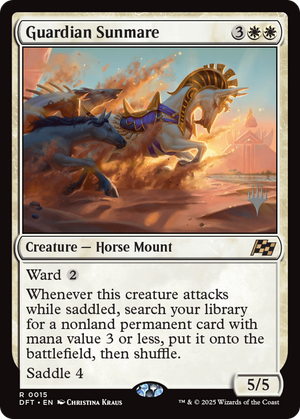
Guardian Sunmare


Saddle asks a pointed question: what is a Mount's payoff worth when the enabling cost is paid at sorcery speed, before combat, rather than baked into the attack itself? Here you pay Saddle 4 in the main phase (tapping four power of other creatures or committing them to the ability), and only then does the attack trigger reward you. That two-step structure is the gate doing the design work. The tax is real: you sink a board's worth of power into saddling a body that already threatens to win combat unassisted, so the Mount is not just the engine's ignition, it is half the reason to build the engine. What makes the trigger dangerous is where the fetched card lands. A search for any nonland permanent of mana value 3 or less, put directly onto the battlefield, means the payoff is a resolved threat, blocker, or synergy piece with no summoning cost and no counterspell window aimed at the fetch. Because the trigger fires on the attack, the tutor resolves in the combat step, sidestepping the sorcery-speed vulnerability that grounds most white ramp and value effects even though the setup was paid pre-combat. Ward  protects the assembly from cheap removal before it comes online. The structural relative is a repeatable creature-based tutor that cheats mana value onto the battlefield rather than drawing it, and the cap (three or less, permanents only) is the constraint that stops a five-drop from simply reaching for whatever finisher its deck most wants.
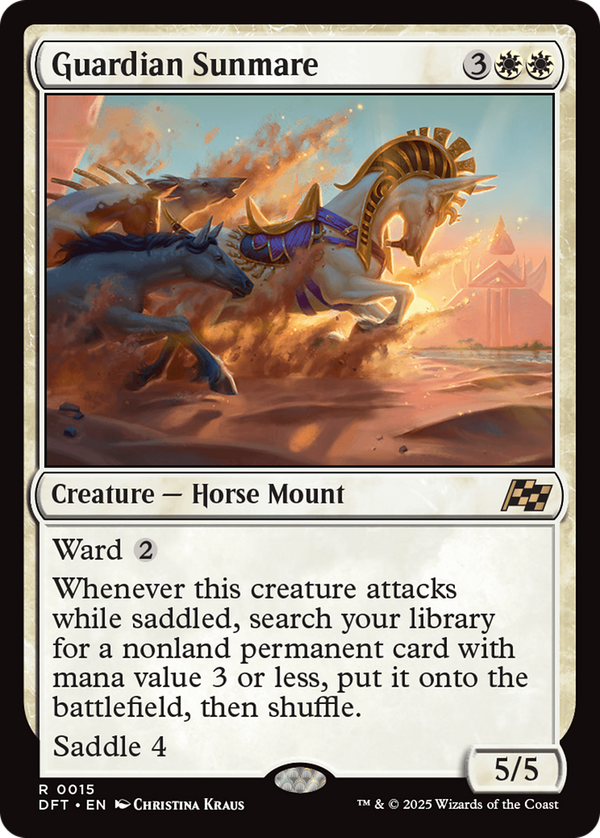
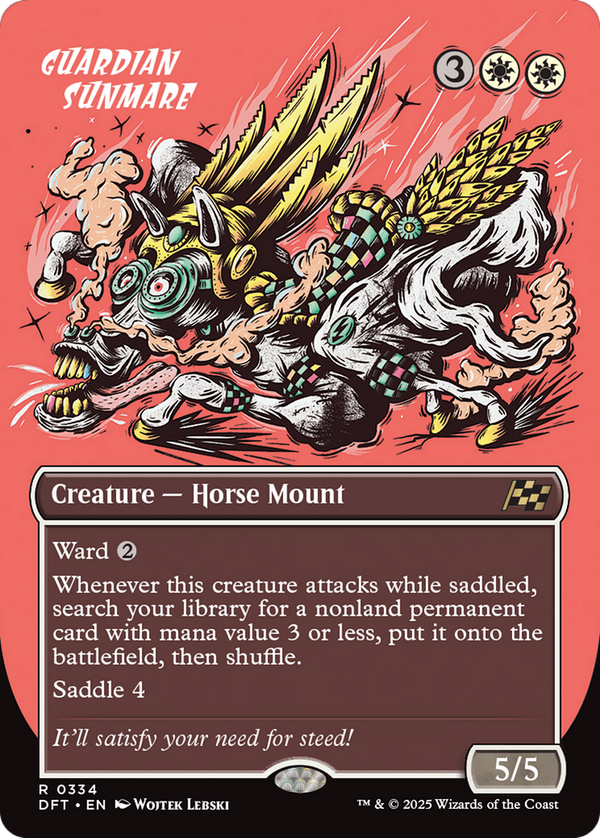
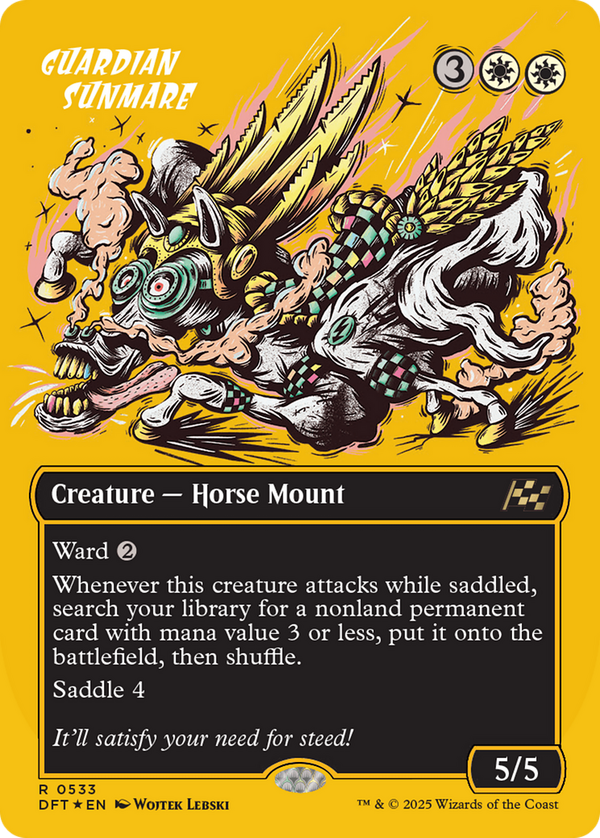
Rules text
Whenever this creature attacks while saddled, search your library for a nonland permanent card with mana value 3 or less, put it onto the battlefield, then shuffle.
Saddle 4