Greed's Gambit


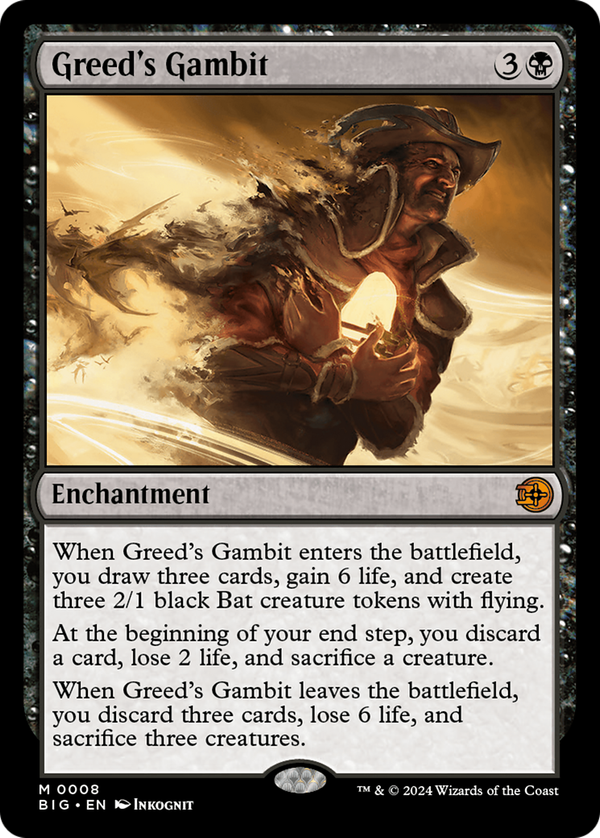
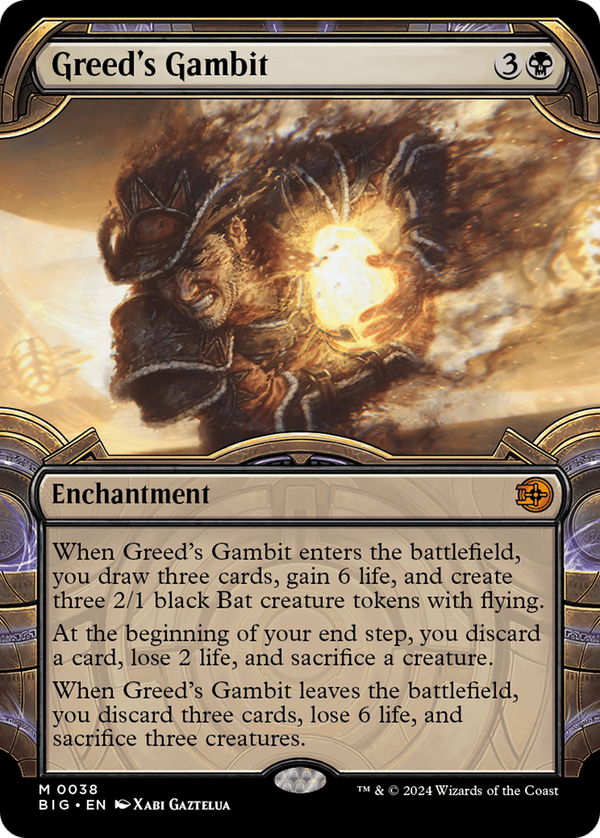
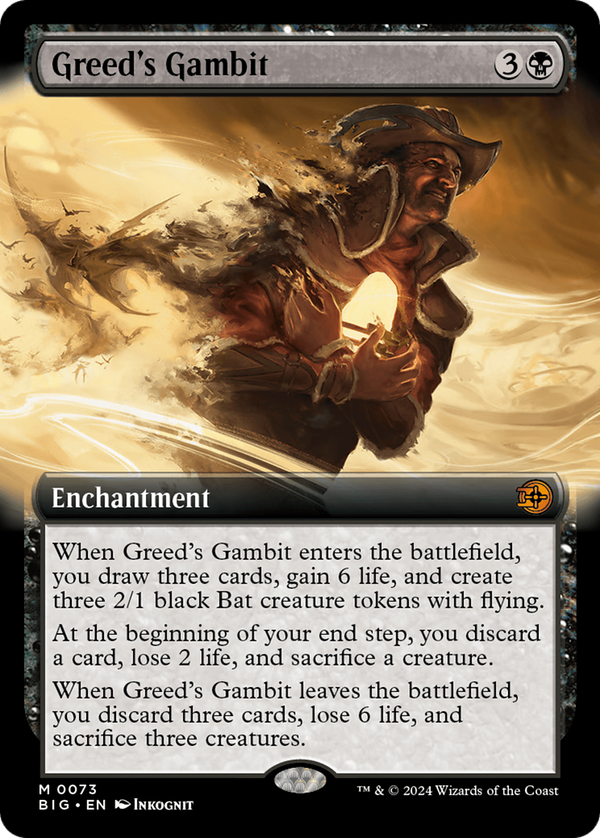
Front-loading is a familiar deal in black: take the burst now, service the debt later. What makes this one strange is that the ledger never closes while it sits on the battlefield, and the exit is written to punish you for ever settling up. The entry is a genuine windfall (three cards, six life, three flying bodies), the kind of swing that would justify the cost outright if that were the whole transaction. It is not. Each of your end steps exacts a tax in card, life, and creature, so the enchantment slowly consumes the very board it built. That recurring drain is the reason you want it gone. The departure clause is the reason you cannot afford to help it along: leaving play refunds the entry almost line for line in reverse, discarding three, draining six, and taking three more bodies with it. So the design pins you between two bad options, running the end-step tax or eating a catastrophic exit, and the intended way out is to stop treating either as a drawback. Feed the guaranteed end-step sacrifice to aristocrat payoffs and death-matters triggers; let the forced discard fuel a graveyard rather than bleed you. Played straight it is a countdown on your own resources. Built around, the recurring drain becomes the engine and the exit penalty becomes the thing you never trigger, a standing reminder that the upfront value was always a loan meant to be spent, not repaid.