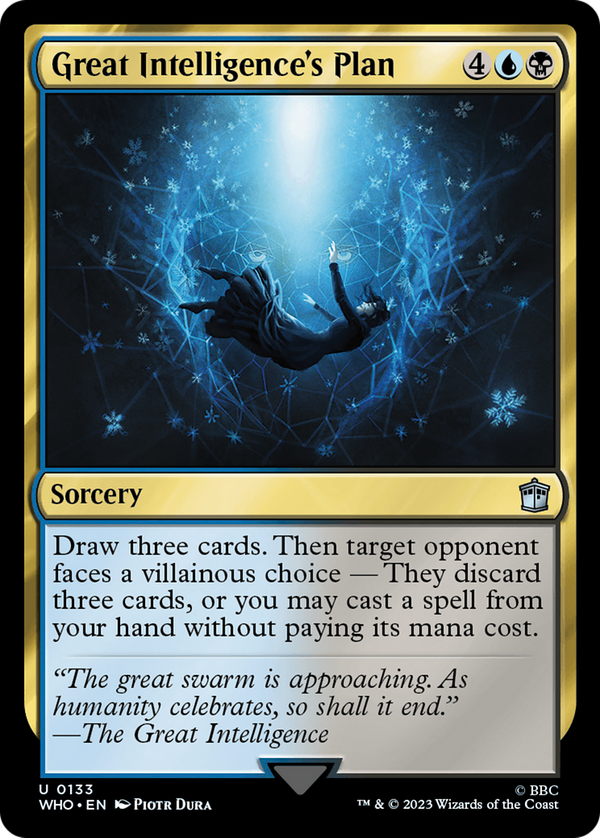
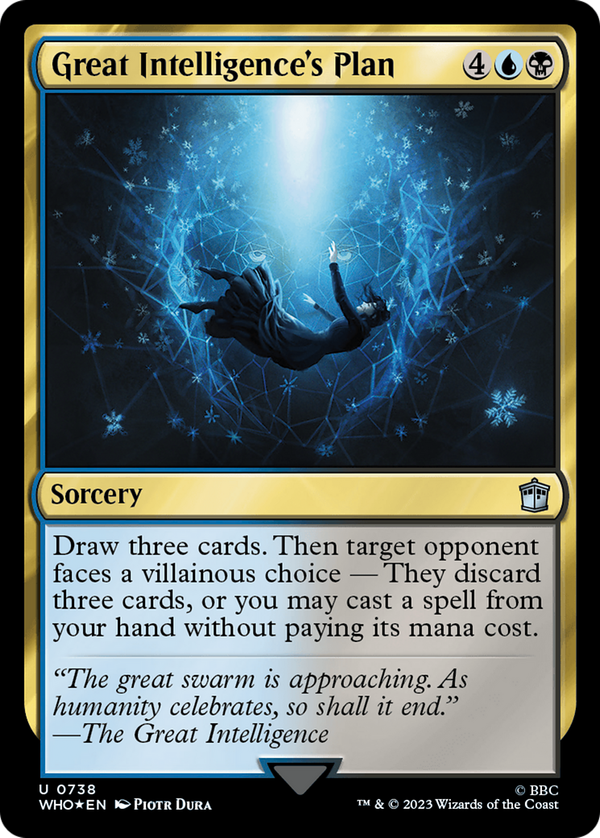
Great Intelligence's Plan



Draw three first, then hand the opponent a fork where both tines are yours. That sequencing is the whole trick: you refill by three before you set the terms, so the hand you are threatening to unload is stocked by the same card that threatens it. The opponent either pitches three cards to keep you off a free spell, or lets you cast something from your hand at no cost, and you have already arranged which door is worse for them. Call it a trap, not a choice: a marginal spell in hand makes the discard an easy concession, while a haymaker makes the discard the concession you were hoping for. You are never punished for the branch you did not get, because you drew into both. Six mana in Dimir buys plenty of raw card advantage on its own; the free-cast clause is the ceiling that separates this from a straight draw spell, turning it into a two-for-one that can also deploy a top-end threat the same turn. The sorcery speed and the cost keep it a controlling top-end play rather than a tempo swing. What it is really measuring is hand density: it wants a deck that always holds something worth casting for free, and it asks the opponent to guess which half of the fork they would rather spring.