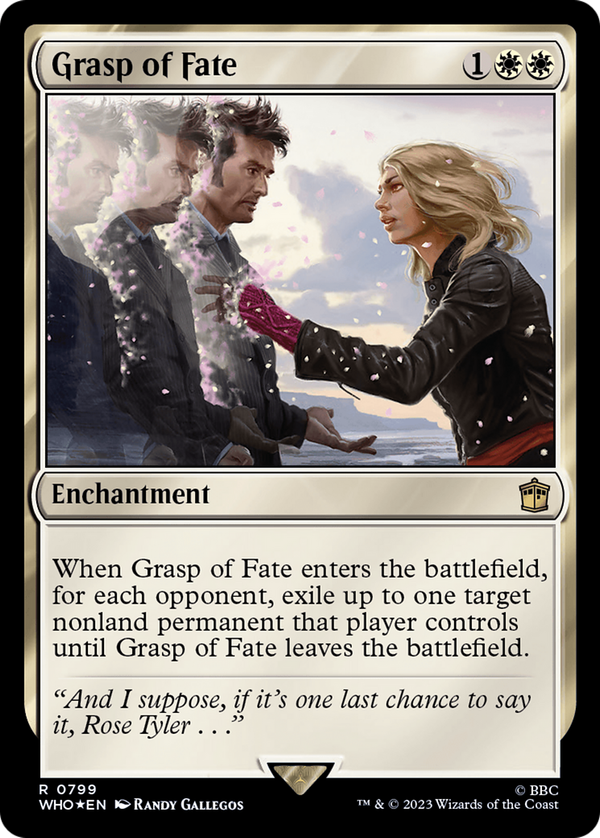
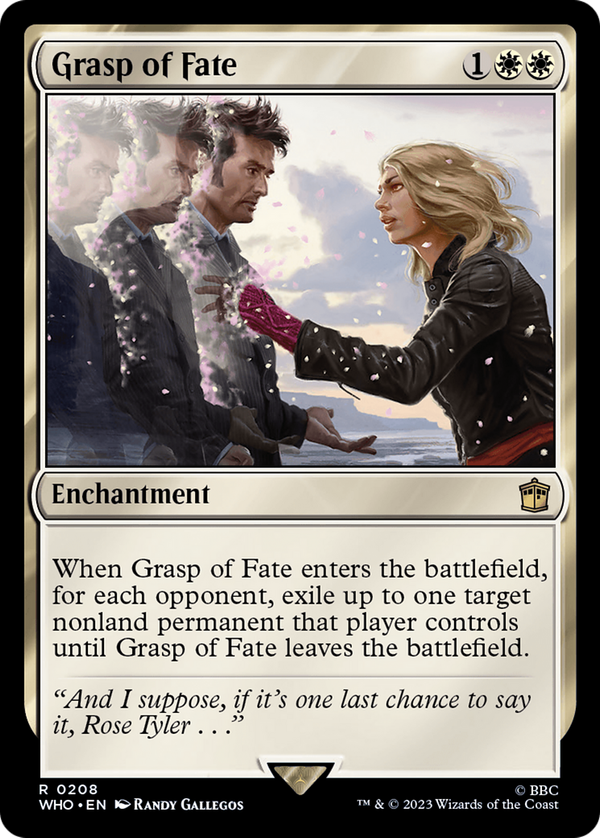
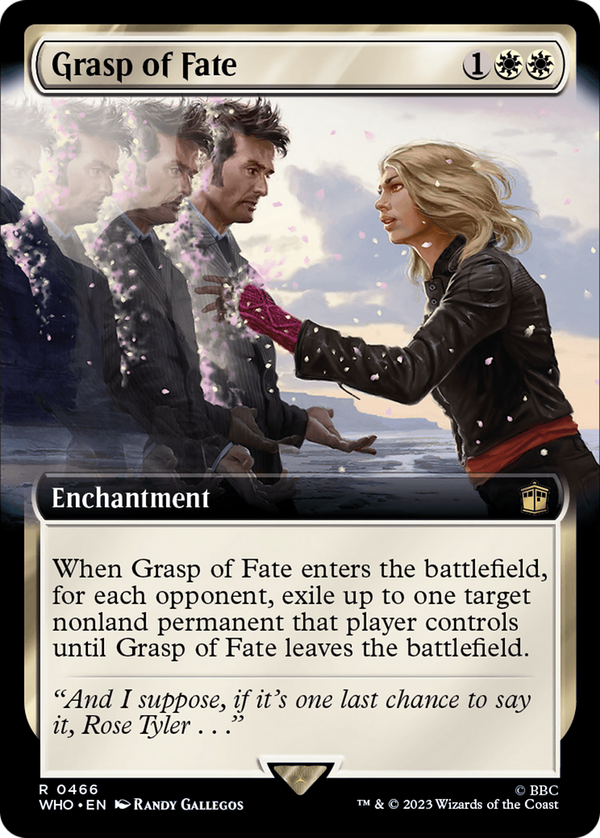
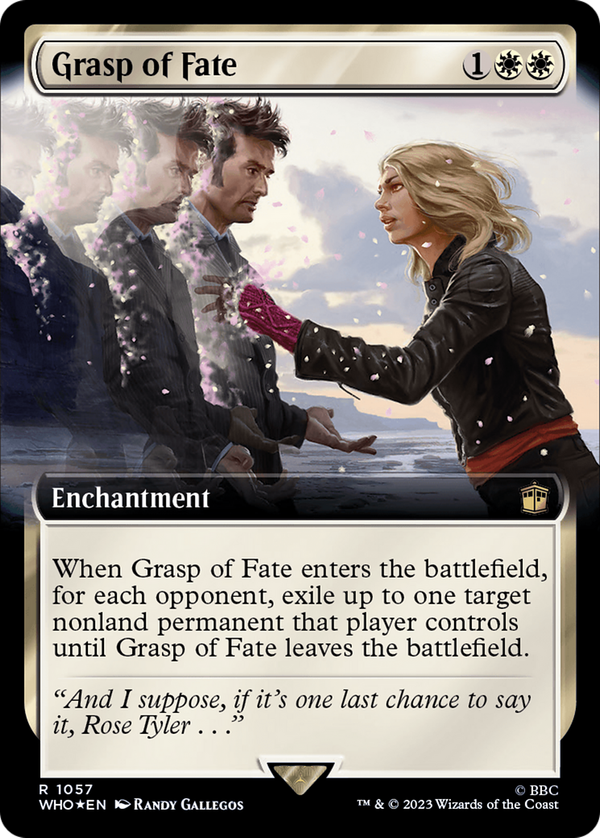
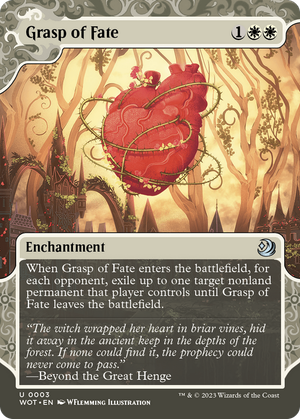
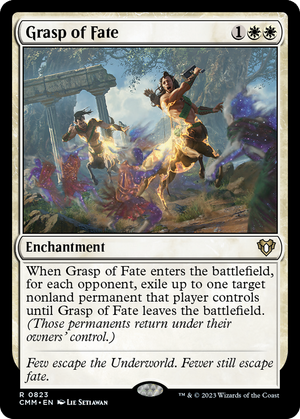
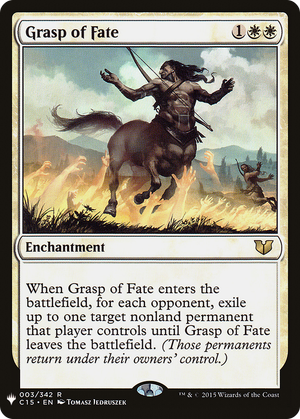
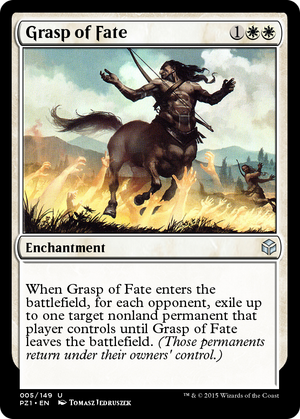
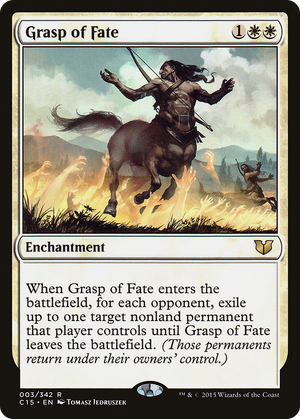
Grasp of Fate


Oblivion Ring taught white players to treat removal as a lease rather than a sale: the answer arrives as an enchantment, the threat goes to exile, and destroying the enchantment hands the threat back. This stretches that single-target template across a whole table. One trigger reaches out to every opponent at once, exiling a problem permanent from each, which is white's way of answering an asymmetric board with a single card instead of three. The catch is wired into the same line. Everything it pulls into exile is held hostage to the enchantment's survival, so each permanent you take is a permanent you have committed to defending. Disenchant it, Krosan Grip it, or catch it as collateral in someone's board wipe, and a table's worth of threats return simultaneously, all at once, all hostile. That fragility cuts both directions: it answers the present board but can outlive its usefulness, freezing things you would later rather see freed and freeing things the moment it dies. The "up to one" clause is where the flexibility lives, sparing you from a forced hit against a player with nothing worth taking; you can leave a permanent in place rather than exile something you would only have to give back. It is a one-shot, multi-target spin on a duel-era design, scaled up to point at a room.