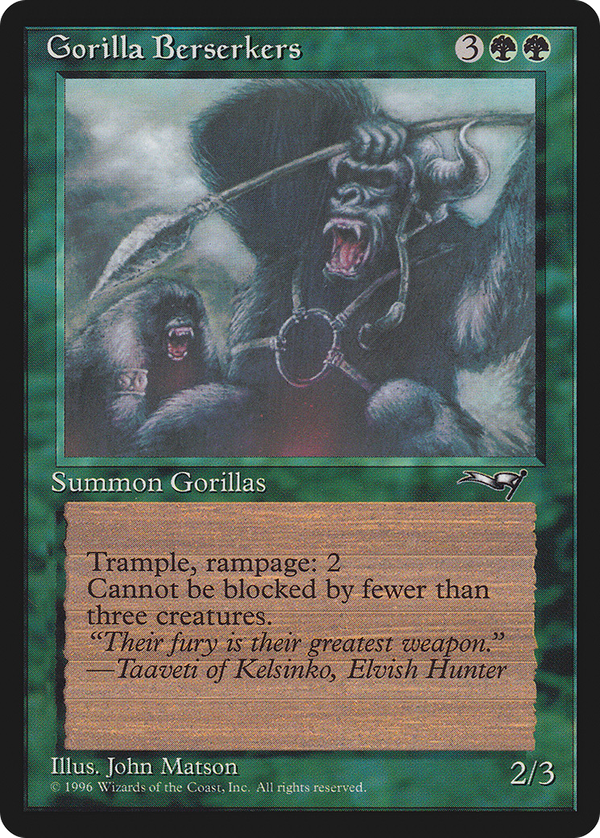
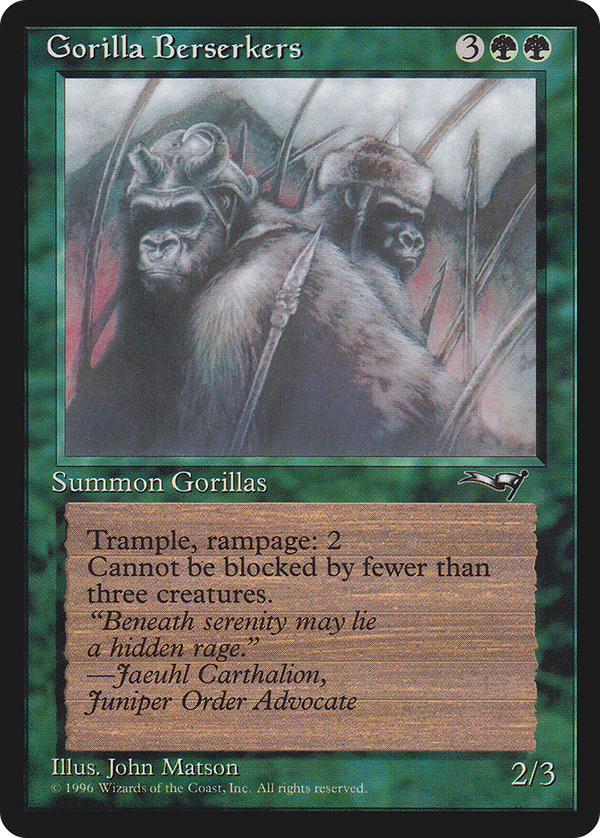
Gorilla Berserkers


Here is a creature built entirely around a defensive paradox: it refuses to fight one-on-one, then punishes the army required to stop it. The can't-be-blocked-except-by-three clause manufactures the exact board state that rampage wants, so the two abilities are not separate keywords stapled together but a single closed loop. With the minimum three blockers, rampage 2 swells the 2/3 body to a 6/7 trampling over for the overflow, and every blocker past the third only feeds the math further. This is mid-1990s combat design at its most experimental, when Wizards was still bolting flavor keywords like rampage onto creatures to model the chaos of an overwhelmed defensive line. The interaction reads as a pun (a berserker that grows stronger the more enemies pile on) but the mechanics are doing real strategic work. The friction is structural: because the card cannot be blocked by one or two creatures, the defender either commits three bodies to a swing that punishes the commitment, or lets a 2/3 connect for two and saves the army for a real threat. There is no chump option; the blocking restriction forbids the cheap answer the rampage trigger would otherwise punish. Rampage proved a dead-end keyword, appearing on a handful of cards and never revisited, which makes this a clean fossil of a design idea that did not survive contact with the format: combat math as a deterrent, written before Wizards settled on evasion and reach as cleaner tools for the same job.