Goblin Festival


Almost every "downside" mechanic in Magic asks you to weigh a cost against a benefit; this one asks you to gamble on whether the source of your repeatable damage stays yours at all. The pinger itself is unremarkable: pay two, ping for one, the kind of effect Prodigal Sorcerer was already doing for less risk. The flip is where the design lives. Lose, and the enchantment walks across the table to an opponent of your choosing, becoming their pinger to point back at you. That single coin toss converts a tame value engine into a recurring referendum on greed: every activation is a 50/50 on whether you keep your toy or arm the table against yourself. It belongs to the late-'90s school of variance-as-flavor, the same impulse that produced Goblin Bomb and a whole stratum of coin-flip cards built more to generate stories than to win games. The "choose one of your opponents" clause is the telling detail, a relic of a multiplayer design assumption baked straight into the rules text: in a duel there is no choice, but at a crowded table the loser gets to hand the liability to whoever they fear most, turning a personal gamble into a political one. It is engineered to be played badly and remembered fondly, which is a coherent goal even if it never produced a card anyone optimized around.
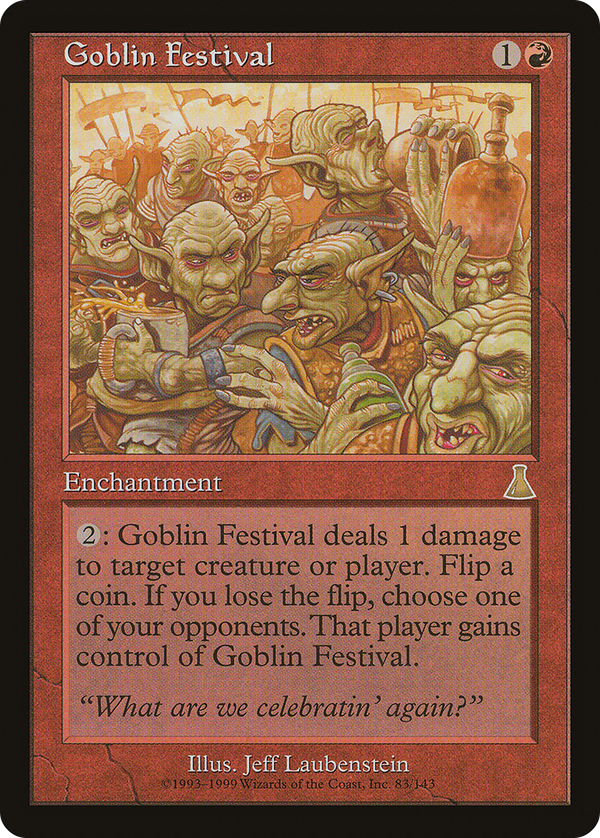
Rules text
 : This enchantment deals 1 damage to any target. Flip a coin. If you lose the flip, choose one of your opponents. That player gains control of this enchantment.