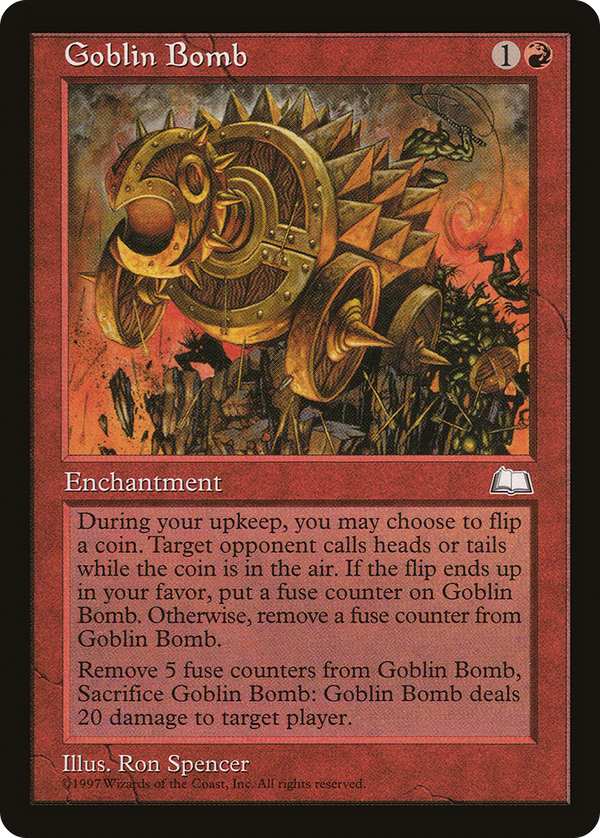
Goblin Bomb


Wind a doomsday clock by flipping a coin every upkeep, and let the math decide whether you live to see it strike. The fuse climbs on a win and retreats on a loss, so a fair coin gives you no edge and the counter staggers up and down for turns while you wait to bank a net of five. When the bomb finally ripens, twenty damage to one player ends most games on the spot: that is the bargain the design strikes, a payoff far above curve in exchange for a fuse you genuinely cannot trust. This is coin-flip Magic in its early, undiluted form, before red learned to fix the variance with effects that grant extra flips or let you reroll losses. On its own it does nothing useful while it builds, asking only that you survive a random walk long enough to clear the threshold. The tension is telegraphed by nature: an enchantment that must sit in play for at least five upkeeps is a threat your opponent watches accumulate, and they have ample room to answer it, whether by destroying the enchantment outright or by holding up a Stifle for the sacrifice ability when you finally reach for it. The detonation uses the stack like any activated ability, so the bomb is loud, slow, and stoppable, which is precisely the price red paid in this era to put twenty damage on a two-mana card.