Giant Badger


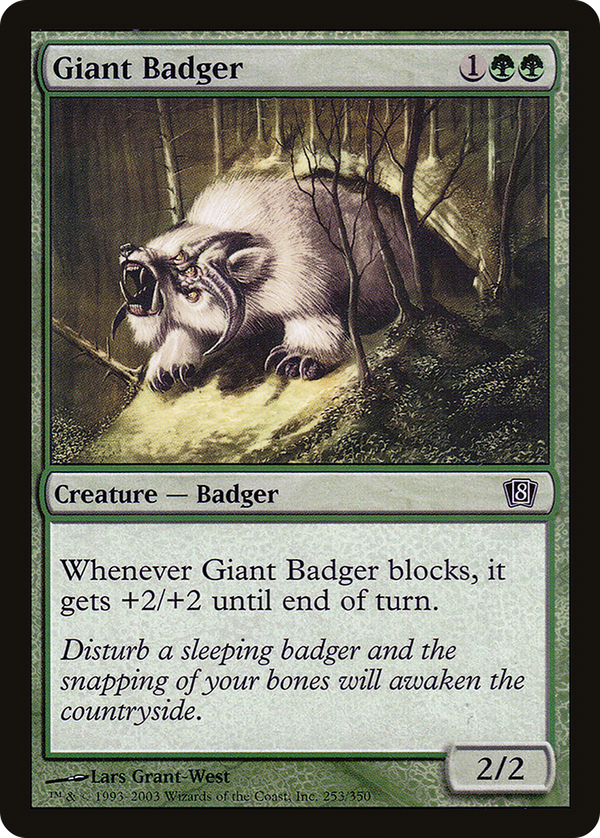
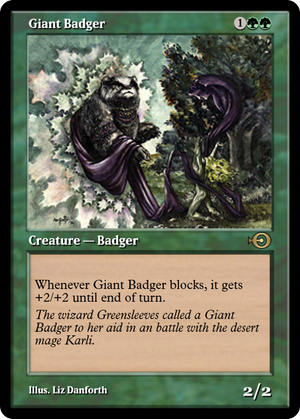
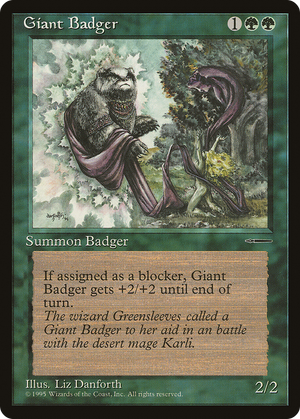
One of the earliest examples of Wizards using a card as marketing collateral rather than a piece of set design: it arrived as a book-promo insert, part of the program that packaged Magic cards with HarperPrism's tie-in fiction. The mechanical conceit is a defender's reward written before defender existed as a keyword. A 2/2 that swells to a 4/4 the instant it eats an attack, with the bonus pegged to blocking and nothing offered on the swing back. That asymmetry (priced as a three-mana 2/2, fights as a three-mana 4/4) is the entire card, and it points at a design question Wizards spent the next decade circling: how do you compensate green for sitting back without giving it reach? The answer here is the bluntest possible one. The badger taxes the attacker for swinging into it and rewards no aggression of its own, which is exactly backwards from how green creatures of the era were usually built. Later cards (Wall of Blossoms, the various Fog-on-a-stick walls, the eventual defender keyword itself) found subtler ways to make a body worth keeping home. Giant Badger is the artifact of an earlier moment, when the promo channel was a place to try shapes the main sets would not touch, and when a 2/2 that became a 4/4 in combat was novel enough to print on the back of a paperback.