Gev, Scaled Scorch


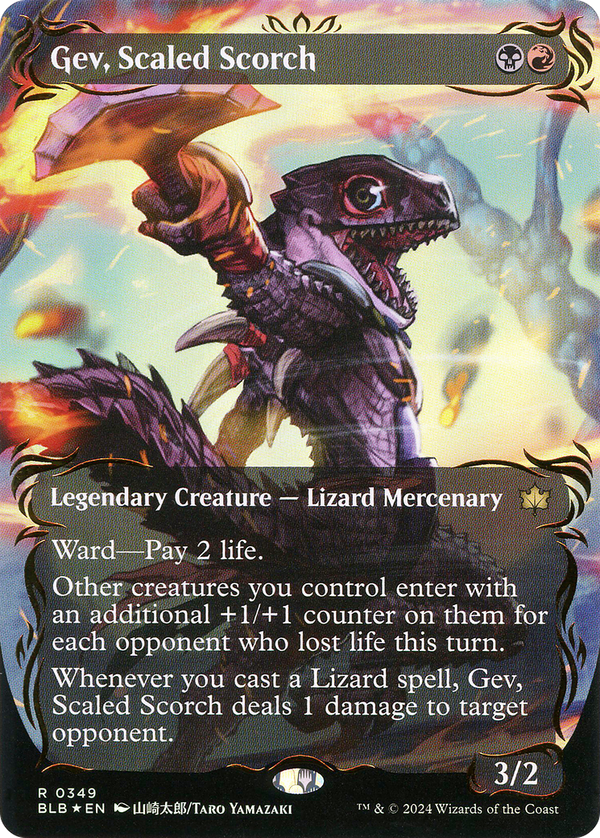
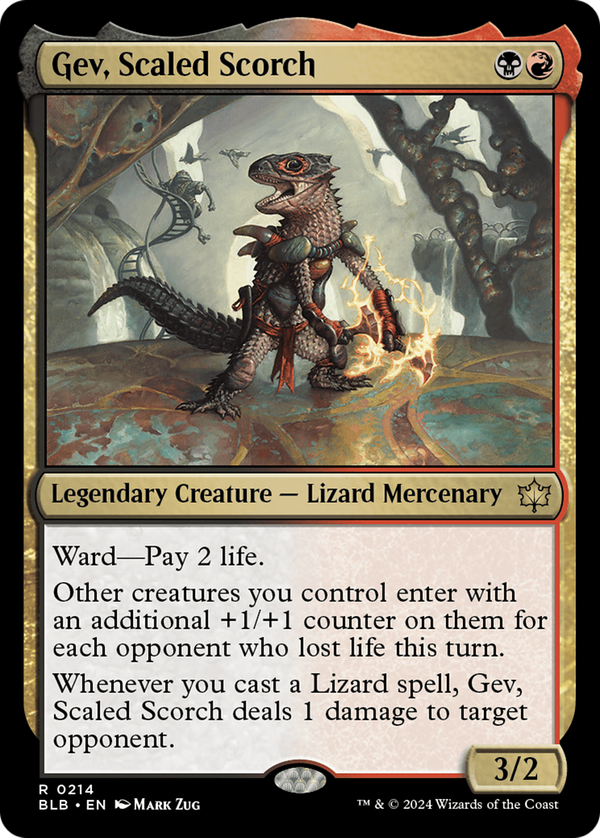
The design bet here is that aggression compounds. The counter-generation clause only fires once an opponent has already lost life this turn, which means the reward escalates in exactly the game state a Rakdos aggro deck is built to reach: you punch first, and every subsequent creature arrives bigger for having done so. It is a deliberately sequenced payoff, worthless on an empty board and monstrous once the beatdown is underway, rewarding you for leading with reach (a burn spell, a ping, an attacker connecting) before you commit the rest of your hand. The Lizard clause folds tribal loyalty into the same engine, turning each Lizard cast into a life-loss trigger that then feeds the counter ability, so the two lines are not separate hobbies but one loop: cast Lizards, chip life, deploy fatter bodies, repeat. The ward reads as an extension of that same clock. Costing life rather than mana is a tempo tax that hurts a defensive opponent more than an aggressive one, and it forces the removal-happy control deck to spend its own margin just to answer a two-drop. The load-bearing constraint is that everything downstream is contingent on pressure you have to establish first: the static counter ability sits idle until an opponent has bled, so the card rewards an aggressive plan already in motion rather than starting one. Remove it and the engine goes with it, which is why the life-loss ward is a deterrent and not a gift.