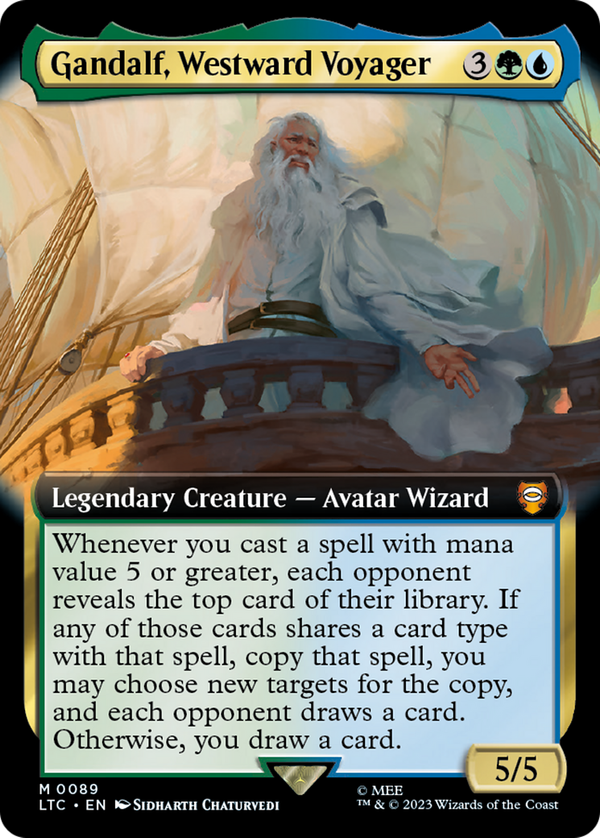
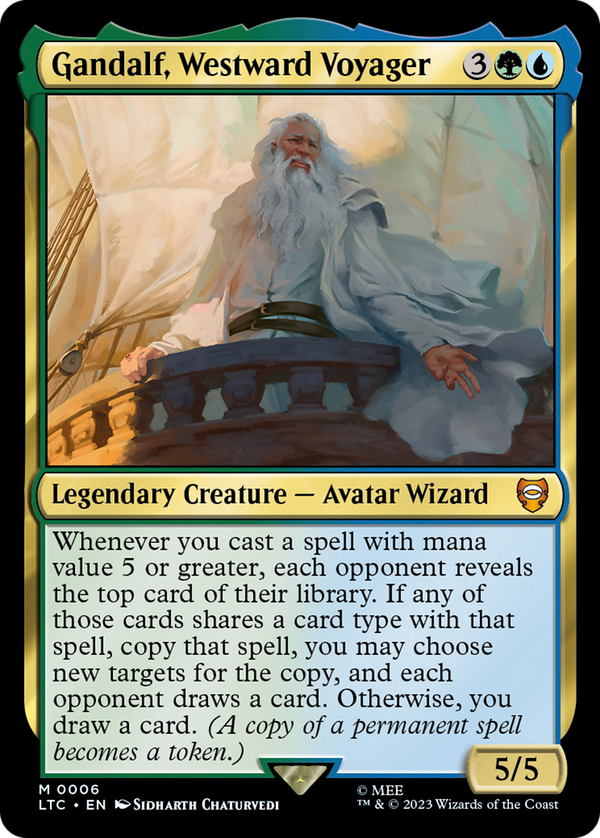
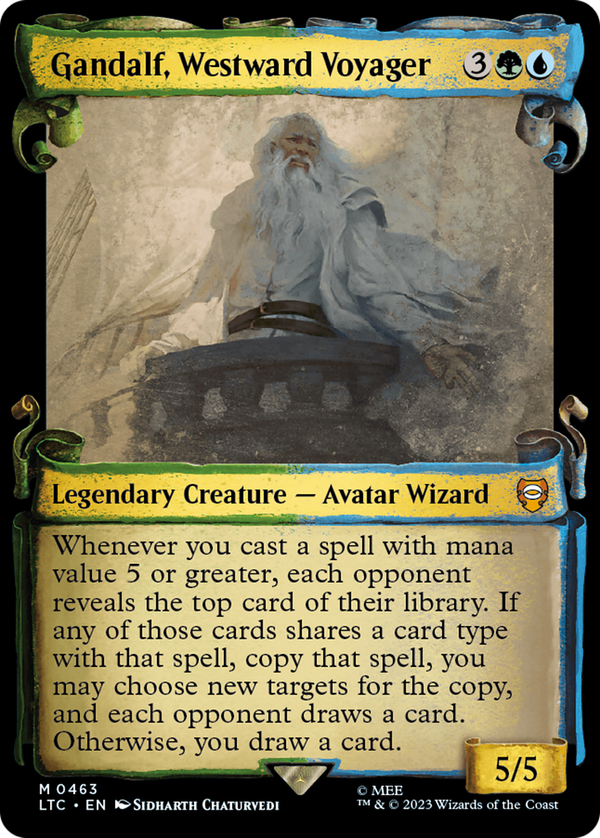
Gandalf, Westward Voyager



The reward structure here is a gamble dressed as an engine, and the gamble is aimed outward: cast anything with mana value five or greater and each opponent flips the top of their own library. If a revealed card shares a type with your spell, you copy the spell (new targets allowed) and each opponent draws. Miss, and you quietly draw one for yourself. The design is sharp because neither branch is dead, and because the two outcomes tug against each other. Hitting is the flashy payoff, but it is priced: the copy comes bundled with card advantage for the whole table except you, so a doubled spell is never a clean tempo swing. Whiffing is the consolation, and it is the branch that actually refills your hand. The trigger is calibrated so you are always trading, never stalling, but which trade you get is out of your control.
Where it points a deck is the more interesting part. The threshold funnels you toward top-heavy spells (expensive sorceries, splashy instants, fat creatures, big enchantments), which is precisely the shape a green-blue ramp shell is already building toward. But because the check reads opponents' libraries, not yours, no amount of deckbuilding guarantees a hit; the odds live across the table and shift with what everyone else is running. That is what turns each expensive cast into a moment rather than a grind: a revealed top card, a visible outcome, a spell that either fires twice or replaces itself. The 5/5 body keeps pressure on while the trigger rolls its dice, and the randomness is the design, not a flaw in it.