Frodo, Adventurous Hobbit


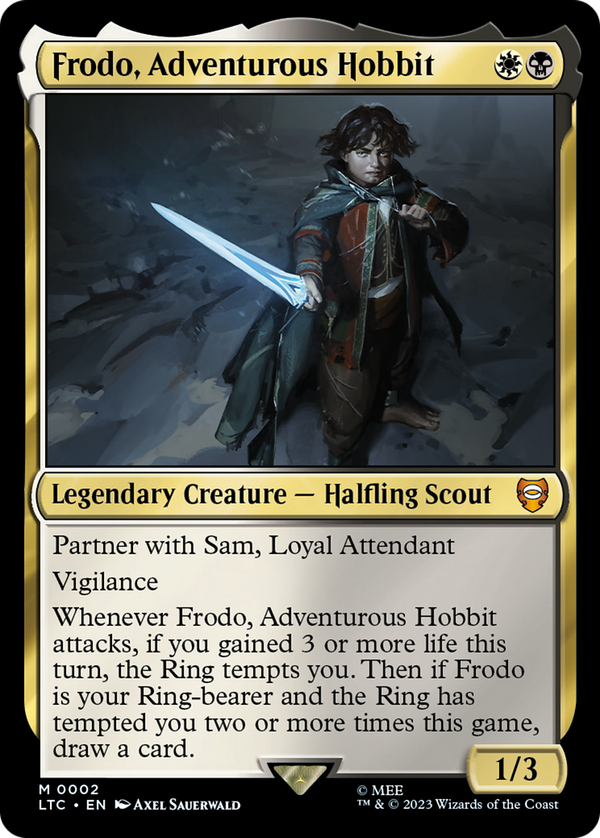
The design here hangs on a threshold most attackers never budget for: the combat trigger only tempts the Ring if you have already gained three or more life that turn, which quietly recasts a lifegain shell as the fuel for a card-advantage engine that looks nothing like lifegain on its face. The draw sits behind a second gate. You need the Ring to have tempted you two or more times across the game, and only while this is your Ring-bearer. Because the trigger tempts you first and then checks the count, the payoff lands on the second qualifying attack: that temptation brings the tally to two and satisfies the condition in the same resolution, not on some distant third swing. That staging rewards a build that treats life total as a resource you spend and refill on a curve rather than a number you hoard. Vigilance does structural work underneath: an attacker that stays back to block keeps the trigger live turn after turn without leaving the engine open to a swing-back. The Partner with clause pointing at Sam, Loyal Attendant is the other half of the concept, a designed pair meant to be cast and commanded together rather than a generic slot you fill freely. What lifts this above a plain lifegain payoff is the sequencing it demands: it does not reward gaining life so much as gaining the right amount at the right moment, on a turn you were already committing to combat.