For the Common Good


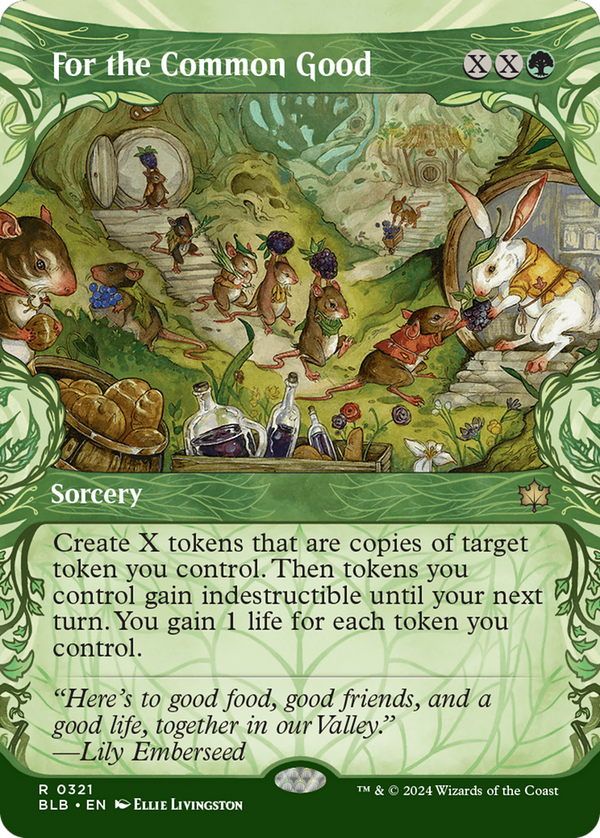
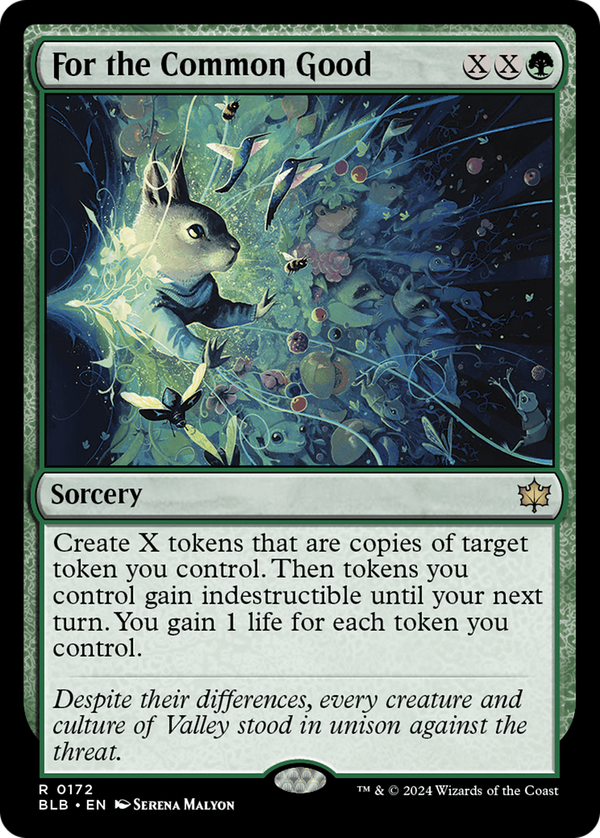
Written , every additional copy costs two generic mana rather than one, and that doubling is what keeps this from collapsing into a cheap board-flood. A single-X version would fill the battlefield for pennies; the second X taxes the ambition, so a board-doubling turn demands a genuine mana commitment. The payoff scales with what you already have: copy your best token X times, then count every token you control (not just the fresh ones) for the lifegain, so the same army that fed the copies also feeds the buffer. The life is a cushion, not a clock against the opponent: the spell only ever adds to your total and never touches theirs, so the kill comes from bodies, not from the lifegain. What promotes it from value spell to finisher is the indestructible clause tucked between the copy and the life. It lands a new army straight through a sweeper's window, and because the protection holds until your next turn, a modest token board suddenly swings as a lethal alpha strike that survives the crackback. The card assumes you already own a token worth multiplying: a Treasure, a beast, something with a body or a compounding trigger that matters twelvefold. Assemble that engine first, and this becomes the button that turns a token board into a lethal one in a single sorcery-speed cast.