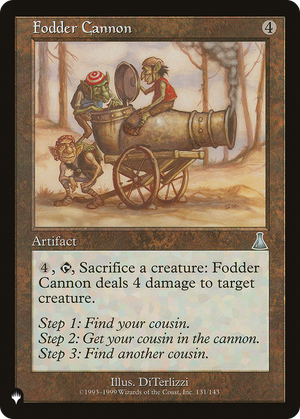
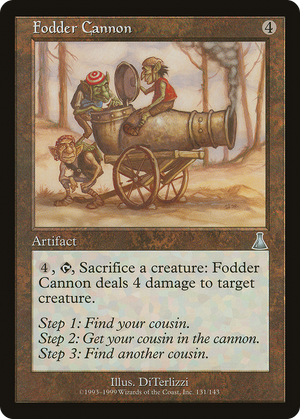
Fodder Cannon

Sacrifice a creature, tap the artifact, pay another four, and you get four damage at a target creature: a cost stack so steep no modern designer would dare it, and that severity is the whole story of where this comes from. This is a sacrifice outlet from an era when Wizards still charged full retail for the privilege of turning a body into damage. The design predates the cheap, repeatable sac engines that would later define the aristocrats archetype; there is no death-trigger payoff baked in, no incidental value, just a clunky free-fire weapon that converts dead-on-board creatures into removal at a rate nobody would accept today. What it does offer is rate-of-fire flexibility that contemporary burn artifacts lacked: four damage clears most of the creatures of its time, and the activated nature means you point it wherever the threat appears rather than committing on cast. The friction is the balancing valve. Eight total mana plus a creature is a tax steep enough that the card never threatened to become an engine, which is exactly why it stayed a curiosity rather than a staple. It reads now as a fossil of how the design language around sacrifice has shifted: the modern version of this effect costs a fraction as much because the game eventually decided that converting creatures to value should be cheap and frequent, not an occasional, expensive ceremony.
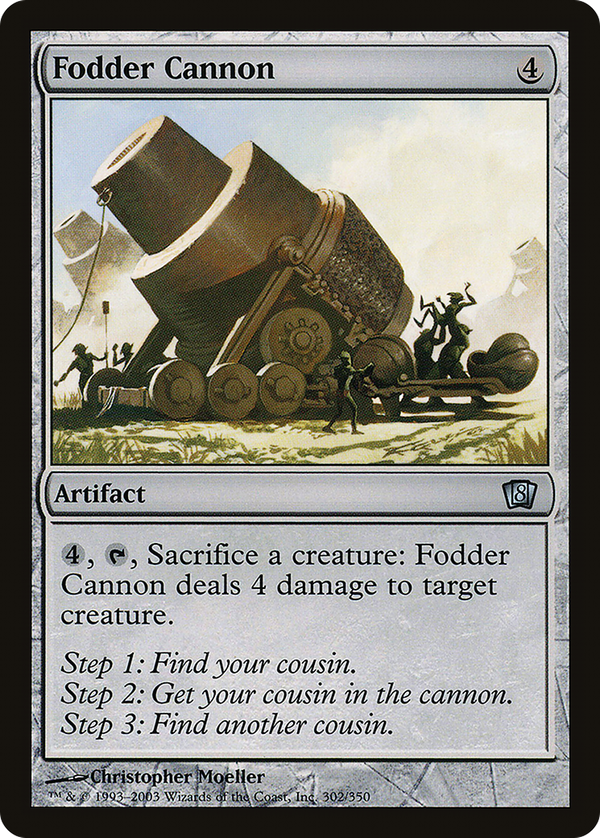
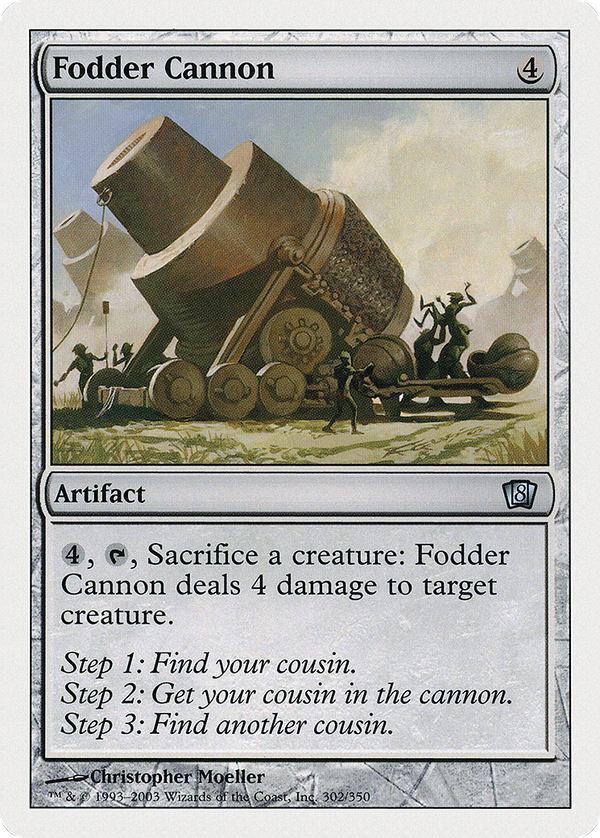
Rules text
,  , Sacrifice a creature: This artifact deals 4 damage to target creature.