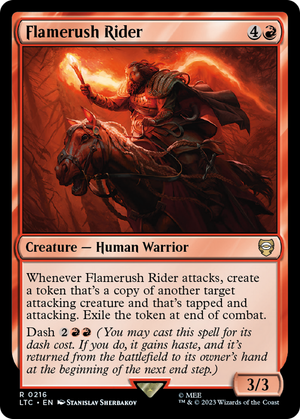
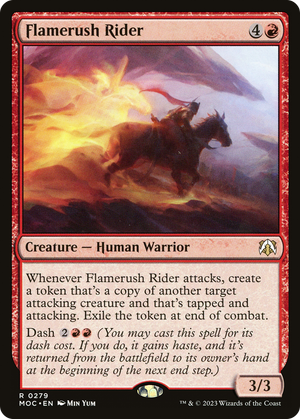
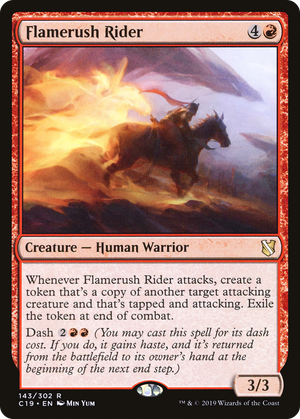
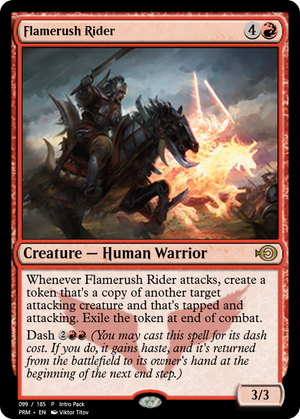
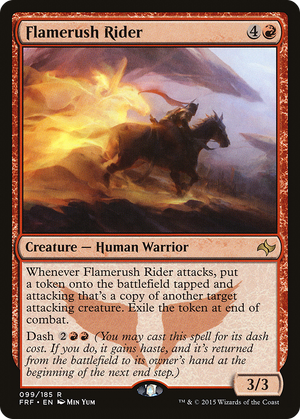
Flamerush Rider


The interesting tension here is that the copy is yoked to the attack step rather than to the cast. Dash is the obvious hook, letting the body slip in for a one-turn alpha strike, but the real reward is what the attack trigger does with whatever else is already swinging: it stamps out a tapped, attacking duplicate of your best attacker, then exiles it once combat ends. That timing is the whole engine. Because the token is created already attacking, it skips the declare-attackers step entirely, so it never triggers its own "whenever this attacks" abilities or any copied from the original. What it does carry are enter-the-battlefield triggers and any combat-damage payoff on the creature it copied. The synergy axis, then, is bodies whose value sits in the swing itself or in the act of entering: a copy of a fat combat-damage threat, or a creature with a punishing ETB. The token leaves via exile at end of combat rather than by dying, so leaves-the-battlefield death triggers are not the payoff you're building toward. Dash makes the package self-contained: cast it for the dash cost, swing, get the bonus body, and return the Rider to hand at the next end step. That bounce sidesteps sorcery-speed sweepers on the following turn, though it leaves the Rider exposed to instant-speed removal during and after combat, and the delayed exile can itself be responded to. This is a haste-enabled, one-shot doubling effect dressed as a midrange beater, built to extract maximum value from a single attack rather than to hold a board.
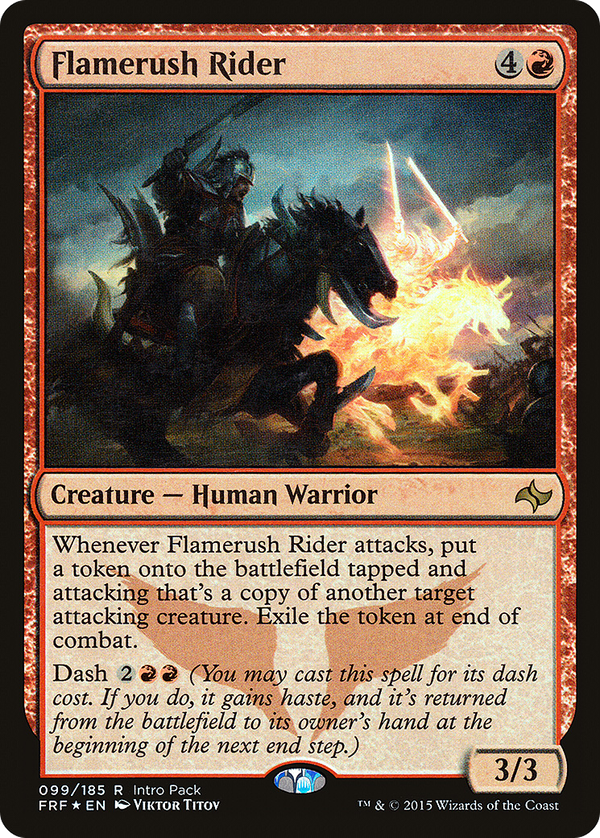
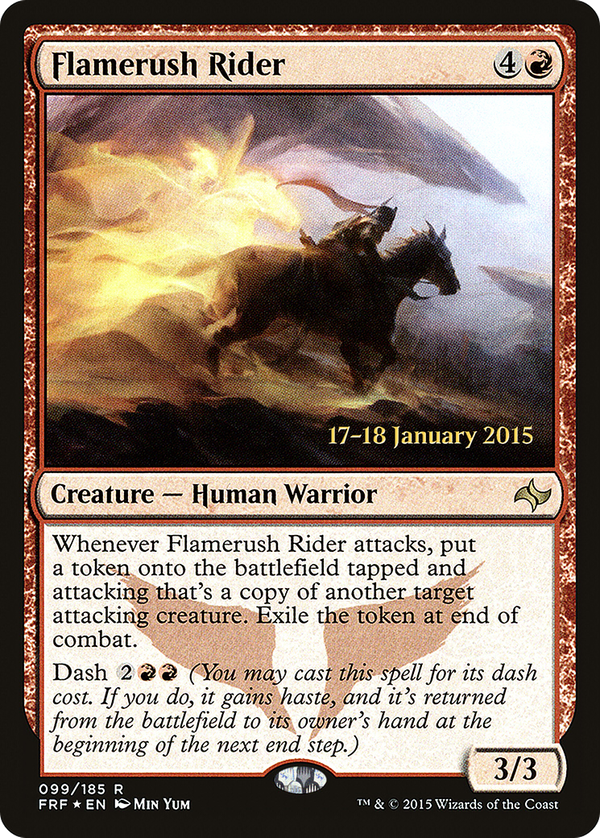
Rules text
 (You may cast this spell for its dash cost. If you do, it gains haste, and it's returned from the battlefield to its owner's hand at the beginning of the next end step.)