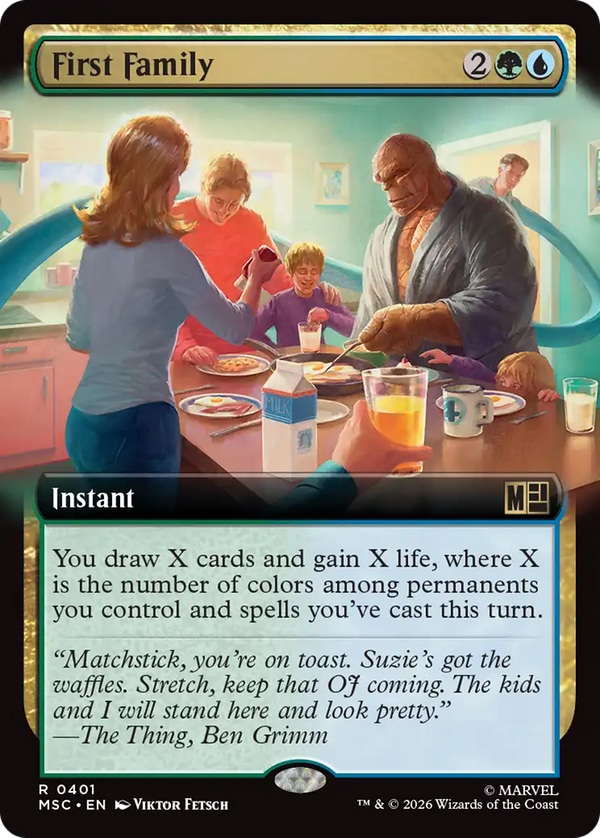
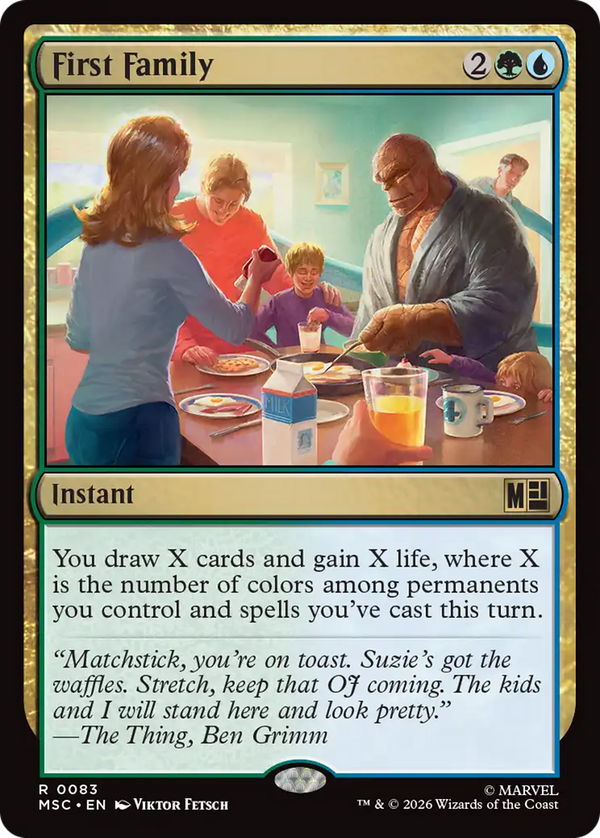
First Family



The scaling variable here is unusually elastic because it counts two different pools at once: colors among permanents you already control, and colors among spells you've cast this turn. That second half is the clever part. A two-color deck that runs out one gold spell and a couple of off-color cards over the course of a turn can push X well past what the board alone would suggest, and because this resolves as an instant, you can hold it until the count peaks, drawing and gaining life off a turn's worth of activity rather than a static snapshot. The tension the design walks is that a straight Green-Blue shell caps low: you need to reach into other colors, via mana rocks, borrowed spells, or a genuinely wide identity, before the payoff justifies four mana. That pushes it toward five-color and heavy-fixing builds, where the ceiling is a fistful of cards and a comfortable life buffer at end of turn. Most game-state draw spells key off a single dimension: creature count, cards in hand, life paid. This one keys off color diversity, which makes it a rare payoff for a deckbuilding decision the rest of the card pool usually taxes rather than rewards. Spreading your permanents and spells across the wheel is normally a fixing headache; here it is the whole point.