Fires of Invention


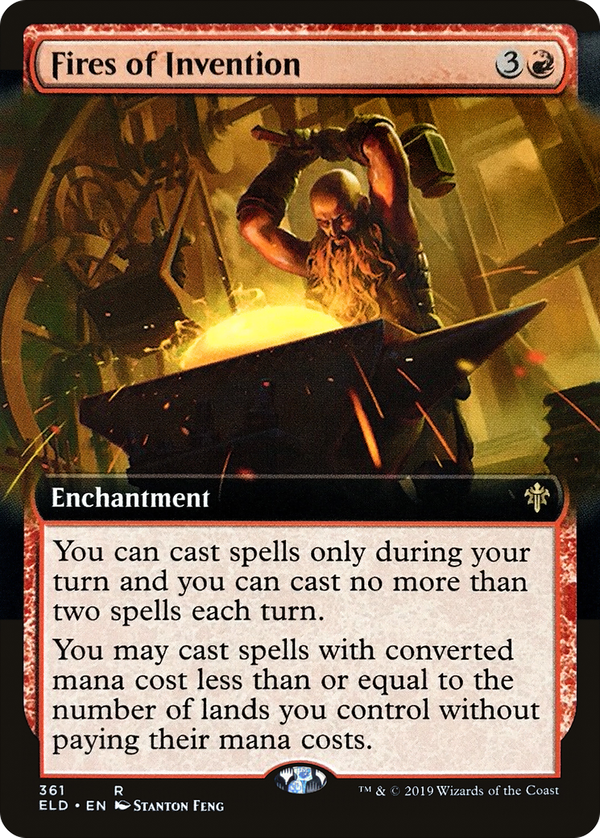
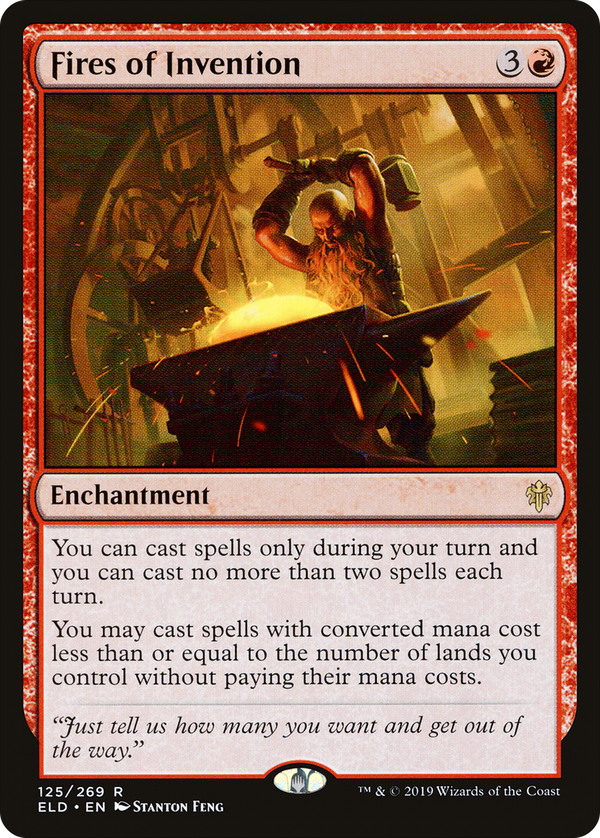
The trade is stark: you surrender the ability to cast anything on an opponent's turn and cap yourself at two spells per turn, and in exchange your spells stop demanding their mana. That inversion is the entire point. Once this resolves, the manabase decouples from casting cost: a board of five lands deploys any two spells of mana value five or less for nothing, so the card rewards holding the most expensive threats a deck can pack rather than curving out. The two-spell governor is the price the free casting is set against, and the "only during your turn" clause blocks it from becoming an instant-speed engine. Both restrictions bend once your top of curve is fat, because two free five- or six-mana plays a turn will bury nearly any fair opponent. That is precisely why it drew a Standard ban: it fueled a deck built around hitting five lands and then untapping into two haymakers every turn, a payoff structure the format's normal economics could not check. It sits in a small lineage of enchantments that suspend a core rule of resource development, the "mana works differently now" school, and it stands apart for how completely it rewrites what casting a spell costs while never touching the graveyard, the stack, or the combat step.