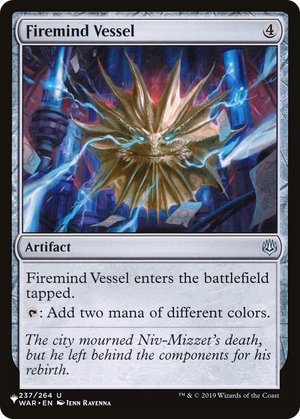
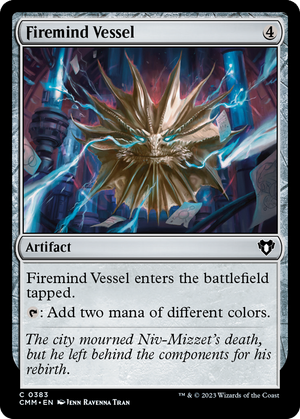
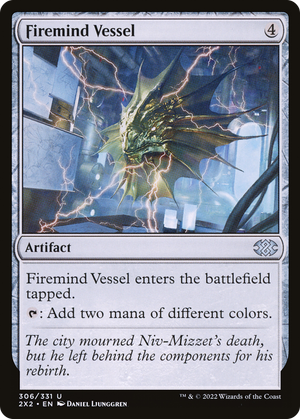
Firemind Vessel

The four-mana price is the whole tension here. Two-color fixing on a single body has historically sat well below this rate, and the premium buys one thing: the mana comes in any two different colors, not a fixed pair. That is real flexibility for a deck spreading spells across four or five colors, but the tax is steep enough that most decks would rather run a fistful of dual lands or a cheaper filter that asks for less up front. The tapped-on-entry clause sharpens the problem. A four-mana rock that does nothing the turn it lands means the first activation waits until your next turn, so the fixing you paid for arrives a full turn behind where a two- or three-mana rock would have put it. That tempo cost, not the four mana alone, is what makes the card a hard sell against the going rate. The redeeming detail is the yield: each activation produces two mana, not one, so over a long game the body outpaces the single-color-per-tap rocks it competes with, and the color-pair choice can shift turn to turn as your hand demands. It is built for the ramp-hungry, deeply multicolor deck where both the extra mana and the on-demand pair actually pay off. Outside that narrow use, raw color flexibility priced at a premium still has to clear the bar cheaper, tempo-positive fixing already set, and this design mostly does not.
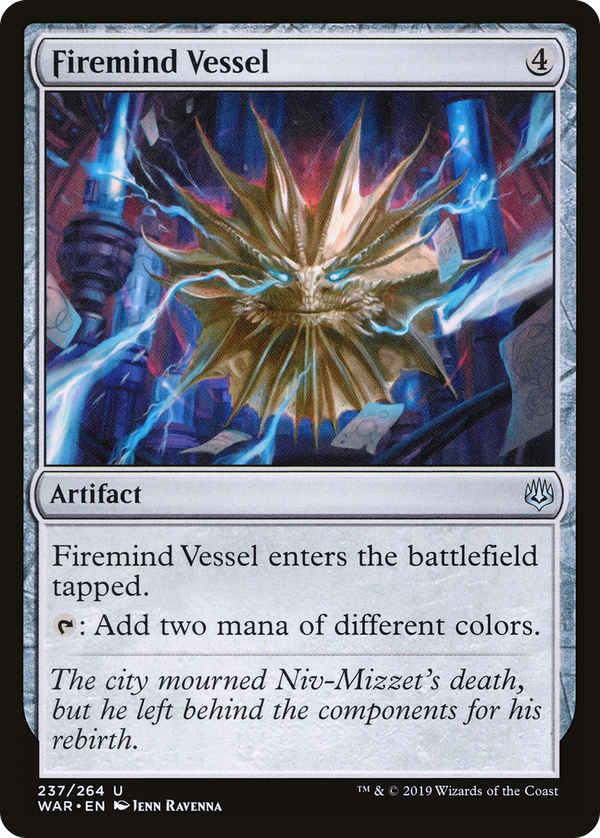
Rules text
 : Add two mana of different colors.