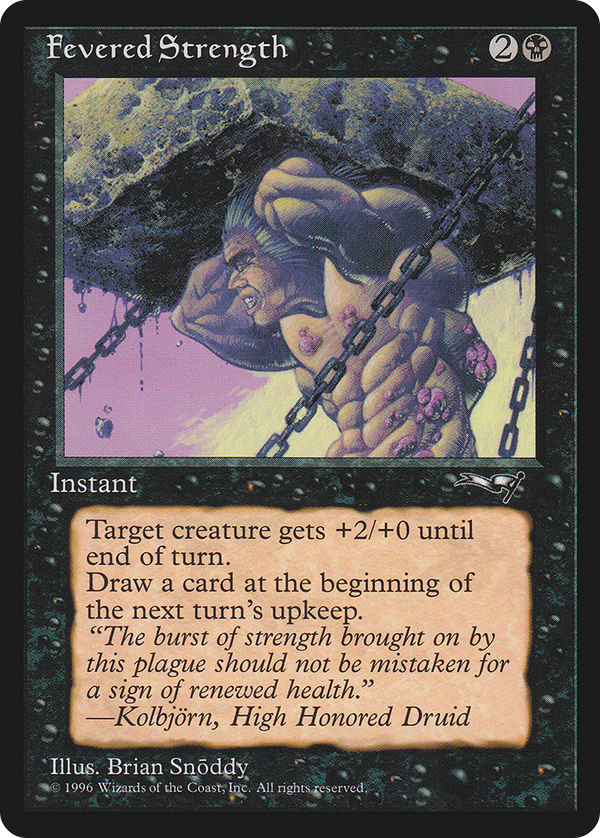
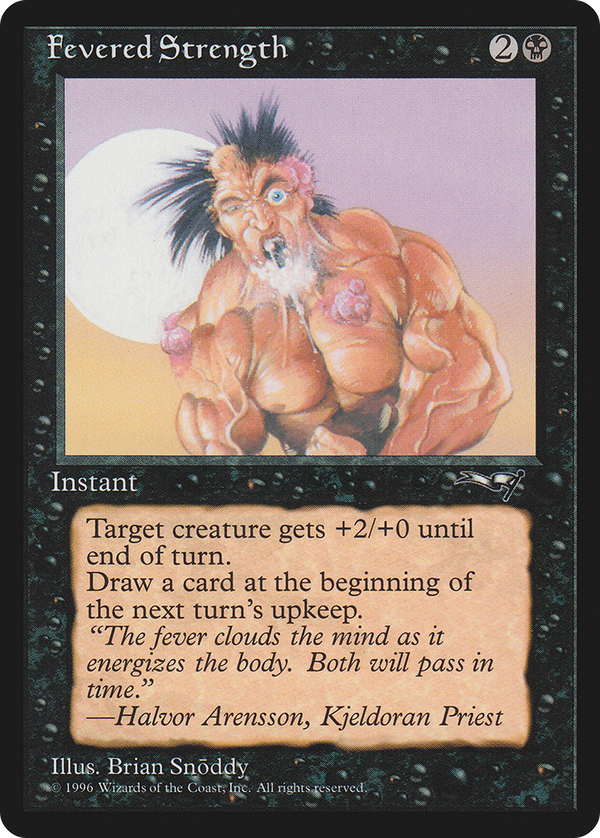
Fevered Strength


At three mana, +2/+0 is a poor rate on its own: the bulk of the cost is buying the cantrip, with the pump as a small rider. That framing explains the timing clause, which is where the real balancing lives. The reward never arrives on the turn you spend the mana. Pump your attacker during your own combat and the draw waits for the opponent's upkeep; pump a blocker on their turn and the draw lands on yours. Either way, the replacement card shows up past the point where it could shape the decision that earned it, so the delay costs you information and tempo, not the card itself. The only window to deny the draw is before resolution: kill the creature in response and the spell loses its lone target, fizzling entirely, so the delayed trigger is never created. Once the spell resolves, that trigger is locked in: destroying the now-bigger creature afterward, or sweeping the board two turns later, does nothing to the card already promised to a future upkeep. An instant that drew on the spot at this rate would simply be a stronger, more flexible play. By pushing the draw one upkeep out of reach, the design softens an effect it would otherwise have to price higher: a clean example of how older sets leaned on delayed triggers to make a marginal pump pay for a cantrip without becoming a snap-include tempo tool.