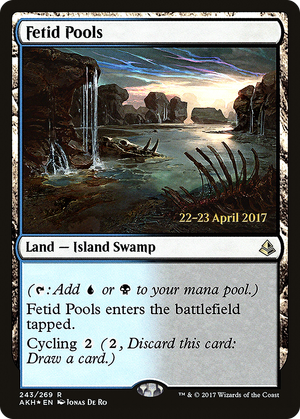
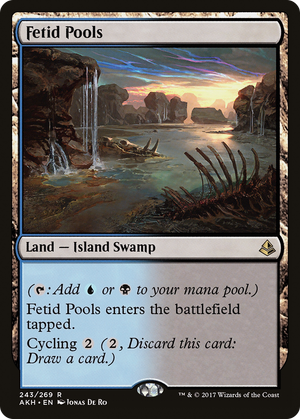
Fetid Pools
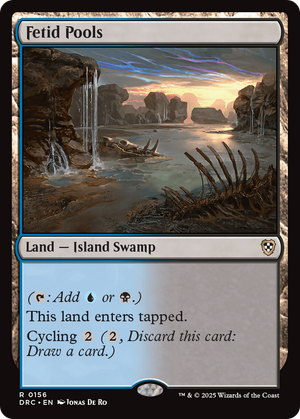
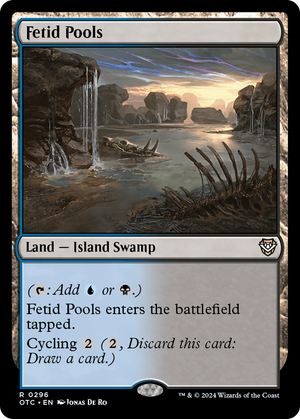
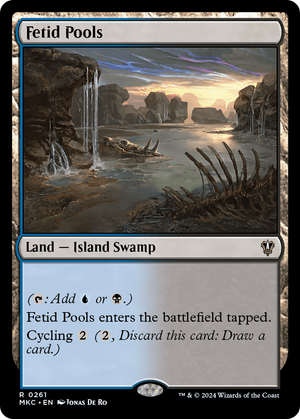
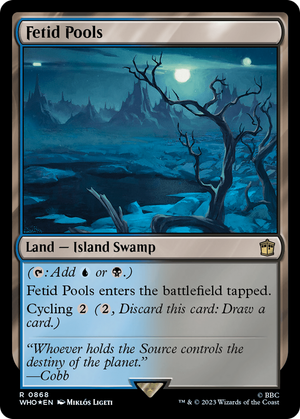
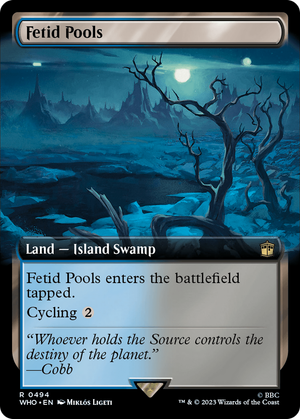
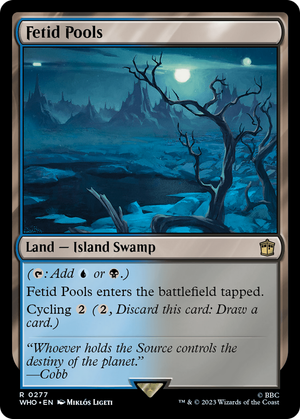
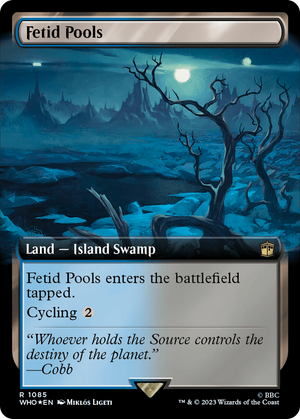
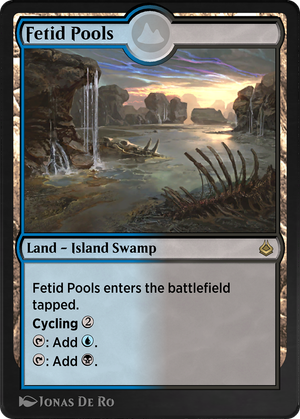
The design here is one card slot doing two jobs, sorted by what the game actually deals you. Early, it fixes blue and black; later, when the top of your deck keeps offering more lands than you can profitably play, you pay two to discard it and draw fresh instead. That second mode explains why a deck can afford a deep count of these: a plain tapland is fine in an opening hand (turn one, tapped, no cost) but rots into a wasted draw once the game goes long, exactly the moment cycling converts a redundant copy into a live card. The bill comes due as tempo. As a land it always enters tapped, so committing it means surrendering a turn of mana. The cycling fee is real friction on turns when two mana is most of what you have; it is nearly free once surplus mana is lying around, which happens to coincide with when flooding hurts and the option is worth the most. The two modes never combine: cycle it and it goes straight from hand to graveyard, never touching the battlefield, so the tapped clause only bites when you keep it. What the pattern resolves is the oldest weakness in a mana base, the dead-draw land, without asking the deck to thin its dual sources. Not free fixing, not a free cantrip: a land that declines to be a blank.
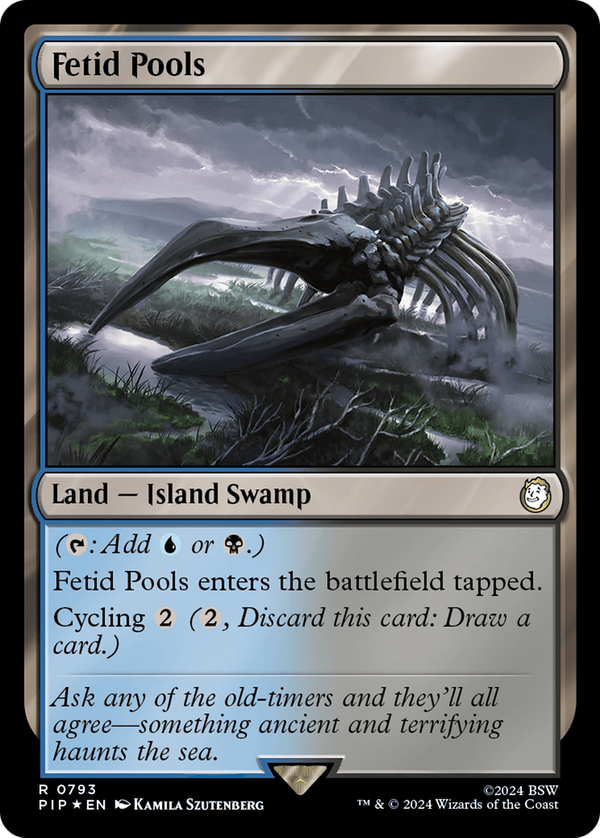
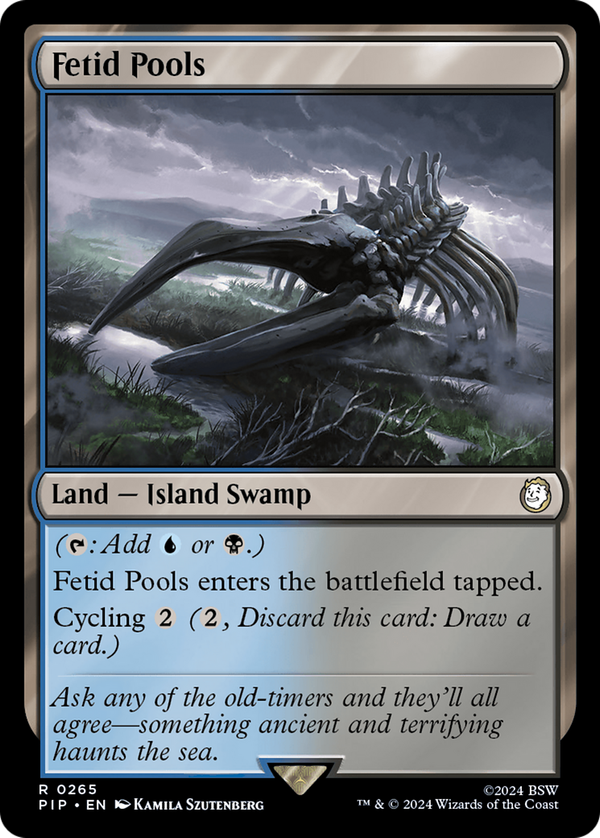
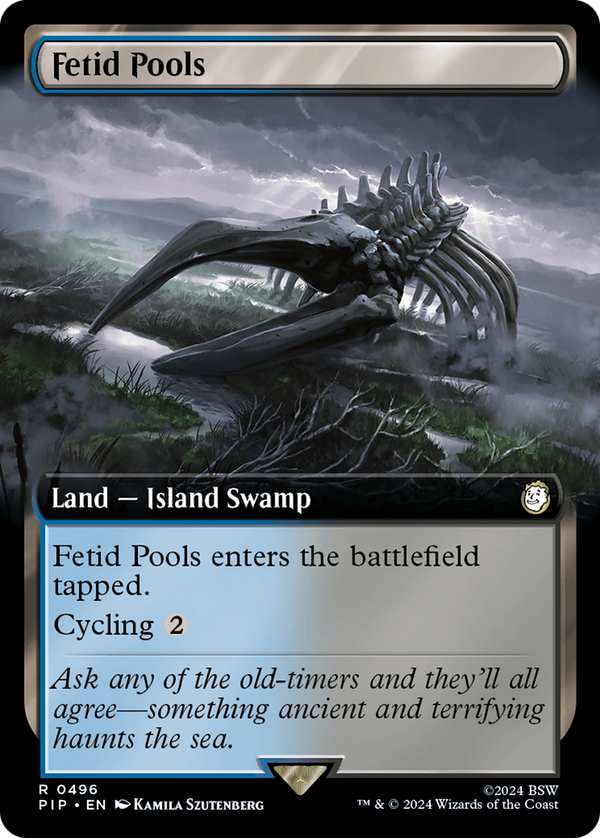
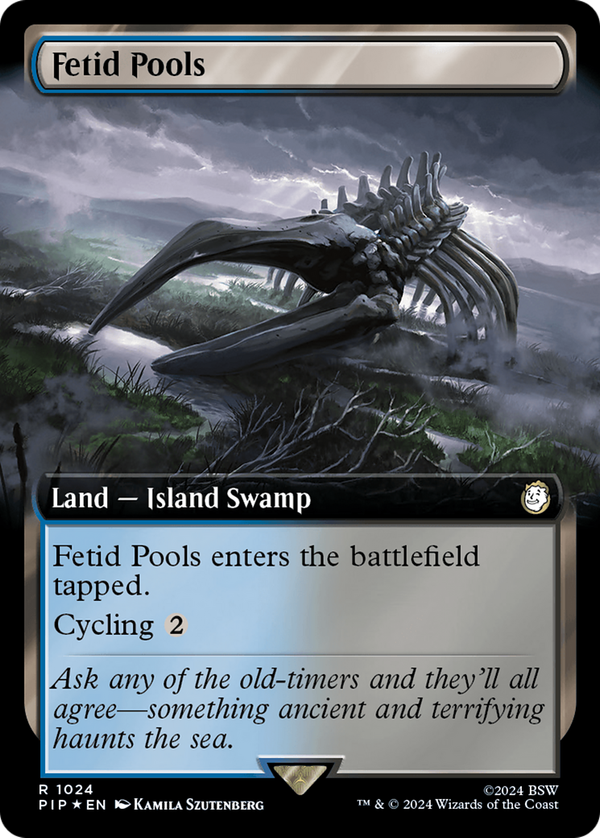
Rules text
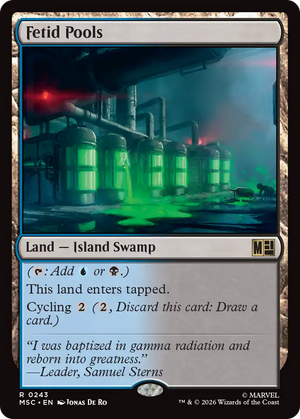
 : Add
: Add  or
or  .)
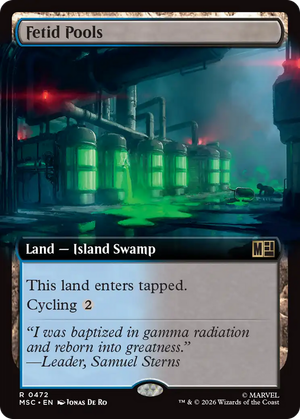
This land enters tapped.
Cycling
.)
This land enters tapped.
Cycling  (, Discard this card: Draw a card.)
Format Status
More formatsFewer formats
Other printings
- Marvel Super Heroes Commander#472
- Marvel Super Heroes Commander#243
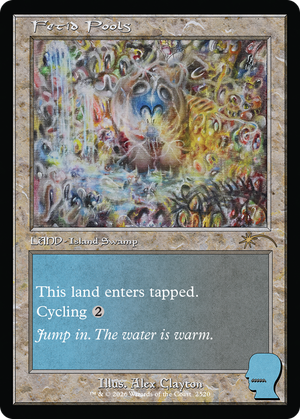
- Secret Lair Drop#2520
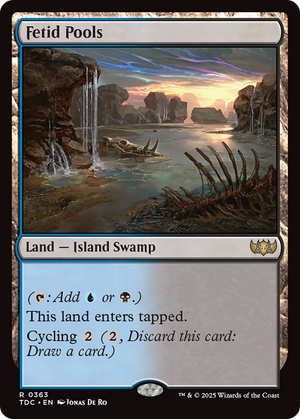
- Tarkir: Dragonstorm Commander#363
- Aetherdrift Commander#156
- Outlaws of Thunder Junction Commander#296
- Murders at Karlov Manor Commander#261
- Doctor Who#868