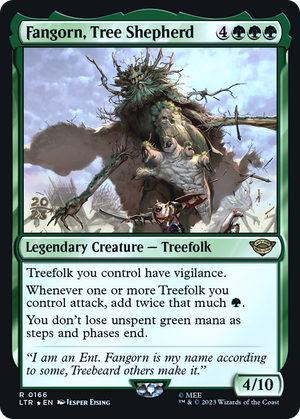
Fangorn, Tree Shepherd


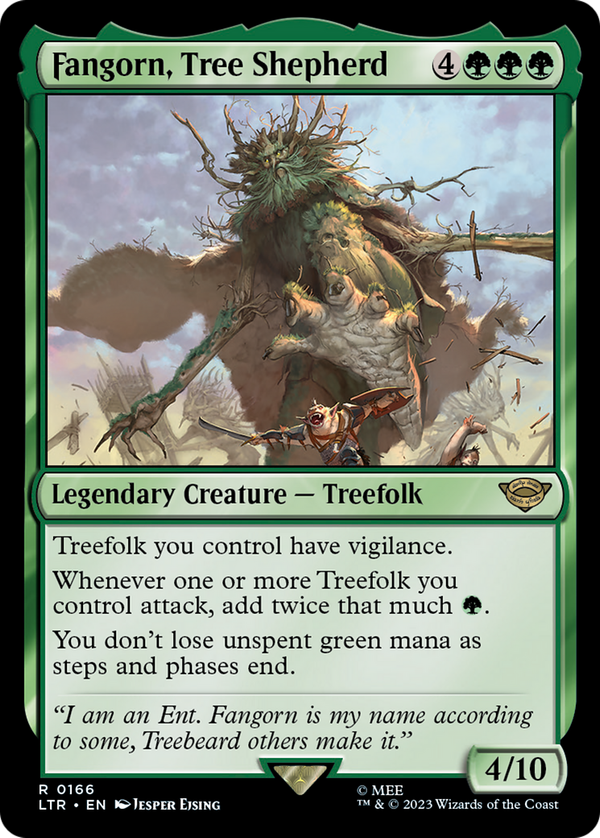
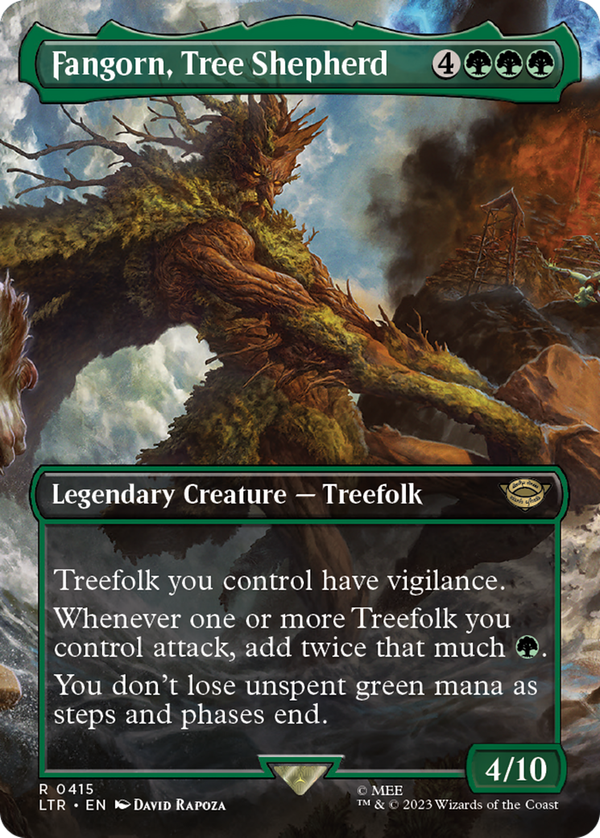
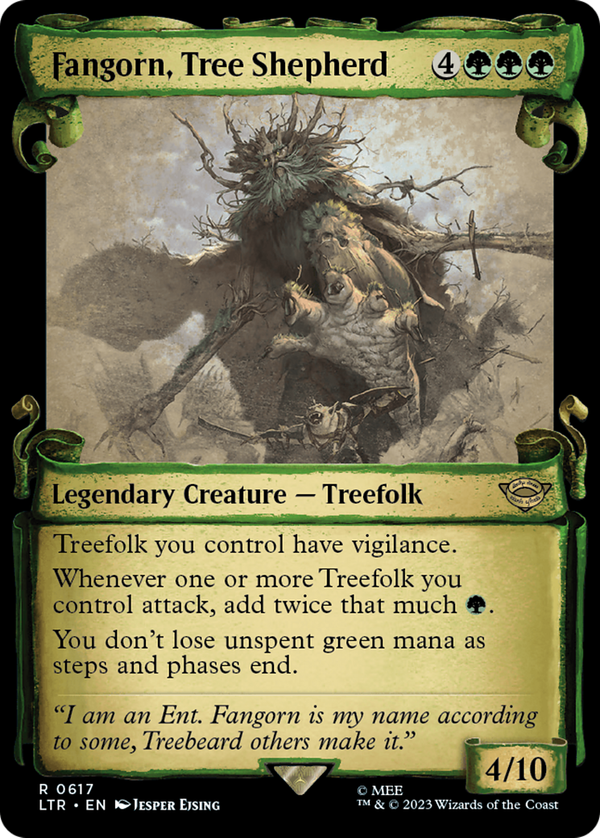
A 4/10 body is the tell: this is a wall that swings, built to survive the crackback that vigilance invites. The green engine is the real architecture. Most attack-triggered ramp hands you mana that evaporates when the combat step closes, useless unless you have instants to spend it on during declare-attackers. Fangorn removes that constraint by keeping unspent green pooled across steps and phases, which turns a battlefield of Treefolk into a sorcery-speed payload: attack, generate two green for every Treefolk swinging, then dump the whole reservoir into a second main phase. Note the shape of that trigger. It does not double what the creatures themselves tap for; it reads the number of attacking Treefolk and adds green worth twice that count, so the ramp scales with how wide you go, not with how much mana your board can already produce. Gating it to Treefolk keeps the payoff tied to a board you were already committing to combat rather than any go-wide token plan. The mana persistence is the piece doing the structural work, converting a temporary combat windfall into durable resources the way certain rituals that leave mana in your pool between spells enable payoffs a standard mana-emptying rule would strand. Vigilance on every Treefolk closes the loop: the whole squad can attack for mana and still stand back to defend, so the engine never forces a choice between pressure and safety. The ceiling is set by how much green you can spend at once, not by how hard the creatures hit.
Rules text
.
You don't lose unspent green mana as steps and phases end.