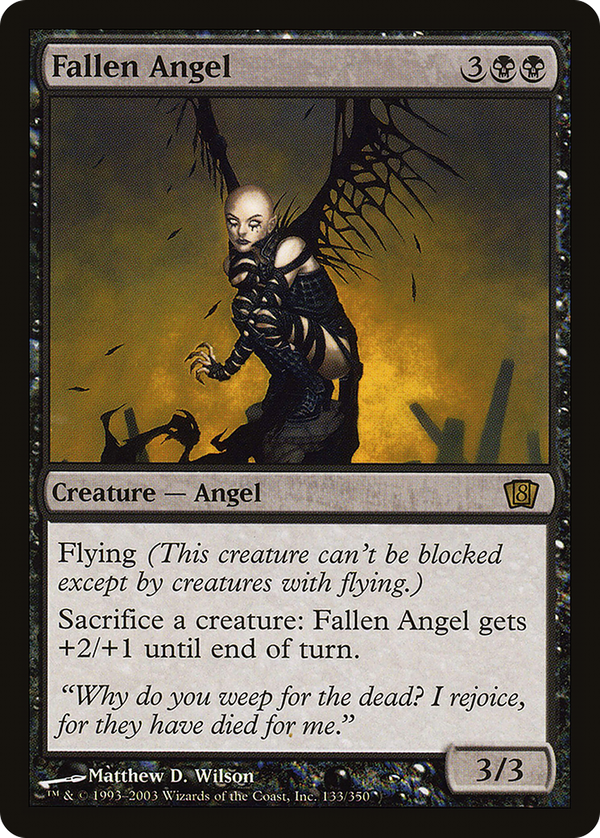
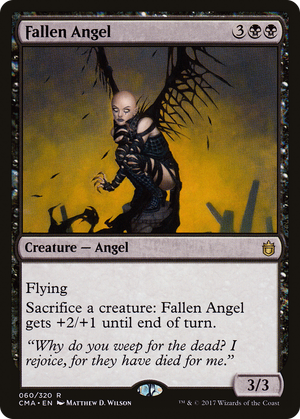
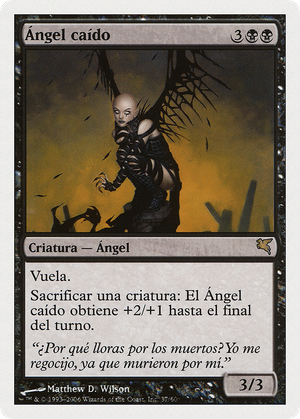
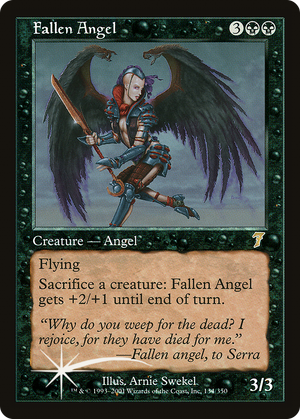
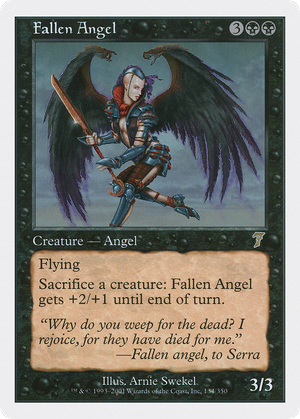
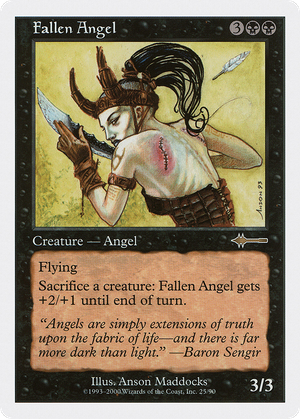
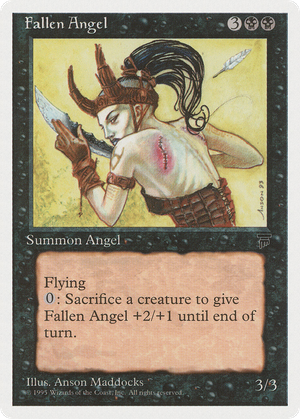
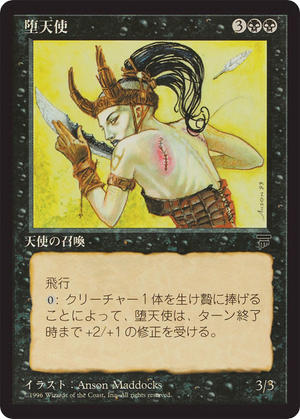
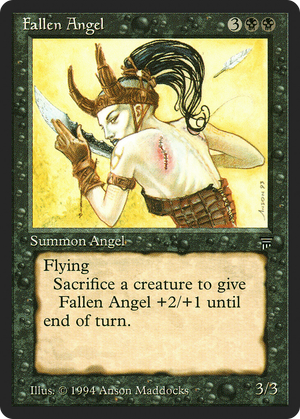
Fallen Angel


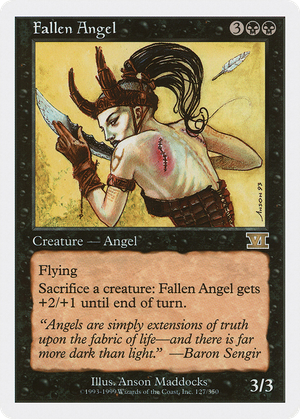
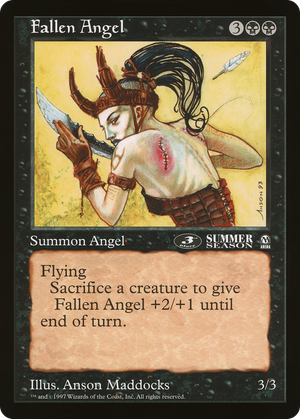
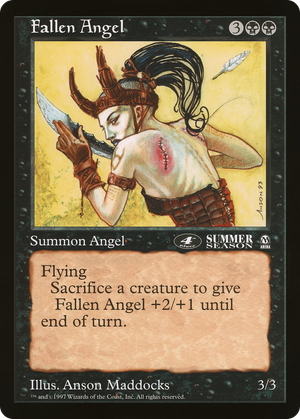
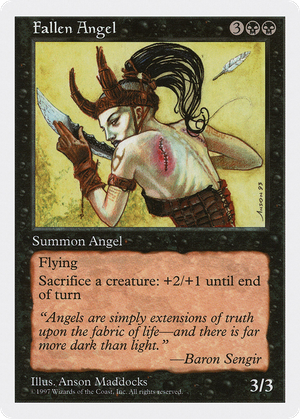
The earliest expression of an idea Magic has returned to dozens of times since: the sacrifice outlet stapled to a finisher. Before there was a name for aristocrats, before Carrion Feeder or Viscera Seer codified the cheap sac-outlet-as-deck-glue, this was the card that asked you to feed your own board to it. The build collapses two roles onto one body, and that is what makes it historically interesting: it is a sacrifice outlet (the half that mattered for the recursion shells built around the period's self-returning creatures, the Nether Shadow and Ashen Ghoul that climbed back out of the graveyard), and it is the payoff (a flying clock that grows out of its own activations). Modern design has long since separated those jobs across two cards, because pricing both on one body either makes the outlet too expensive or the payoff too cheap. A five-mana 3/3 was the tax for getting both at once while the design language was still being written. What it demonstrated is that black creatures could be priced around eating other creatures, and that the resulting engine would be strong enough to organize a deck. Every aristocrats commander, every Blood Artist shell, every Nantuko Husk variant is downstream of the question this card asked first.