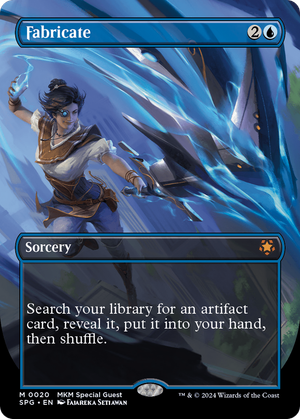
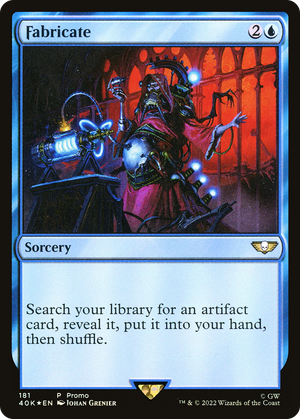
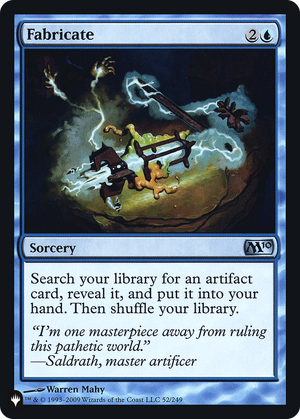
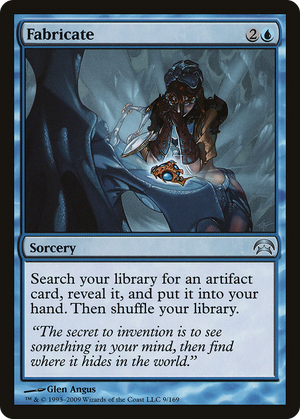
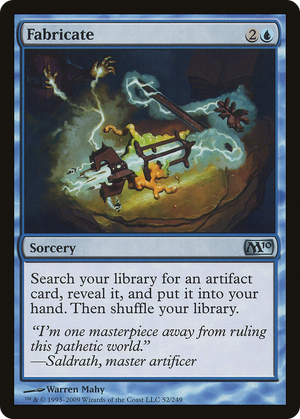
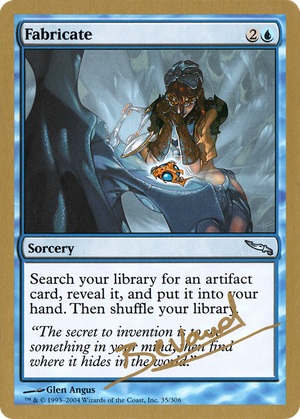
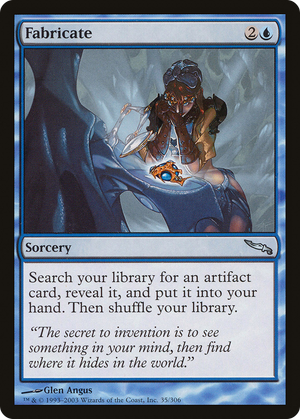
Fabricate


Tutoring for an artifact at three mana asks a specific question: how much is consistency worth when you are paying both the search cost and the artifact's cost afterward? The answer depends entirely on what sits at the end of the search. As a tutor with a card-type restriction it looks slow next to the unconditional black variants, but that framing misses the point: when artifacts were the entire toolbox, the gap between drawing your combo piece and not drawing it decided games. The shuffle clause matters less than the reveal: you commit publicly to a plan, which is the tax a tutor-to-hand pays for being cheaper and less conditional than digging blind. What keeps it relevant across eras is that the artifact card pool never stops growing, and a single card that fetches any of them scales with every new printing. A set of one-of artifacts that would each be too narrow to maindeck becomes a virtual toolbox of singletons reachable on demand. That is the tension it resolves: it converts deck slots from raw copies into options, trading the certainty of multiples for the flexibility of finding exactly the piece a board state requires. The blue identity is the real cost here, not the mana: it slots this into control and combo shells rather than the artifact-aggro decks that might want it most.