Eviscerator's Insight


The sacrifice clause is the whole design. Costed against a plain draw-two, this looks like a discount: black has always been willing to pay for cards, and here the payment is a body or an artifact you were often happy to lose anyway. Feeding a permanent to the graveyard while spending mana is a tempo cost, not a gain; the trick is that the clause turns that cost into a virtual refund by cashing in permanents whose usefulness has already expired. Token fodder, a spent artifact, a chump that has done its blocking: none of those were doing much on the board, so converting them into fresh cards loses far less tempo than the raw text implies. Instant speed sharpens the exchange, letting the sacrifice happen in response to removal, mid-combat, or on the crack-back turn when the creature was going to die anyway. Flashback then squeezes a second cast out of the same card, which means the sacrifice motor runs twice from one spell: once cheaply from hand, again for a heavier cost from the yard when there is another permanent to feed it. It sits in the long line of black draw that asks for a sacrifice rather than life, alongside Village Rites and Deadly Dispute, but the flashback back half is the wrinkle: it wants a deck that manufactures disposable permanents on a schedule, so both halves of the card always find something to eat.
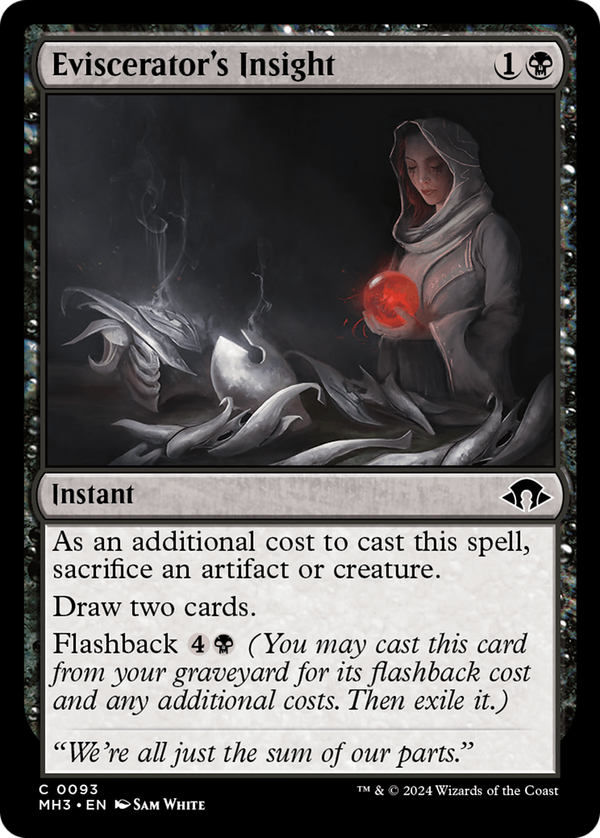
Rules text
 (You may cast this card from your graveyard for its flashback cost and any additional costs. Then exile it.)