Eshki Dragonclaw




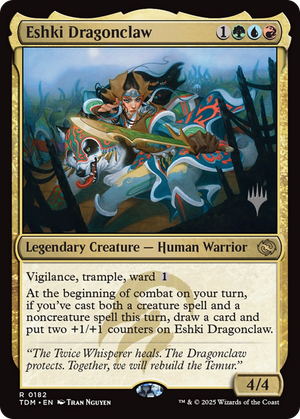
The condition on the combat trigger is the whole design puzzle: it only fires if you have already cast both a creature spell and a noncreature spell this turn, which turns a 4/4 with vigilance and trample into a deckbuilding constraint dressed up as a body. This is the classic "spellslinger meets tempo" tension, but built around a curve most spells-matter cards ignore. Pure spells decks rarely want a creature spell on the same turn as their burn or draw; pure creature decks rarely want to hold up a noncreature spell. Eshki asks for both, every turn, and pays out a card plus two +1/+1 counters when you deliver, which means the payoff scales as fast as the demand does. Vigilance keeps it attacking without surrendering the turn, trample makes the growing body a real clock rather than a chump-magnet, and ward is the tax that keeps the whole growing investment from evaporating to a single removal spell. The interesting part is the sequencing it rewards: because the trigger checks at the beginning of combat, the payoff belongs to players who spend their main phase deploying a creature and a spell before ever swinging, not to those who durdle and pass. It is a value engine whose fuel is the exact play pattern most Temur decks are already trying to execute, rewarding tempo without asking you to abandon interaction.
Rules text
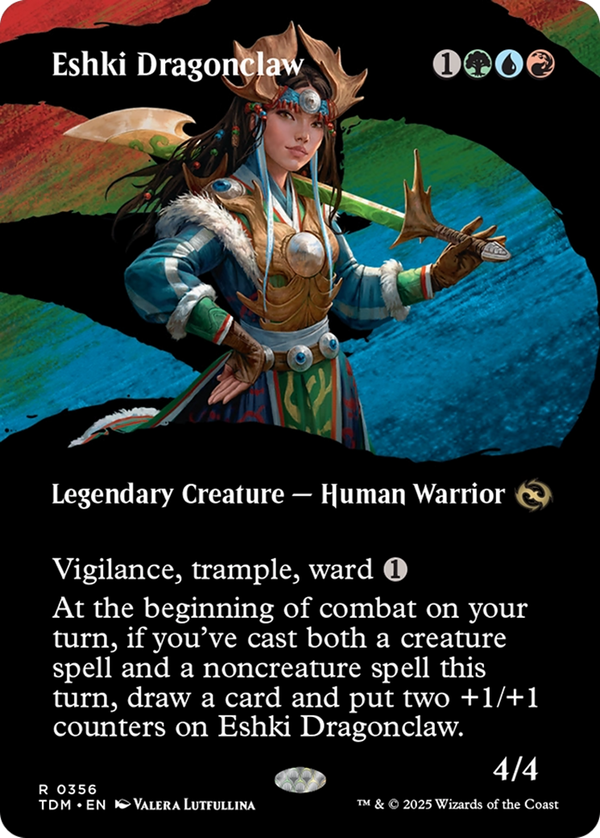
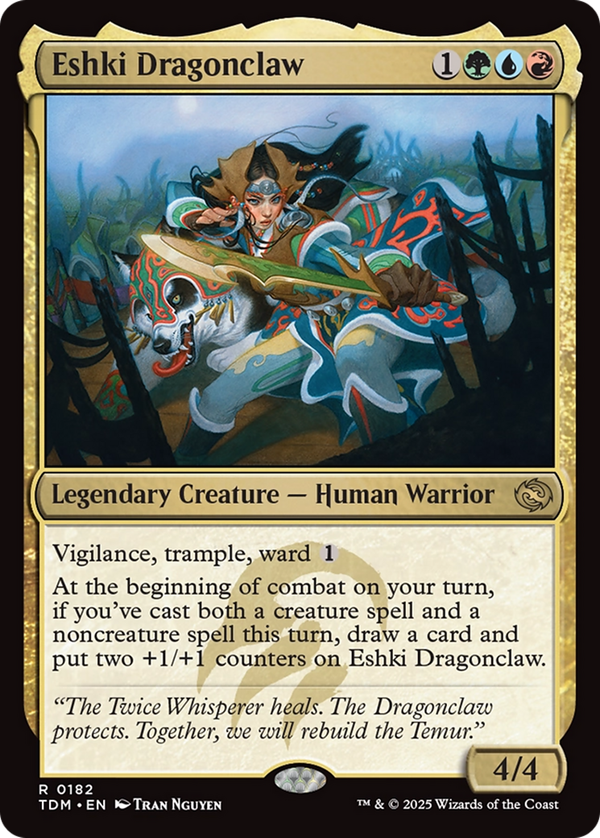
At the beginning of combat on your turn, if you've cast both a creature spell and a noncreature spell this turn, draw a card and put two +1/+1 counters on Eshki Dragonclaw.