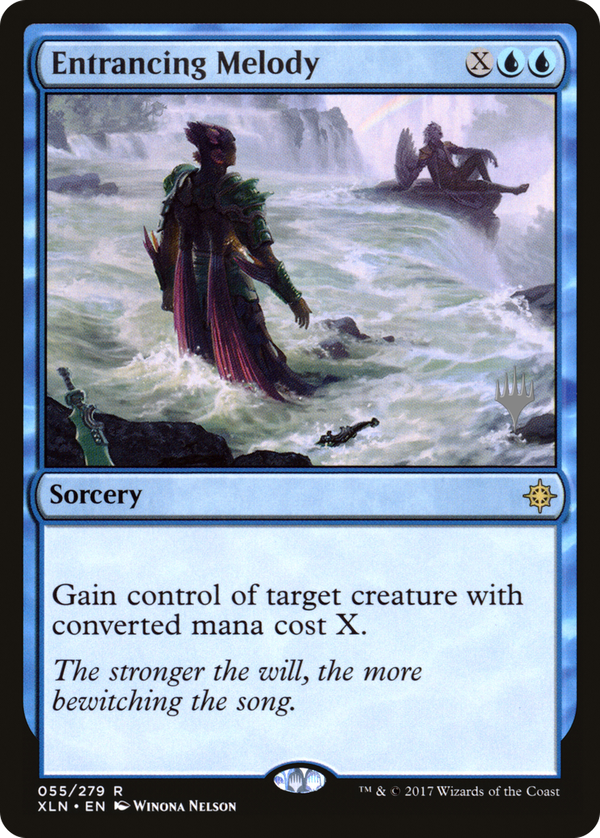
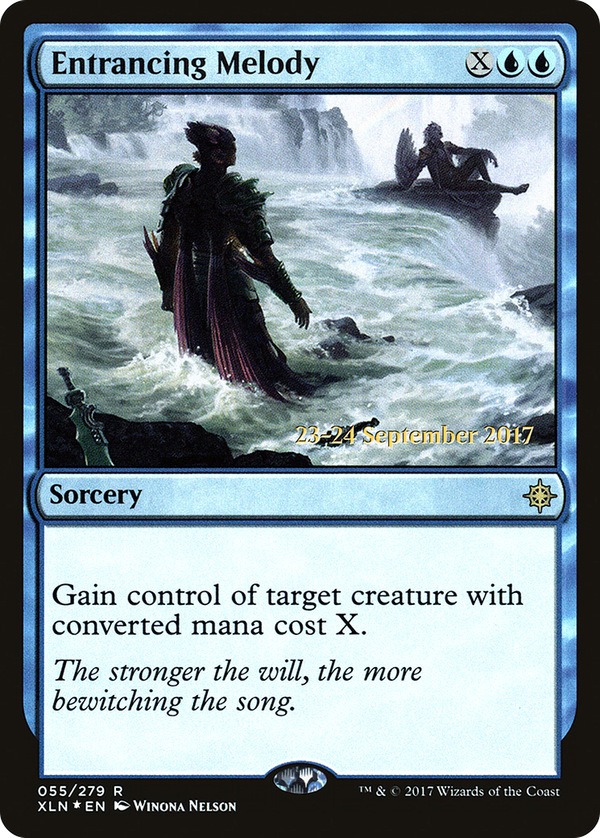
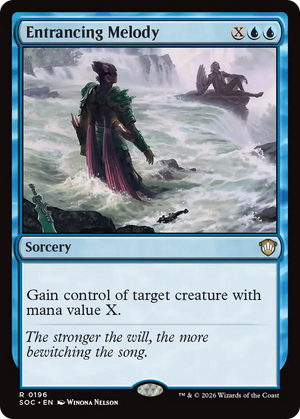
Entrancing Melody


Mind control has always been priced as a tax on commitment: the older blue thefts asked five or six fixed mana and bolted on upkeep payments or random discards to make the theft hurt. This trades all of that for a single dial. The X in the cost names the exact mana value you can steal, which makes the spell a precision instrument rather than a blunt one: it costs almost nothing against a one-drop and scales to the size of whatever it points at, but it can only ever take one rung of the curve at a time. That restriction is what keeps an unconditional permanent steal from being oppressive. You cannot float a generic blue threat and answer whatever the opponent develops; you commit your mana when you cast it, locking onto a creature whose value you have already seen, with no flexibility if the board changes after. The design lives in that gap between elegance and rigidity: it is the cleanest theft effect blue has, and the easiest to play around, because an opponent who knows your hand can simply hold a creature one mana value off your tempo plan. As a sorcery it also surrenders the ambush window that made earlier control-stealing tricks dangerous on the stack, asking you to plan the heist a full turn ahead.