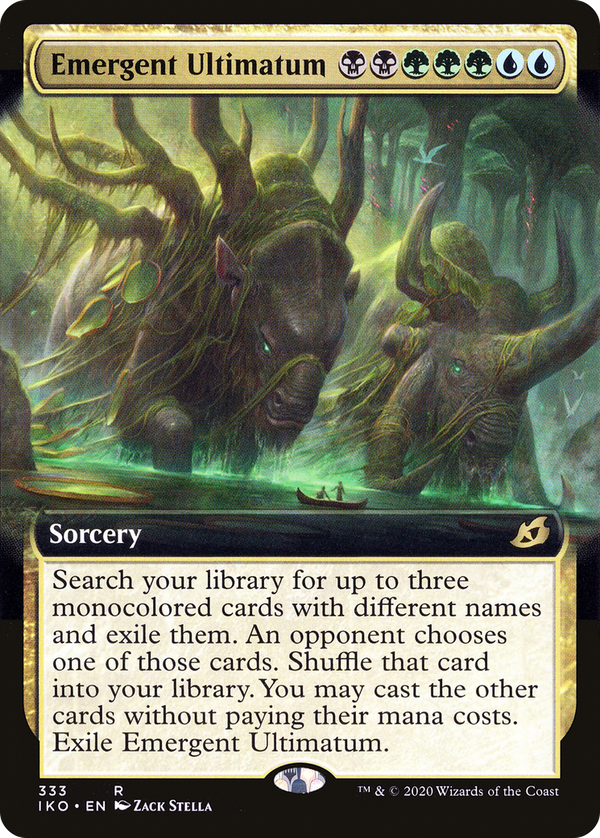
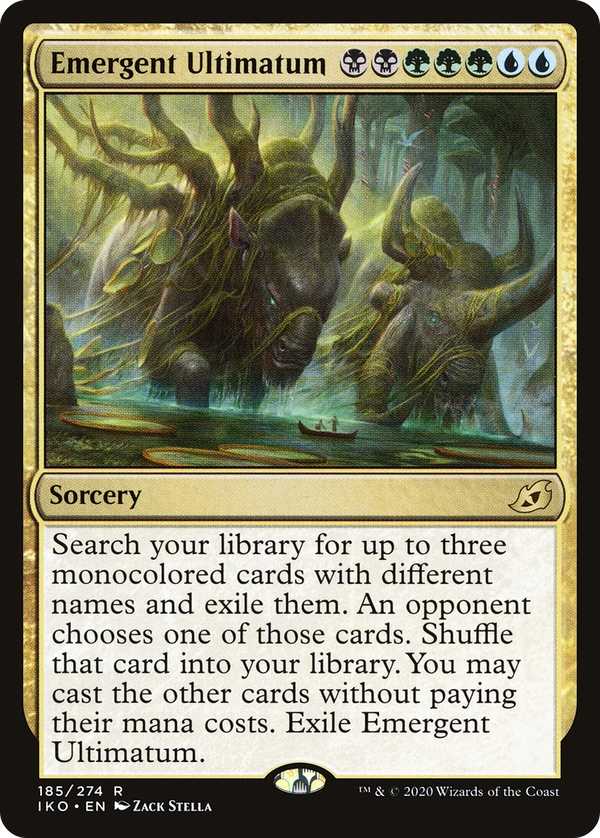
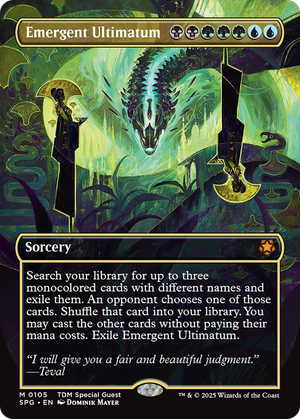
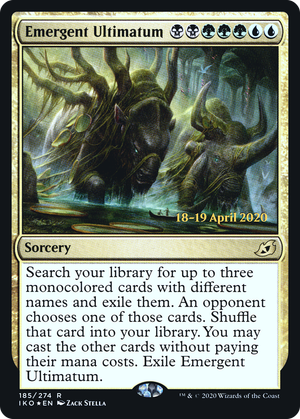
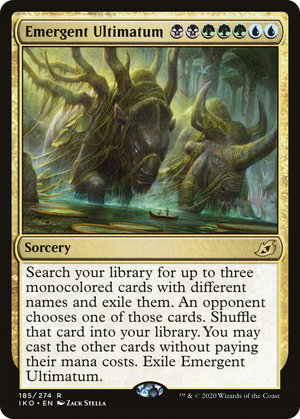
Emergent Ultimatum



The genius of this design is that it hands the choosing to your opponent and still tilts the outcome in your favor. You assemble a package of three monocolored cards, and the concession is real: whichever one your opponent fears most gets shuffled back into your library, off the top and out of reach for the turn. So the trick is never to build a package around a single bomb; it is to build three cards your opponent cannot afford to leave you, so that surrendering any one of them still hands you a game-ending pair. The BUG color identity is doing structural work here, restricting the pool to monocolored cards while giving you access to the three colors most likely to stock a stable of free finishers. What separates it from a straight tutor-and-cast effect is the negotiation baked into the resolution: the "up to three, different names" clause and the opponent's veto turn deckbuilding into a bluffing exercise, where the ideal three sit close enough in threat level that no single denial matters. The self-exile clause keeps it a one-shot, so it is a payoff and not an engine: you get exactly one negotiation, and you want to have rigged it before the game started. It rewards the kind of player who thinks about which card an opponent will surrender, then builds a package where every surrender is a losing one.