Elspeth Conquers Death


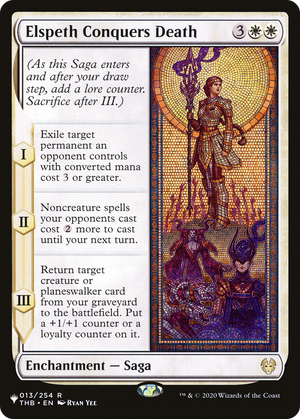
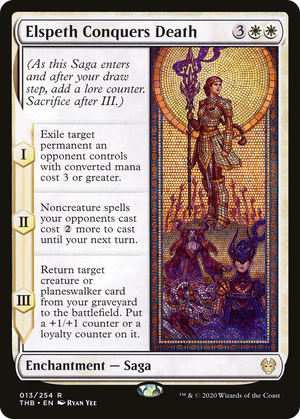
What made the four-mana planeswalker era so oppressive was the compounding: a permanent that answered a threat, protected itself, and generated value while your opponent tried to claw back. This Saga takes that same value curve and stretches it across three turns, front-loading the answer and back-loading the payoff. Chapter I is the exile clause that gives the card its spine, hitting any expensive permanent an opponent controls: the planeswalker, the bomb, the resolved threat that other white removal of the era struggled to touch cleanly. Chapter II buys a turn of insulation, taxing the opponent's noncreature spells while you wait out the timer, a soft tax that also blanks a board wipe or a removal spell aimed back at you. Chapter III is the closer: it reanimates a creature or planeswalker from your graveyard with a counter on top, meaning the permanent you exiled in Chapter I can be traded up for something better you lost along the way. So the card resolves as a clean two-for-one, exiling one permanent and returning one of your own, with Chapter II as insulation rather than card advantage. The design trick is that the Saga's own tempo cost (three turns to fully resolve) doubles as its balancing mechanism; a control deck can afford the wait, an aggressive deck cannot. It reads as removal, plays as attrition, and rewards a graveyard worth returning to. The best midrange white cards of its era all pointed here.
Rules text
 more to cast until your next turn.
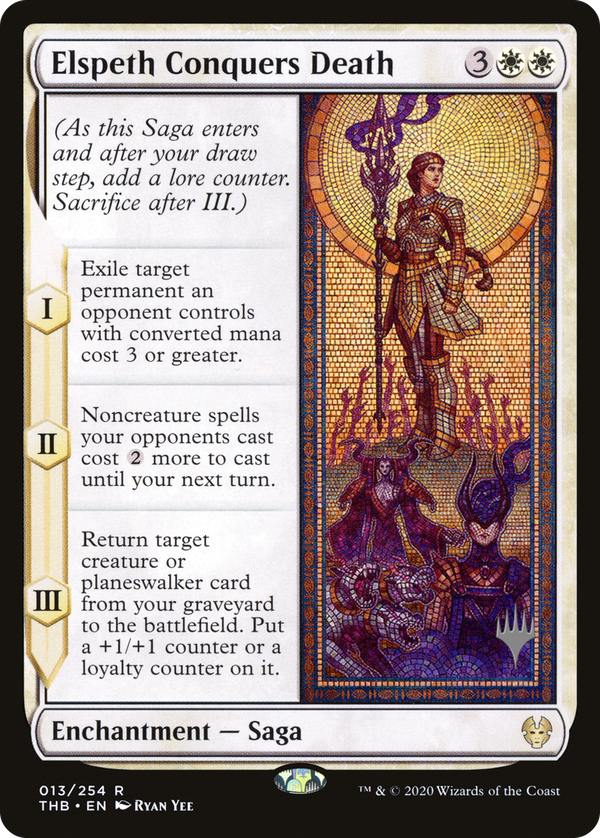
III — Return target creature or planeswalker card from your graveyard to the battlefield. Put a +1/+1 counter or a loyalty counter on it.
more to cast until your next turn.
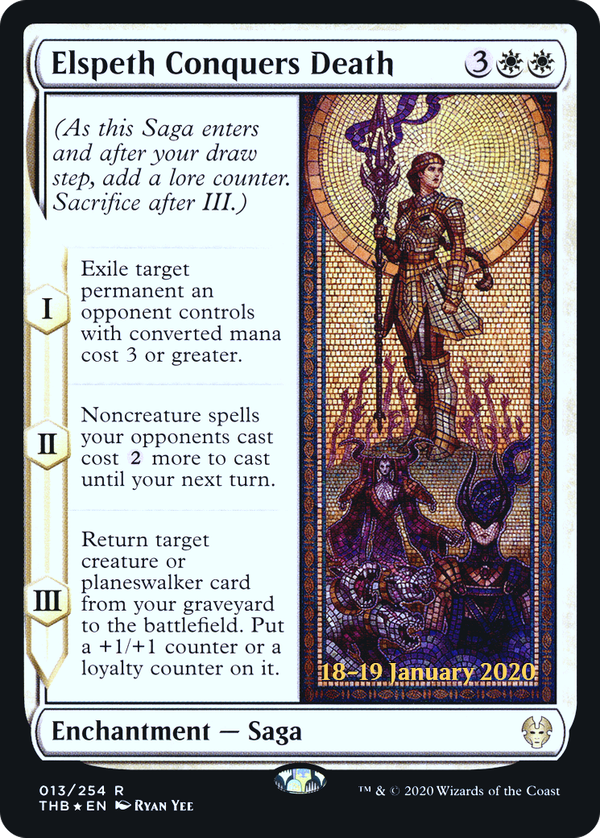
III — Return target creature or planeswalker card from your graveyard to the battlefield. Put a +1/+1 counter or a loyalty counter on it.