Elder Brain


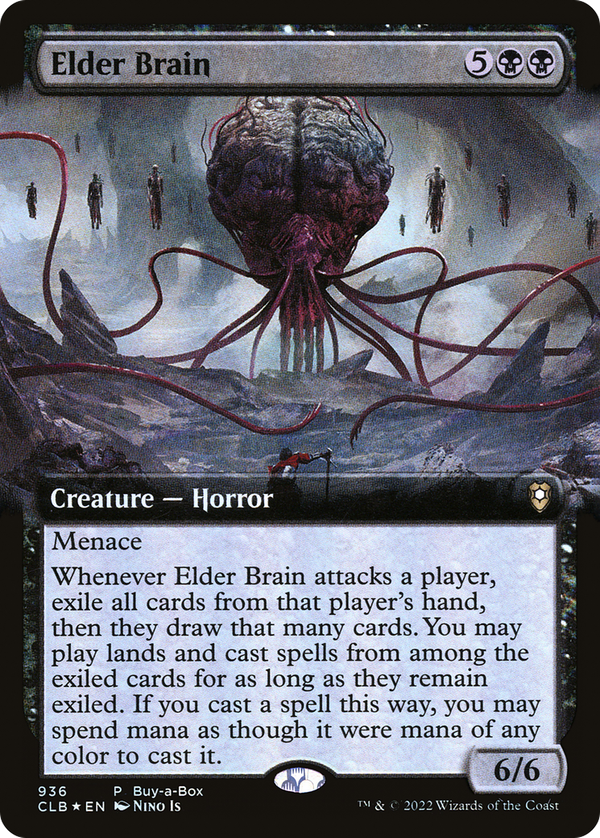
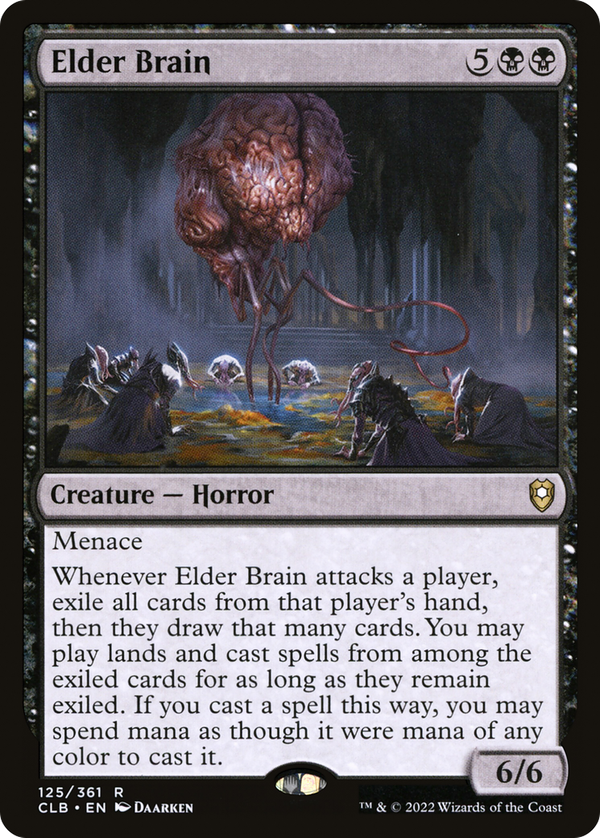
The theft is dressed up as symmetry, and that misdirection is the whole design. Exiling a player's hand and letting them redraw the same number reads, for a beat, like a fair trade: you gnaw their grip clean, they refill. But the redraw is a decoy. The cards you exiled are the ones you keep, and the clause that lets you play lands and cast spells from among them (spending mana as any color) turns their entire hand into your battlefield resources. Every attack strip-mines a different opponent's plan and hands it to you, color-agnostic and immediate, while the victim rebuilds from a hand that no longer holds the answers they were sitting on. Where the misdirection turns lethal is the timing: the ability fires on attack declaration, so the strip resolves the moment the swing is announced, whether or not a body ever connects. Menace on the 6/6 frame is not about landing the trigger; it is about surviving to repeat it, taxing two blockers per swing and pricing every combat step as a bad trade. What balances it is the ceiling itself: seven mana buys a creature that has to attack to do anything, so it sits inert on defense and demands a turn cycle before it earns its cost. The reward tracks how loaded your opponents' hands are, which makes it a punish card for the greedy and a whiff against an empty grip. It weaponizes information asymmetry: the game's most private zone, forced open and repurposed as yours.