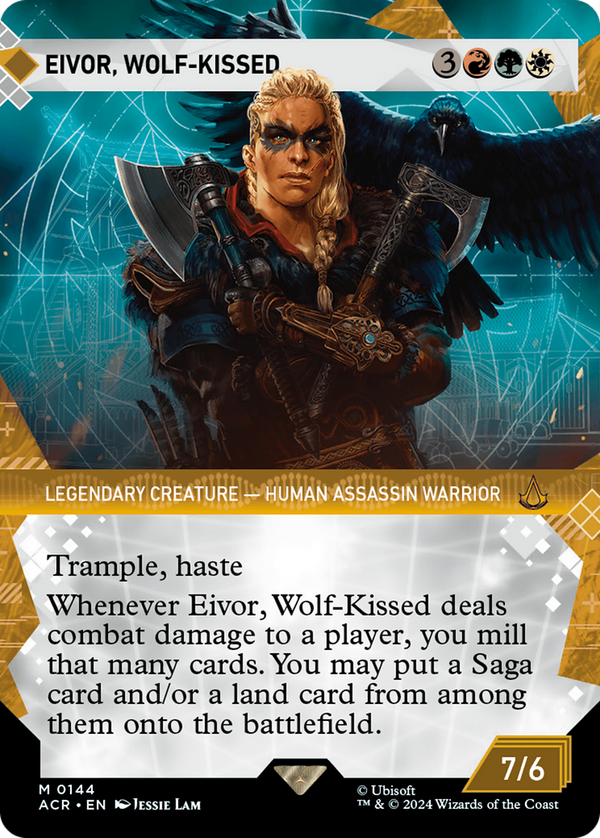
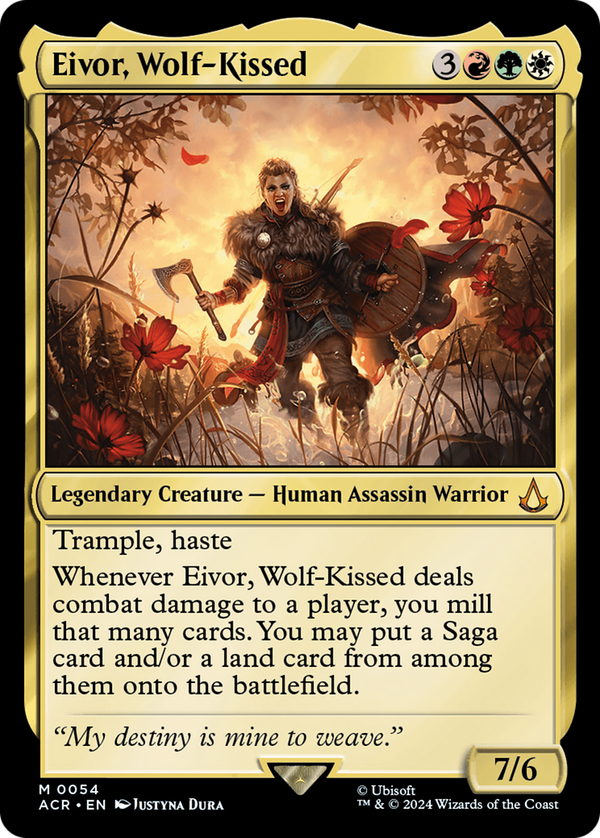
Eivor, Wolf-Kissed




Combat-damage mill is usually a self-mill engine dressed as a clock, and this design leans into that ambiguity by making the mill the payload rather than the incidental cost. A 7/6 with trample and haste is already a threat that connects on the turn it arrives, and the mill scales with exactly how much damage got through, so a wide open board doubles as a deep dig. The clause that matters is the free cheat: from those milled cards you may drop a Saga and a land straight onto the battlefield, no mana, no timing restriction beyond the trigger itself. That converts raw combat aggression into an engine that assembles a manabase and starts chapter-1 Saga triggers in the same swing. The tension is deliberate: the payoff wants high top-end and Saga density in the deck, but the aggressive body wants you racing, and the mill can just as easily bury a key card as reveal it. Compare the older Traverse-the-graveyard or dredge lines, which paid mana or life to fuel a graveyard; here the fuel and the reward are welded to the attack step, which means the card does nothing until it hits and does a great deal the moment it does. It is a build-around wearing a beater's stat line, and the interesting decisions live entirely in what you seed the top of the deck with before you swing.