Duelist of the Mind


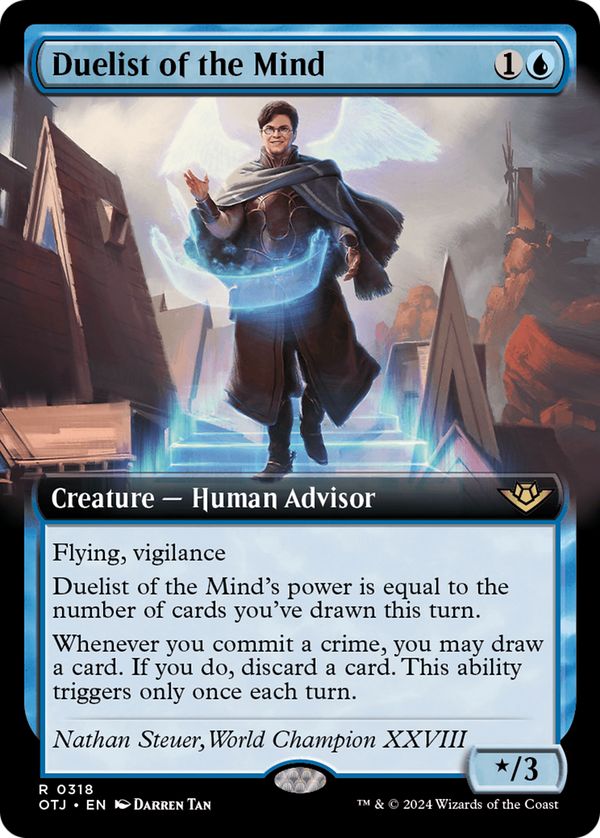
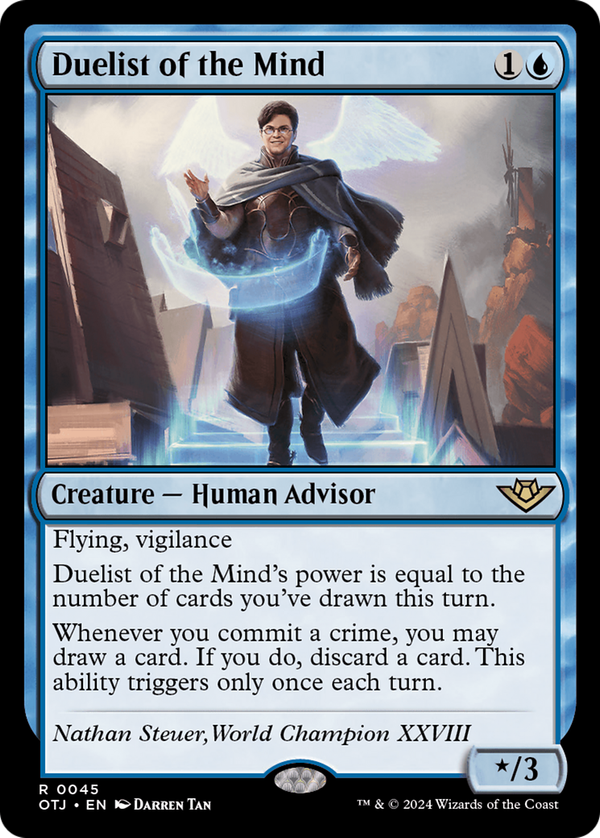
The static toughness of 3 is what turns this from a fragile draw engine into a real threat: the power scales with a resource the deck generates anyway, but a fixed 3 toughness keeps the creature on its feet when the count resets to zero on a quiet turn. A single extra card puts it at two power; a busy card-advantage turn makes it a genuine clock, and vigilance means the swing costs nothing on defense. Draw-matters payoffs historically wanted you to sit back and refill; flying and vigilance pull the opposite direction, asking the creature to attack while the rest of the deck does the drawing. The crime trigger marks this as built for a specific kind of blue deck, one already aiming targeted spells and abilities at the opponent's board. Note the discipline: the loot fires only once each turn, so it rewards spreading small aggressions across many turns rather than dumping a hand of interaction at once, and the draw-then-discard is upside on two axes. It filters toward what the turn needs while still feeding the power count, since the draw resolves before the discard and cards drawn this turn stay counted. It is the uncommon blue two-drop that wants to be the beatdown, and the whole package points toward a tempo-forward controlling shell rather than the passive card-advantage engine this effect usually implies.