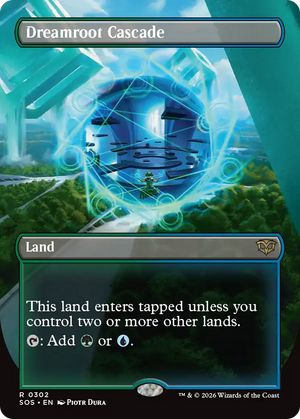
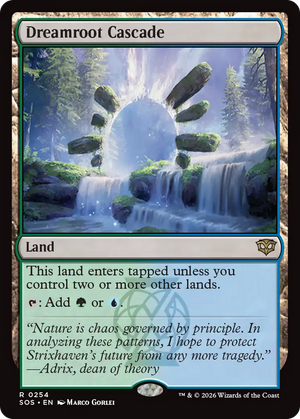
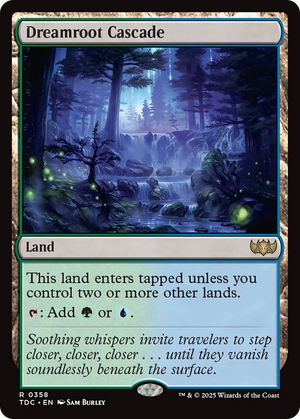
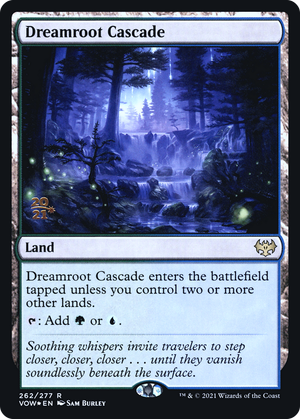
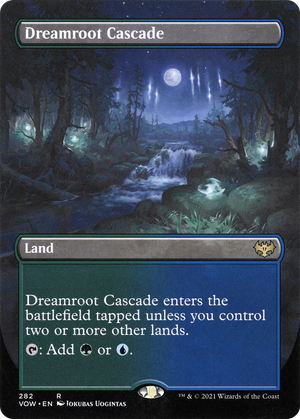
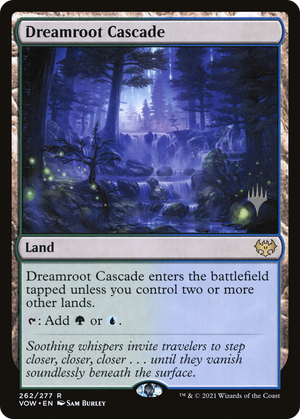
Dreamroot Cascade
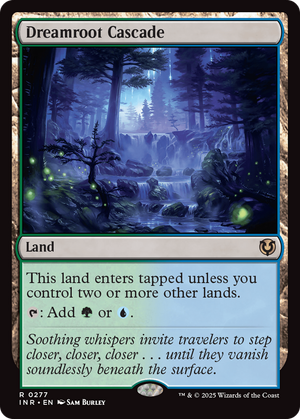
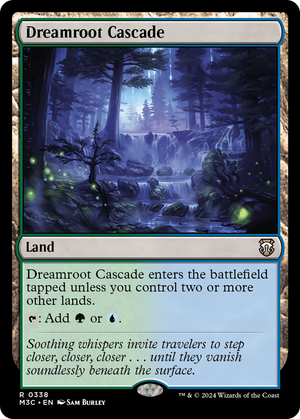
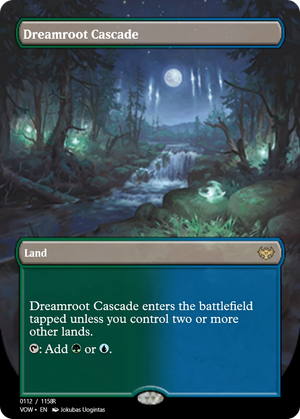
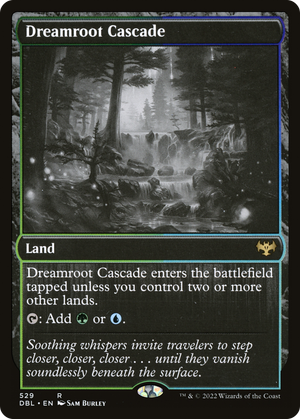
For years, dual lands forced a binary choice: enter untapped and take the damage the way the painlands do, or enter tapped and surrender the tempo the way the gainlands and karoos do. This land splits the difference along a different axis. The tap-in penalty is real, but it evaporates the moment you control two other lands, which means it only costs tempo in the opening turns and behaves as an untapped dual once the board has developed. That conditional does the tuning: it punishes the greedy first-turn drop while rewarding the deck that sequences its cheaper lands ahead of it. The green-blue pairing it serves has always leaned on ramp and card advantage over aggression, so a land that arrives tapped on turn one but untapped on turn three fits that slower clock rather than fighting it. As a cycle, these lands advanced a design principle Wizards had circled for a decade: fixing whose cost is paid in flexibility of timing, not in life and not in permanent tempo loss. The result is a dual that veterans drop without hesitation once a couple of lands are down, and one that quietly disciplines the opening hand into playing its lands in the right order.
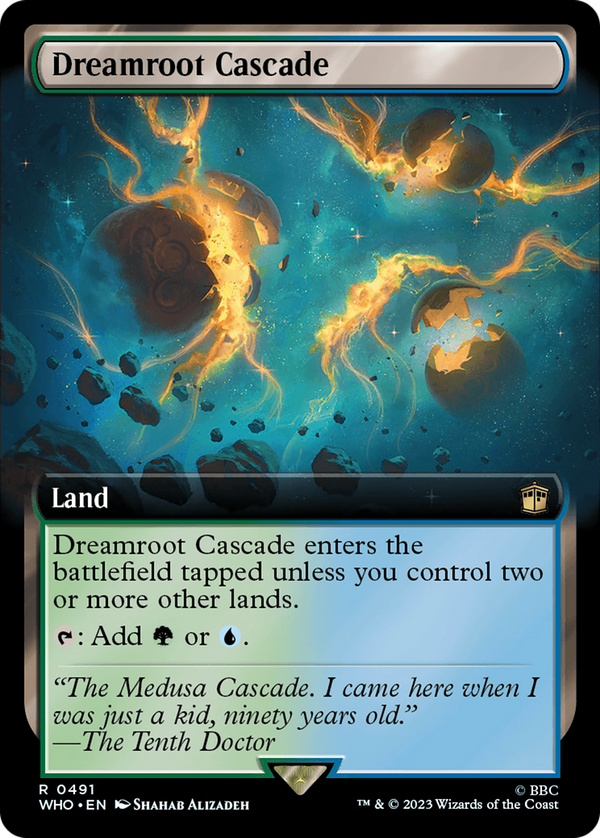
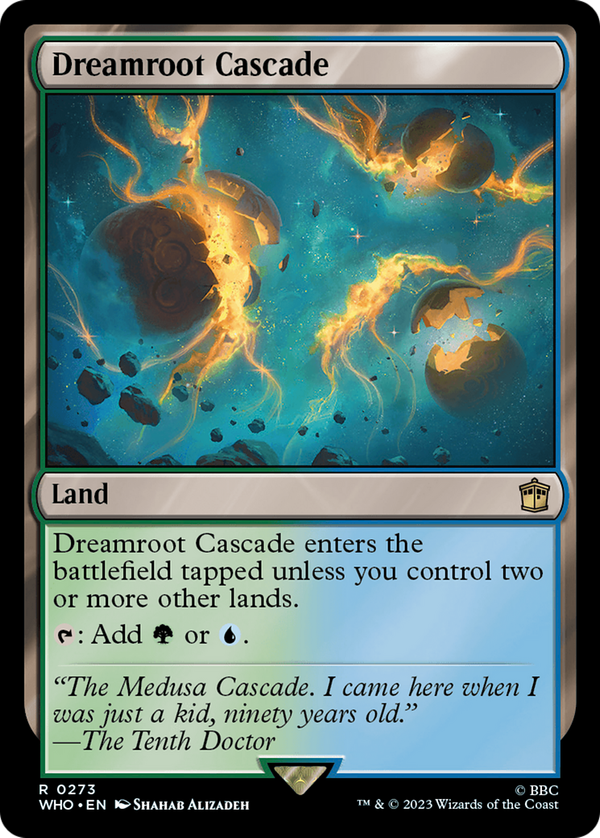
Rules text
 : Add
: Add  or
or  .
.