Dream Harvest


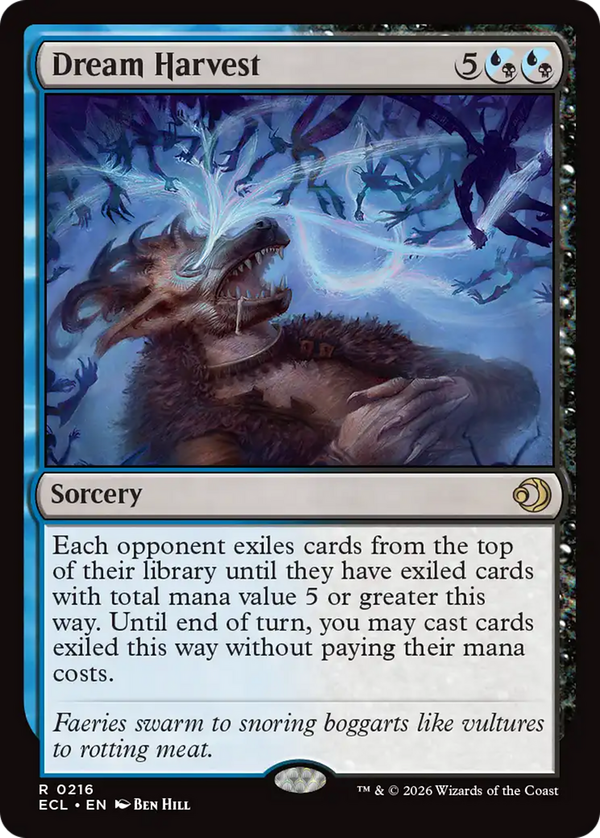
The gamble is the shape of the pile, and the pile is deterministic: the exile crawls down each opponent's library from the top and stops the instant total mana value crosses five, so a single expensive card ends the count on its own while a run of cheap spells hands you a fistful of small ones. What you get is whatever their deck happens to have stacked, in the order they stacked it, with no rummaging on either side. The free-cast clause is what makes the effect asymmetric in your favor: you pay nothing for the spells, so the colors on them and the mana in your pool are irrelevant, and the only cost is that the window closes at end of turn. That turns the real constraint into playability rather than payment. You can cast a stolen bomb without its colors, but you cannot cast the removal spell with no legal target, the aura with nothing to enchant, or the combo piece whose partner sits safely in its owner's deck. The seven-mana price buys access to a stranger's spellbook, but access is not utility: the card rewards the deck that can improvise with whatever falls out over the one hunting a specific answer. The hybrid pips let either half of the color pair foot the cost, a small concession to a spell whose entire proposition is spending big to gamble on someone else's contents.