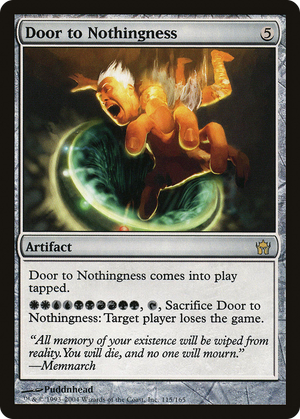
Door to Nothingness

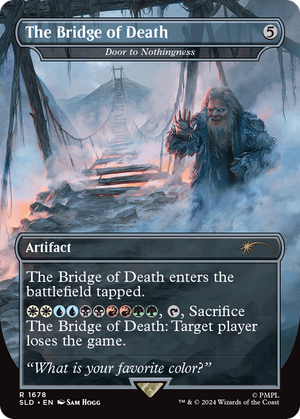
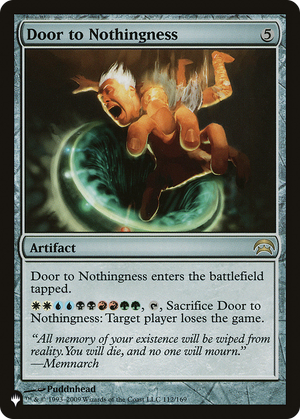
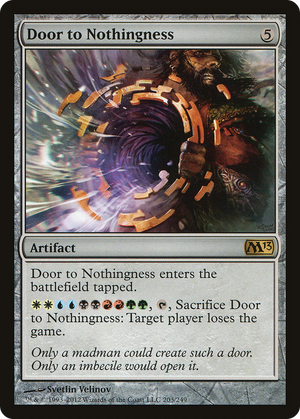
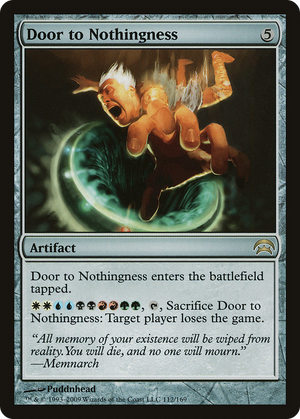
The activation cost is the entire design statement: ten pips, two of every color, on top of a tap and a sacrifice. Mana value of five gets the artifact onto the table, but nothing about that number tells you what it actually demands, which is a board that can produce WWUUBBRRGG on a single turn. That gap between casting cost and operating cost is deliberate. This is a win condition built as a puzzle, not a threat: the "target player loses the game" line is the cleanest kill text in the game, immune to life-total math, indestructibility, and every form of damage prevention, and the price you pay for skipping all of that is assembling perfect five-color fixing while the artifact sits tapped for a full rotation, advertising its intent. It sits among the alternate win conditions that demand you bend a whole deck around them rather than slot them in, the kind of card whose payoff is the act of solving it. Most pilots who deploy it never need the ability to resolve; the threat of ten symbols' worth of mana coming online is itself a clock the table has to respect. What makes it endure is that it never got easier or harder over the years: the requirement is fixed, the effect is absolute, and the only variable is how baroque a mana engine you are willing to build to flip the switch once.
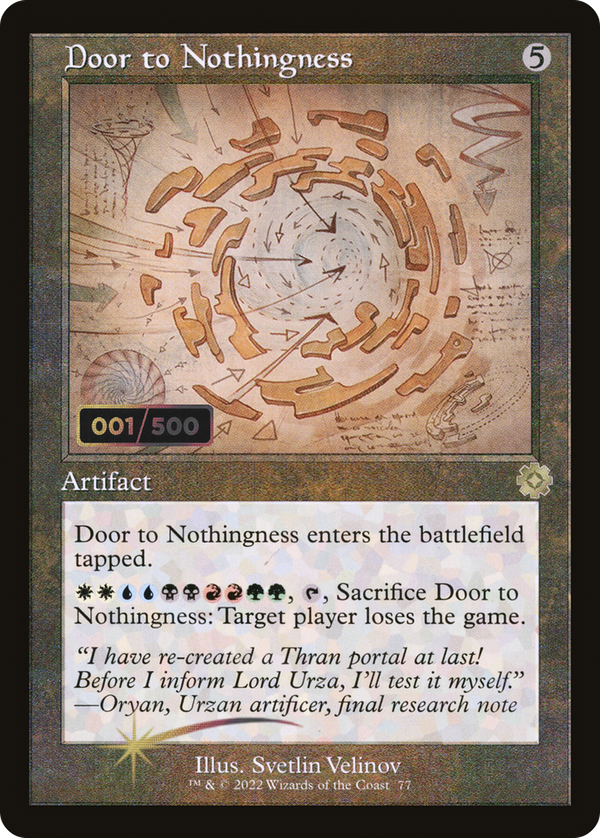
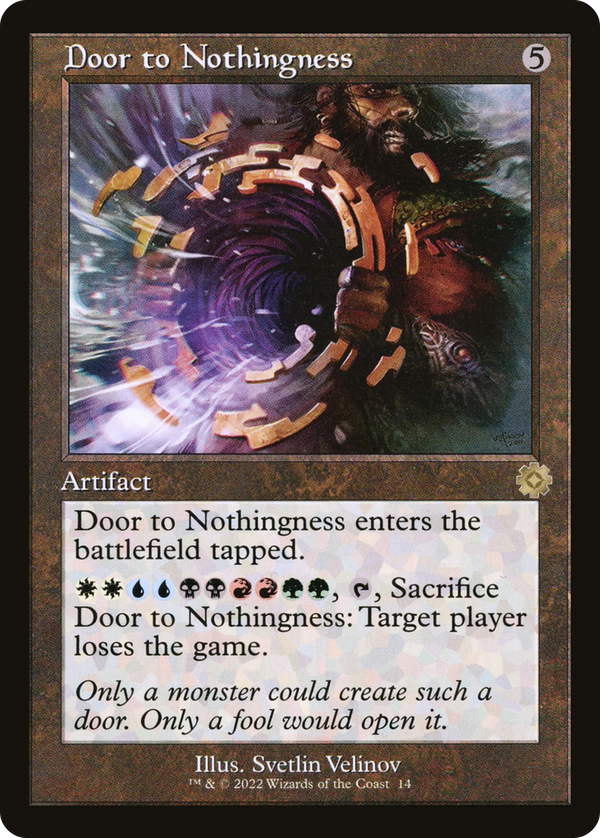
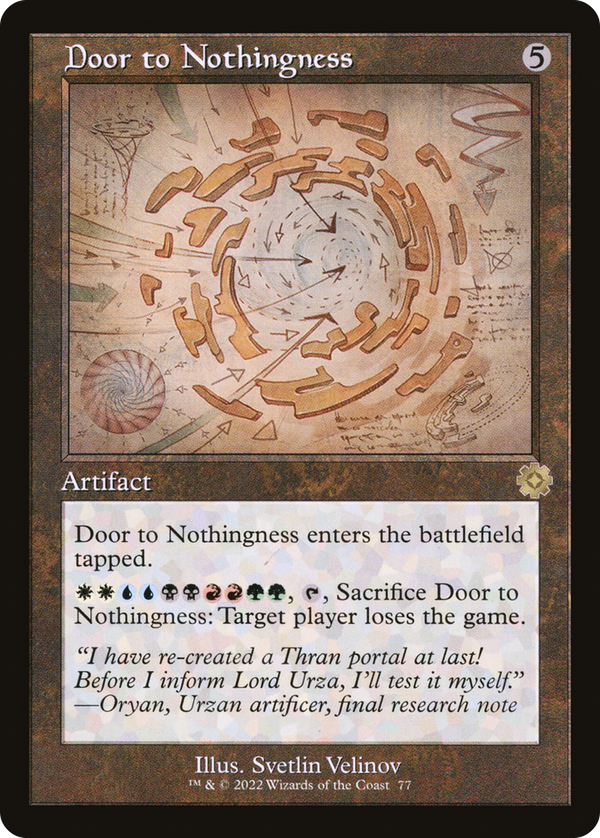
Rules text




 ,
,  , Sacrifice this artifact: Target player loses the game.