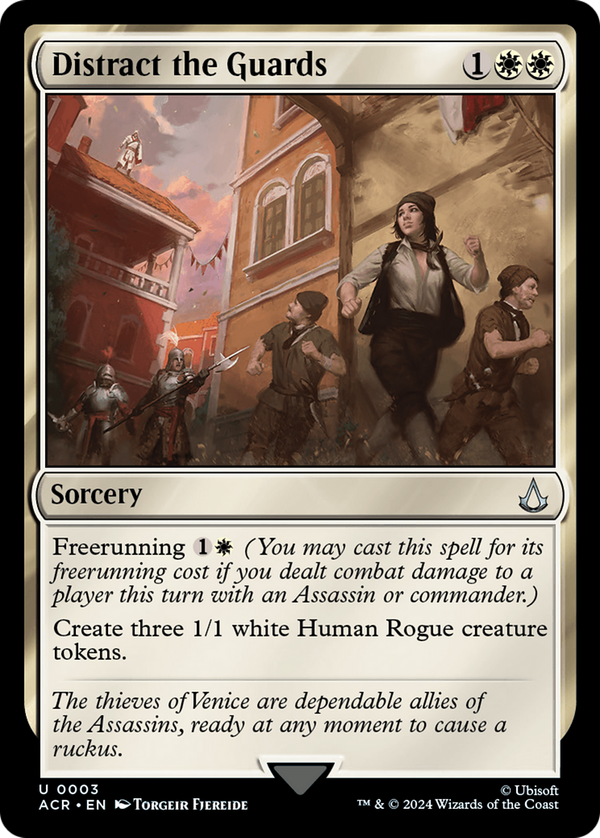
Distract the Guards


Three 1/1 bodies for three mana is a rate go-wide decks have been paying since the earliest days of token production: familiar fodder with a Rogue tag that only registers where a deck already counts that creature type. The freerunning cost is what bends the card away from generic. That alternative price unlocks only after a connecting swing this turn from the right attacker, and because the condition is checked when you go to cast rather than while the spell resolves, it rewrites the card's timing entirely. This is rarely a hard-cast board-builder; it is a second-main refill that turns a successful attack into a wider board for the next one. The gating pulls the card in a single direction (hit first, then flood) instead of offering flexible early development. That is the whole distinction from a plain token-maker: the cheaper mode is earned, not given, and it reinforces the exact aggressive pattern that pays for it. A deck that cannot reliably connect simply pays the printed and treats it as an ordinary three-mana sorcery, which is the honest floor the discount is built on top of. The design is worth studying for how narrowly it channels behavior: a token trio most cards in its slot would let you cast whenever, redirected by its cost into a reward for aggression that has already landed.
Rules text
(You may cast this spell for its freerunning cost if you dealt combat damage to a player this turn with an Assassin or commander.)
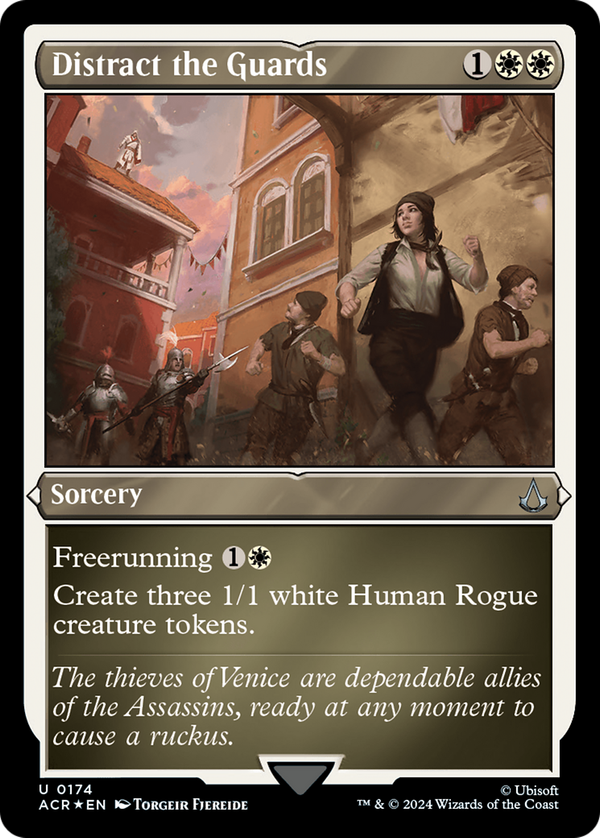
Create three 1/1 white Human Rogue creature tokens.