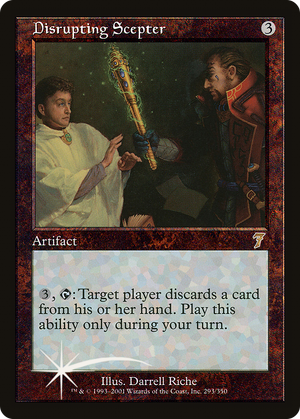
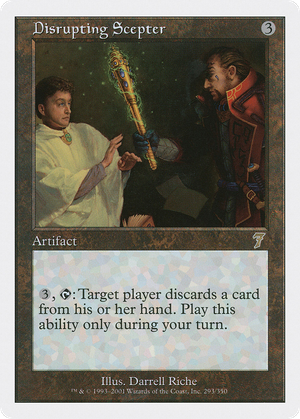
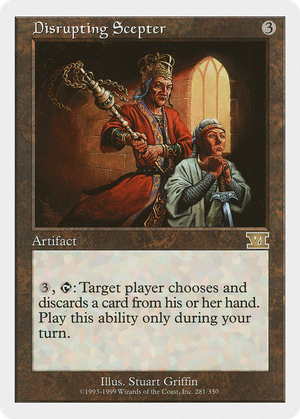
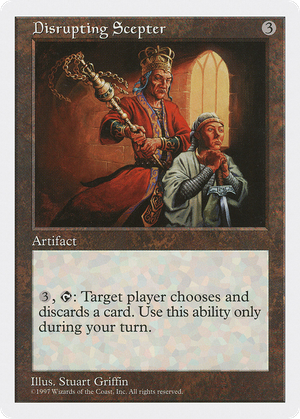
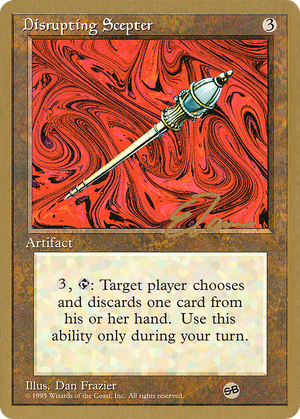
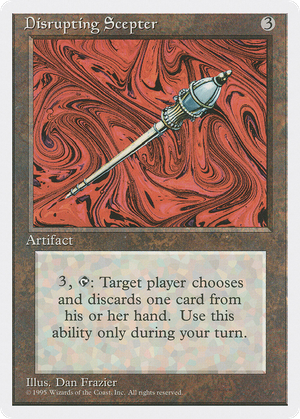
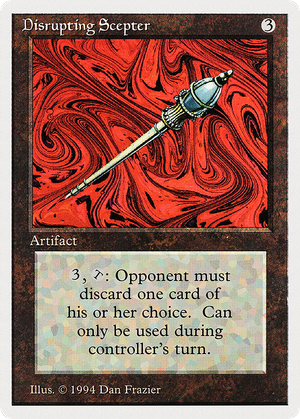
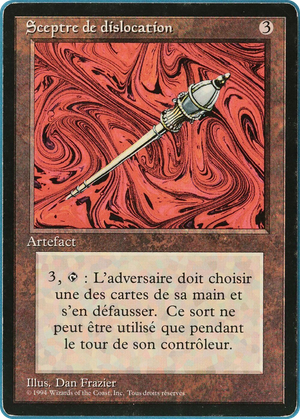
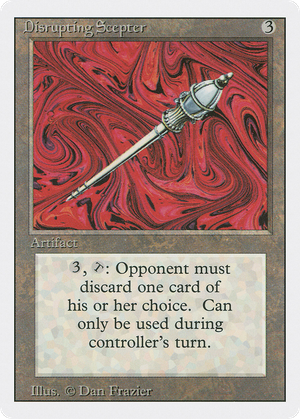
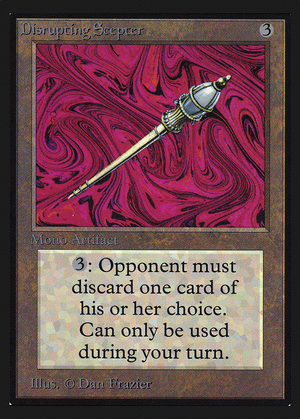
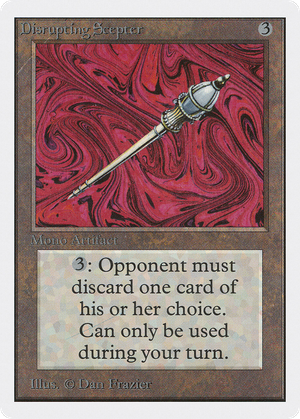
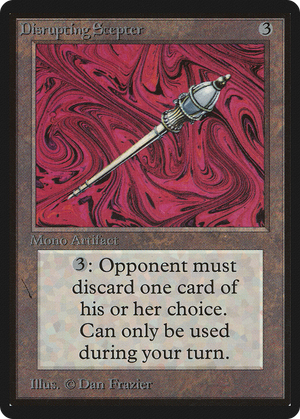
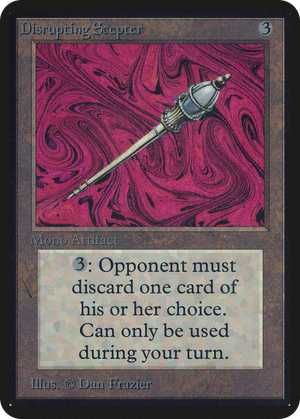
Disrupting Scepter

Hand disruption imagined as a slow grind: six mana total to strip a single card, locked to your own turn so the opponent always draws back before you can fire again. The rate looks absurd by modern standards, but that pricing was a deliberate ceiling. Early design treated repeatable card-for-card disruption as a top-end effect, the kind of permanent advantage engine that warranted an artifact slot, a turn restriction, and a mana cost that rebuilt itself every turn. The "your turn only" clause is the structural valve: it prevents the Scepter from acting as discard-on-demand during the opponent's draw step, where it could otherwise strip a freshly drawn card before they ever had the chance to cast it. That is the exact tempo failure mode cheaper hand attack would later have to reckon with. What followed was three decades of designers solving the same problem differently. Hymn to Tourach put the cost on the front end and made it a card. Mind Twist scaled with mana. The Rack decoupled the punishment from activation entirely. The Scepter is where that whole conversation begins, the first attempt to staple discard to a permanent, and its specific failure (too expensive to lock, too slow to tempo, too telegraphed to surprise) defined the constraints every subsequent discard permanent has had to navigate.
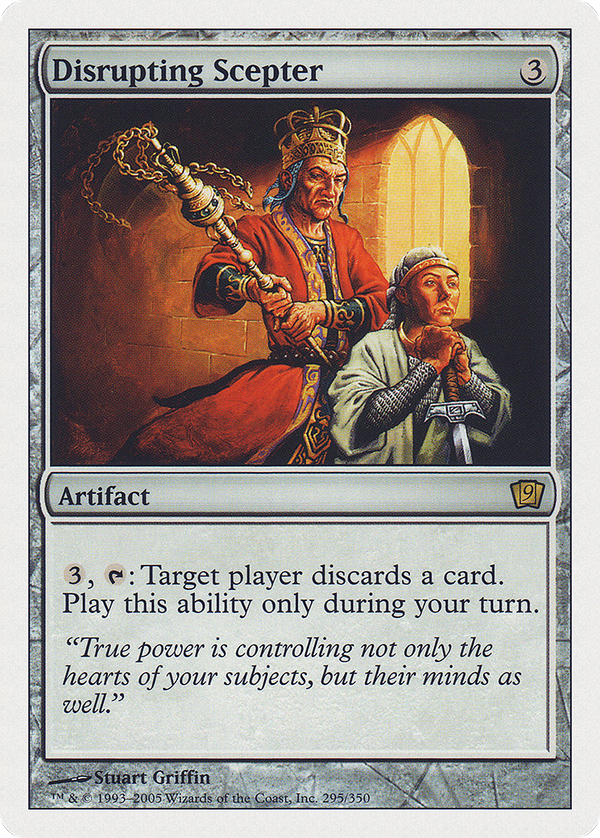
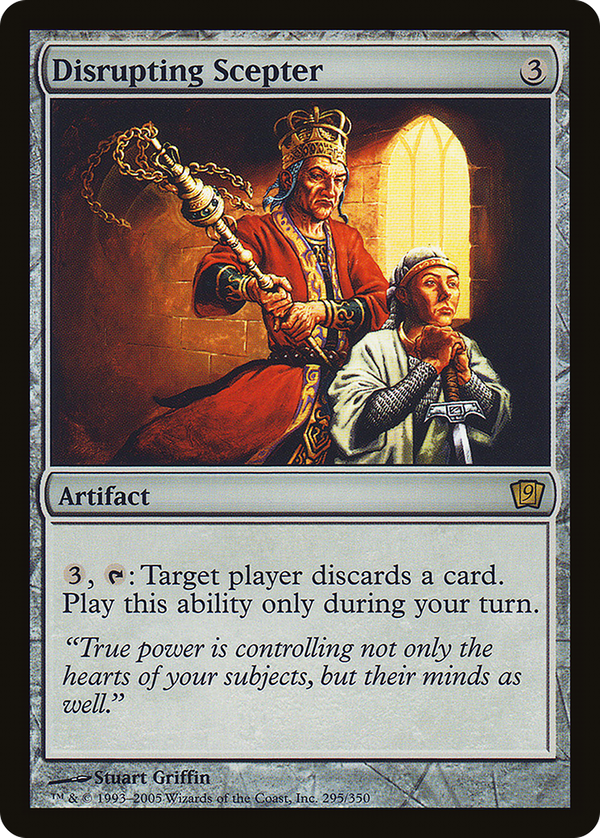
Rules text
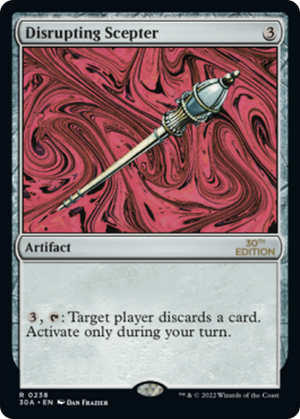
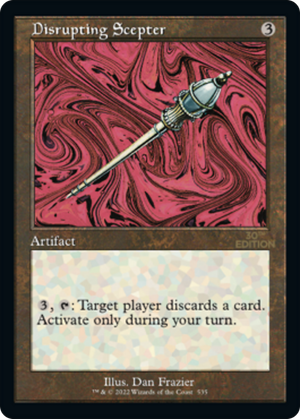
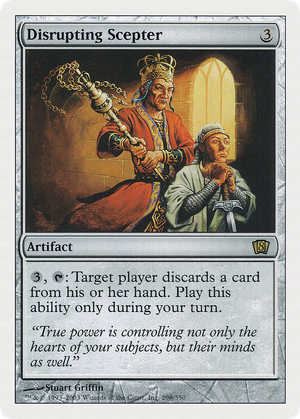
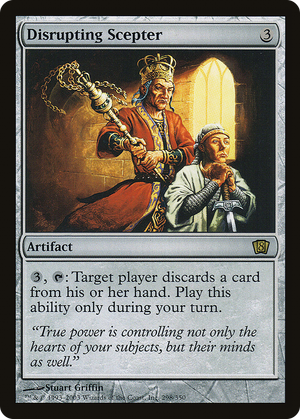
,  : Target player discards a card. Activate only during your turn.
Format Status
More formatsFewer formats
Other printings
- 30th Anniversary Edition#238
- 30th Anniversary Edition#535
- Eighth Edition#298
- Eighth Edition#298★
- Seventh Edition#293★
- Seventh Edition#293
- Classic Sixth Edition#281
- Fifth Edition#365