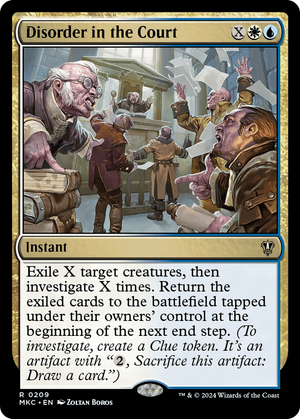
Disorder in the Court



The scaling flicker as a defensive tool, priced so the tempo swing and the card advantage rise together. Blink effects usually pick a lane: white does the single-target Flicker for value, blue does the counterspell for the stack. This one collapses both jobs into an instant-speed X spell that pulls an alpha strike out of combat and refills your hand in the same motion, since every creature exiled banks another Clue. The return clause draws the line between this and a Fog with upside: the creatures come back tapped under their owners' control at the next end step, so you blunt one attack rather than erasing an army. That temporary window matters most when the exiled creatures are yours; flickering your own board dodges a wrath, resets enter-the-battlefield triggers, and hands you a stack of Clues for the trouble, all at the cost of leaving your team tapped down for a turn. The symmetry of "target creatures" (yours or theirs) is the real design texture, because the same spell reads as removal, protection, or a value engine depending on whose permanents you point it at and why. Investigate does the ledger-balancing: the more creatures you touch, the more the spell costs, and the more it draws, so the card advantage never outruns the mana you paid for it.
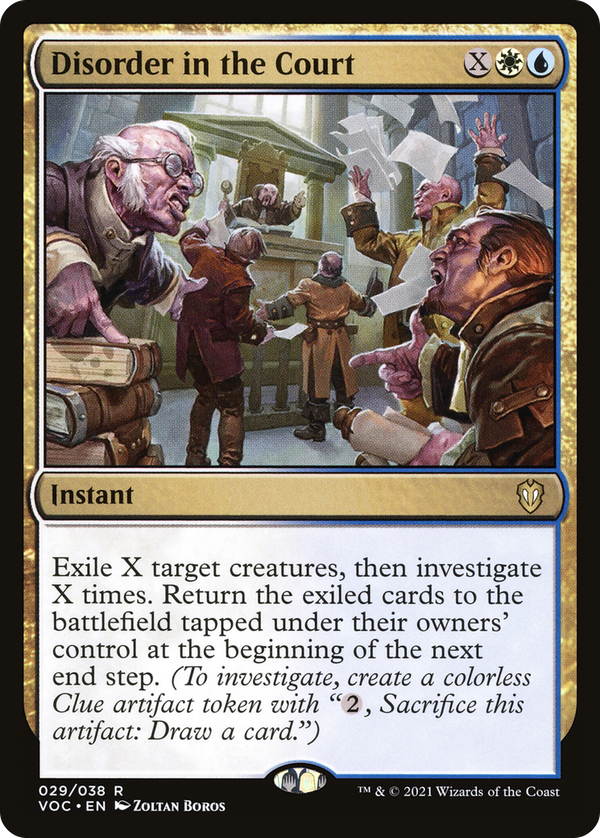
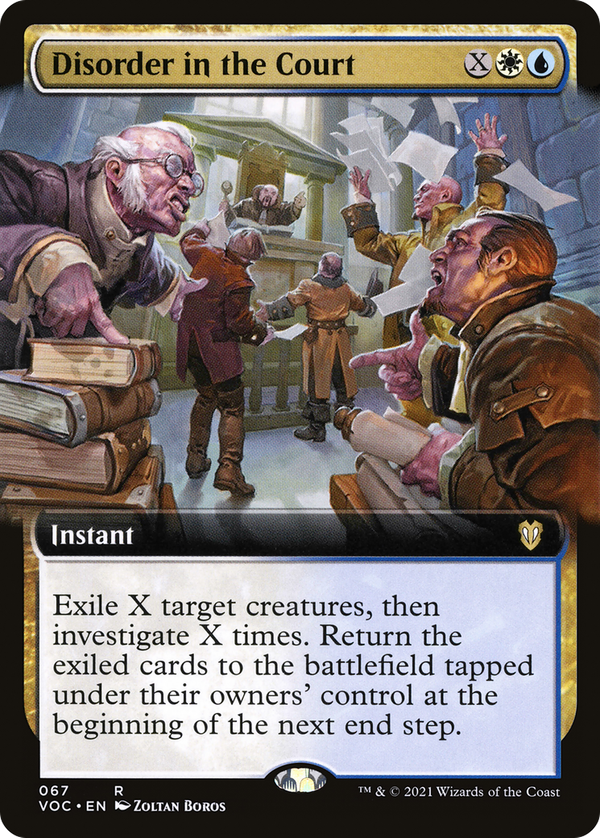
Rules text
 , Sacrifice this token: Draw a card.")