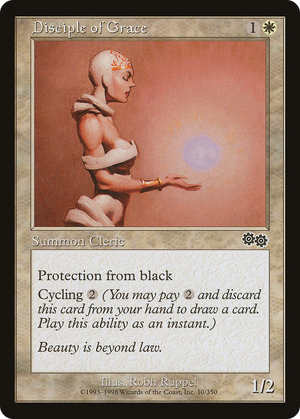
Disciple of Grace


The Urza's Saga cycling commons taught a generation of players what a creature was actually worth. Every color got one of these: a small body with cycling, the choice baked into the card rather than the deck. The design lesson is in the floor it sets. A 1/2 with protection from black is a narrow thing, hosing exactly one color's removal and creatures, but cycling means that narrowness never costs you a draw step. When the protection matters, you have a hatebear that walks past black's targeted removal; when it doesn't, you pay two and dig. That tension (a card that is either a sideboard answer or a cantrip, decided in hand) is what made the cycle a deckbuilding clinic. Cycling itself was the format's defining mechanic, the thing that let aggressive decks run sweepers and reactive decks run threats without flooding, and the Disciple cycle was its clearest teaching aid: here is a creature whose abilities point in opposite strategic directions, and you get to pick which one you need after you see the board. Protection from black does the heavy lifting in the matchups it lands in, blanking targeted removal and turning combat lopsided, but the card's real identity is the optionality. It is a card that refuses to be dead, and that refusal is the whole point.
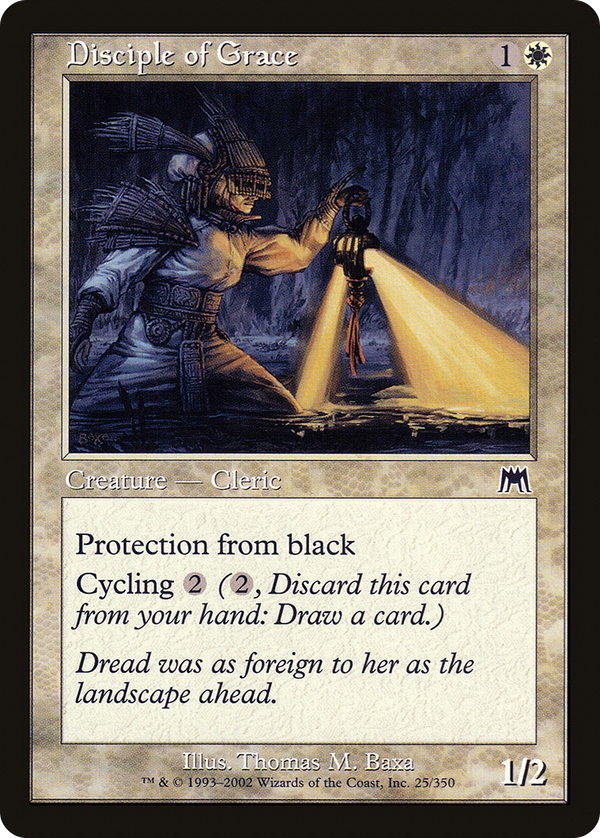
Rules text
 (, Discard this card: Draw a card.)