Desert Warfare


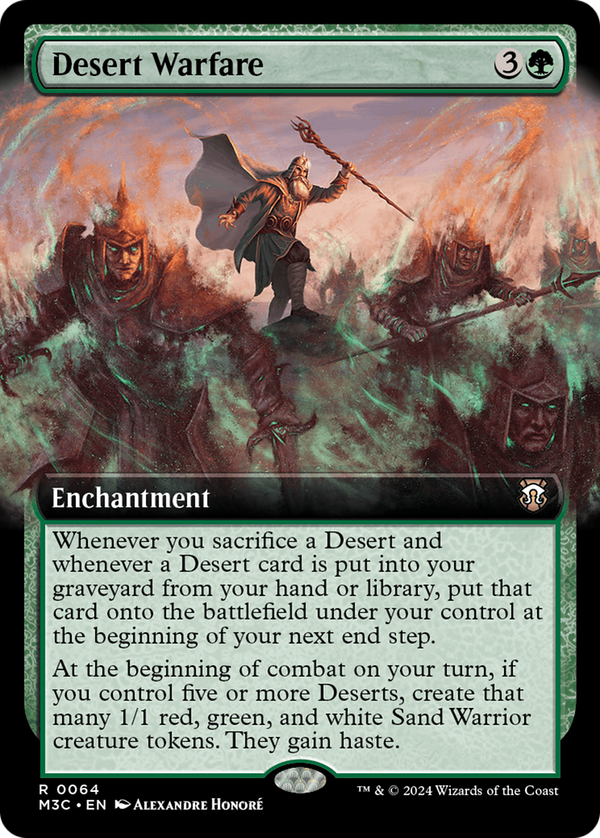
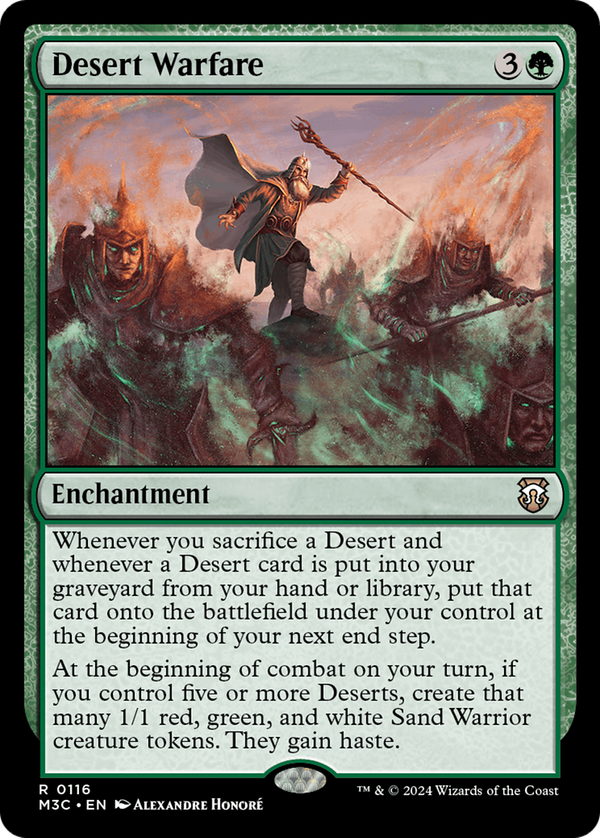
Deserts have always been a resource that ends up in the graveyard by design: cycling lands, sacrifice-for-value utility tiles, a subtype built around being spent. This turns that expenditure into recursion. Every Desert you crack for value or mill off the top returns to the battlefield, so the lands stop being one-shot resources and start functioning as a rotating engine that refuses to stay dead. The delayed timing is the wrinkle worth reading carefully: nothing returns immediately, it queues for your next end step. Sacrifice on your own turn and the payoff lands the same night; sacrifice at instant speed on an opponent's turn and the Desert sits in your graveyard until your end step comes back around, so you spend your own main phases a land short before it resurfaces. That constraint pushes you toward spending on your own turns rather than reactively holding up sacrifice effects. The second clause is the closer. With five Deserts in play, the beginning of combat on your turn manufactures a hasty Sand Warrior for every Desert you control, scaling directly with how many you have kept on the battlefield (which the recursion clause makes far easier than it sounds). The two abilities pull in the same direction: the returns keep your Desert count high enough to keep the tokens flowing. It is a subtype payoff that treats a graveyard-bound land type as a permanent battlefield fixture, and the more your Deserts want to die, the harder it works.