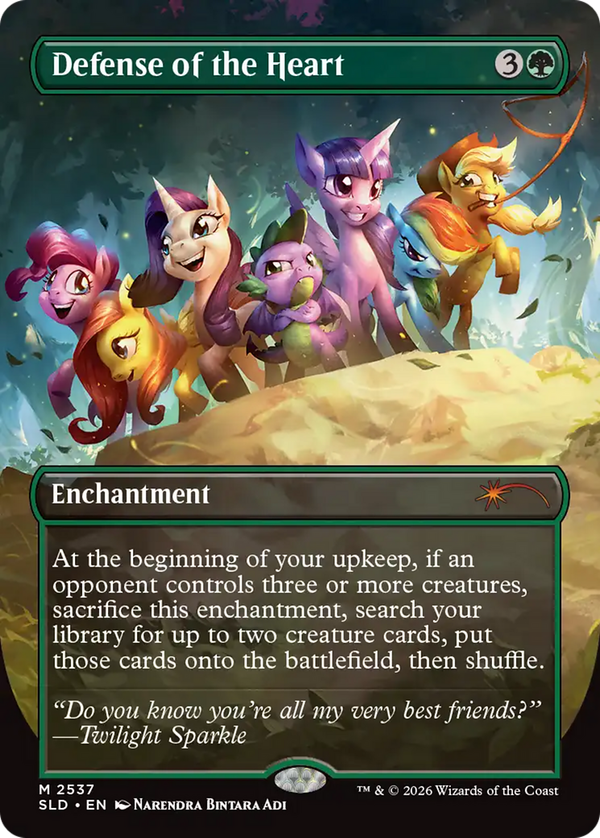
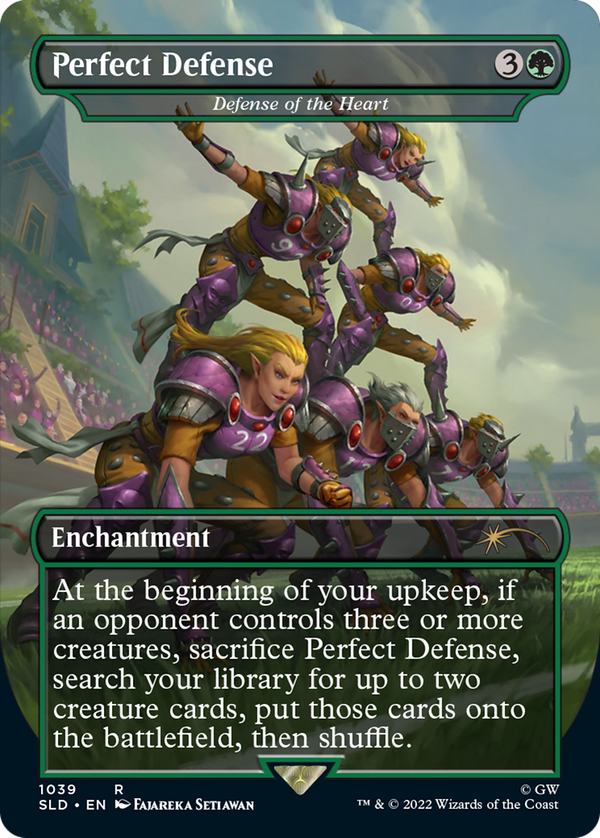
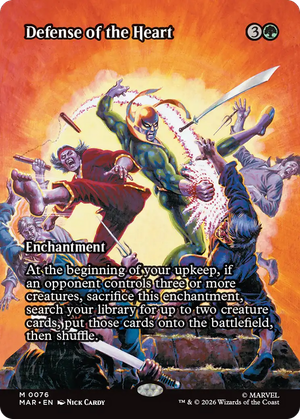
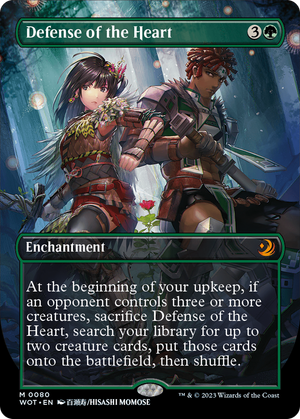
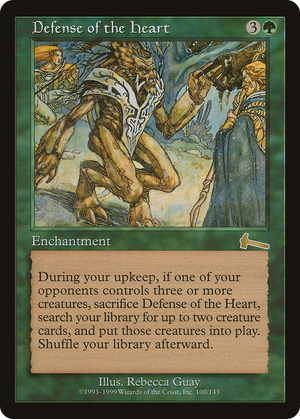
Defense of the Heart


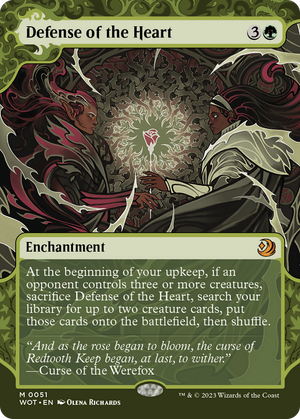
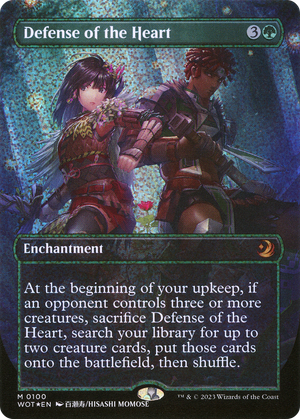
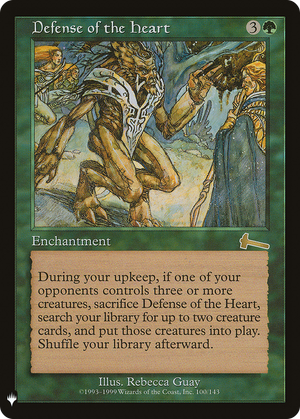
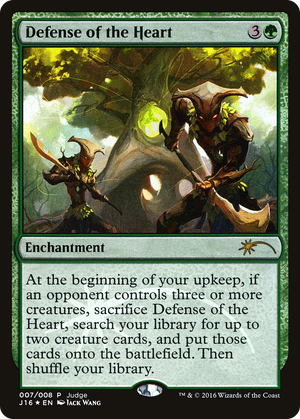
The trade it offers is almost obscene on paper: four mana, then a single upkeep trigger that fetches two creatures from your library straight onto the battlefield, with no further cost beyond the enchantment itself. The brilliance of the design is that the trigger reads off your opponent's board, not yours. The clause that gates it (an opponent controlling three or more creatures) makes the effect feel reactive, almost defensive, as if the enchantment is a panic button against a developing aggressor. In practice it inverts that intent completely, because three creatures is a threshold most boards cross by the natural rhythm of the game. The result is a tutor that pays its own activation by simply waiting one turn, and one that puts no restriction on what it finds: any two creatures, regardless of size, cost, or combo relevance, arrive together. They do still enter with summoning sickness, so anything you fetch is bound by the usual restrictions on attacking or tapping the turn it arrives; the payoff is the bodies on the battlefield, not an immediate attack step. That openness is the whole story. A fetch-two effect with a cheap front end and no size cap is a combo enabler by construction, and the card's history has been a steady march of players discovering which pairs of creatures win on the spot once given a turn to act. The "defense" framing was always a fiction; the enchantment is a delayed two-for-one tutor wearing a defensive costume, and the costume fooled no one for long.