Dance with Calamity


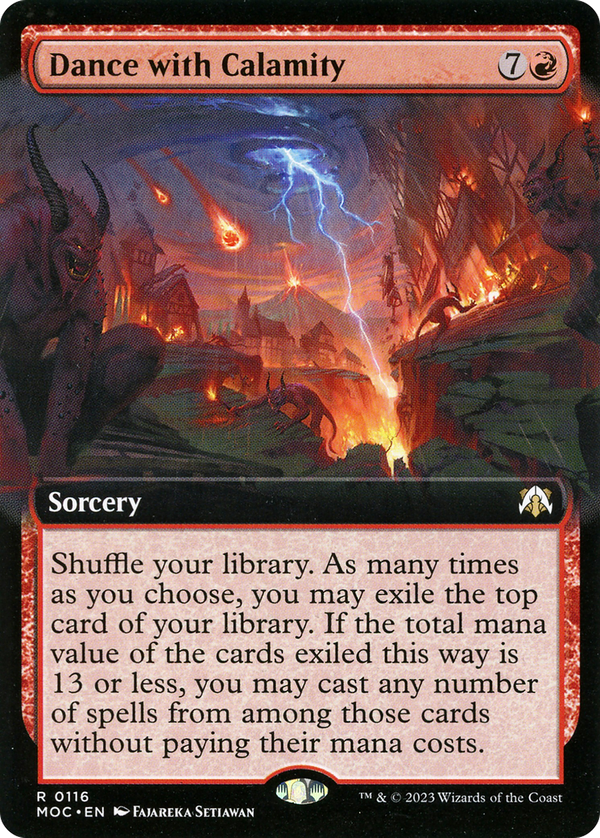
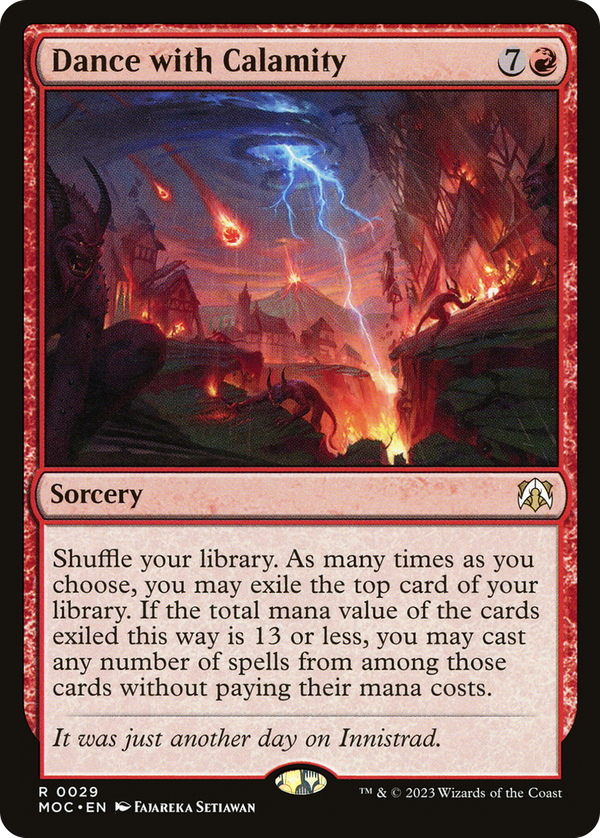
The whole design hinges on a probabilistic gamble that the number 13 makes deliberately unforgiving. You choose how many cards to peel off the top, but the accounting is total-or-nothing: cross 13 combined mana value and the free-cast clause simply never fires, leaving you with a fistful of exiled cards and no payoff. That threshold is the entire tension. Push too hard and you brick; stop too early and you leave value stranded in exile. The library shuffle up front is the honest part of the bargain: you cannot topdeck-manipulate your way around the variance, so the card demands a deck sculpted to control what mana values live on top, which usually means loading up on zero- and one-cost spells that can spill out in a chain without breaching the ceiling. It reads like an eight-mana lottery ticket, but the design is closer to a blackjack hand where you set the odds during construction rather than at resolution. Most free-cast payoffs pin their reward to a fixed count (cast the top three, cast one, cast until you miss); pricing the payoff against a shared mana-value budget instead is what makes this feel less like an impulse engine in the Aetherworks Marvel tradition and more like a bet you size yourself. The randomness is not a flaw to be smoothed out; it is the cost, and the reward scales precisely with how much of it you are willing to court.