Cursed Recording


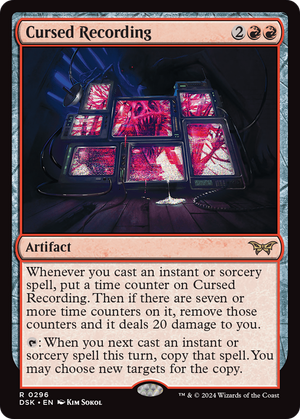
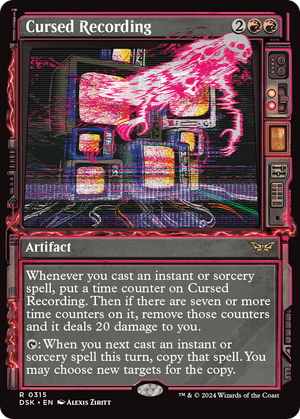
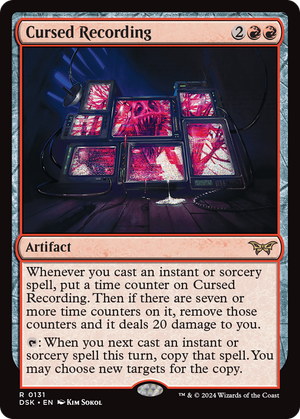
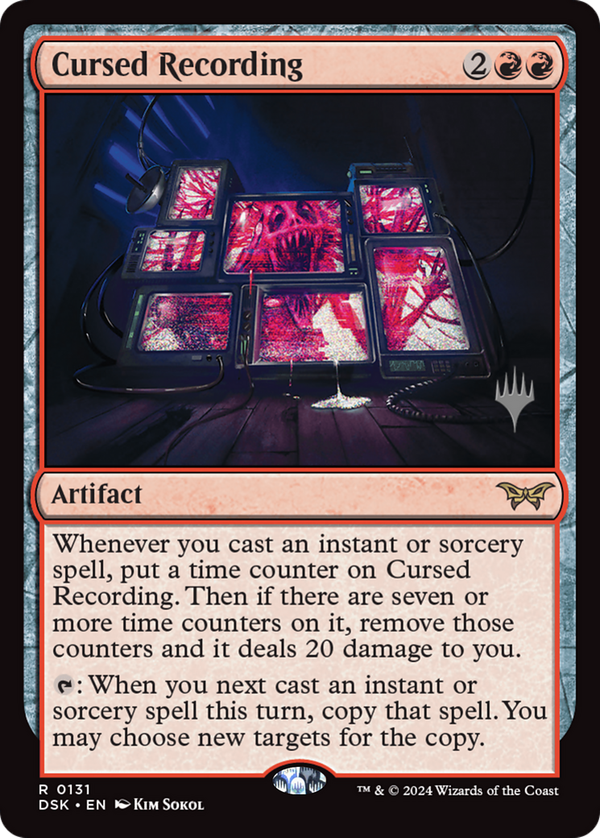
Doubling a spell has always cost real mana: Fork asks for two red pips, Twincast holds up two, Reverberate wants two as well, each copying a spell already on the stack. This flips the economy. The copy is free at the point of use, gated instead by a tap and a one-shot delayed trigger, so you pay in tempo and setup rather than mana. The cost that balances it is written into the passive half: every instant or sorcery you cast walks a time counter closer to seven, and the seventh is a self-inflicted twenty. That is the wrinkle worth dwelling on. Twenty damage is nearly a full life total, which means the artifact is not really "you die at seven" so much as "you have a hard cast-count budget for the whole game, and you had better win before it runs out." A slow spellslinger deck ticks toward that number harmlessly for a dozen turns; a dedicated combo shell that wants to chain and copy is precisely the deck most likely to detonate itself. The clock and the payoff share the same fuel, so the more you lean on the copy engine, the faster the countdown that punishes leaning on it. It is a Faustian value piece in the most literal sense the card can manage: the reward and the eventual bill are metered by the same act.
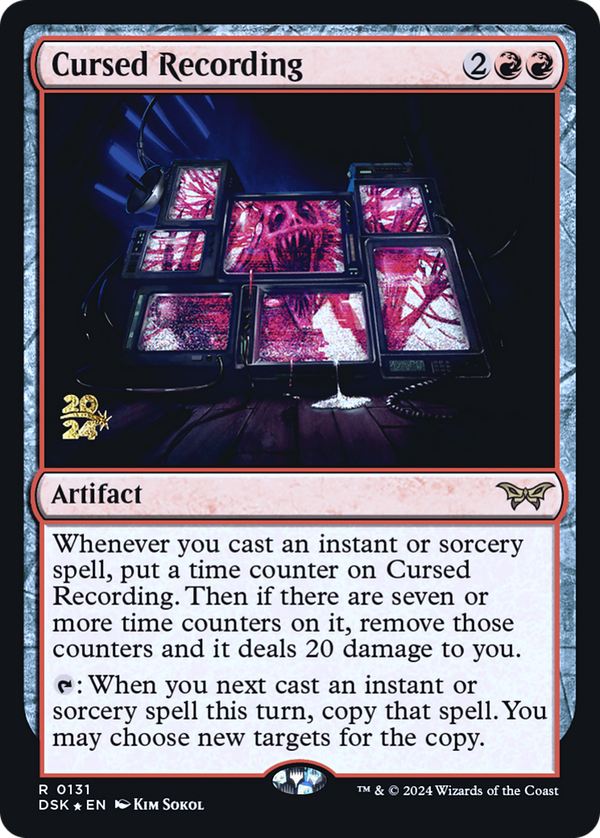
Rules text
 : When you next cast an instant or sorcery spell this turn, copy that spell. You may choose new targets for the copy.