Creative Technique


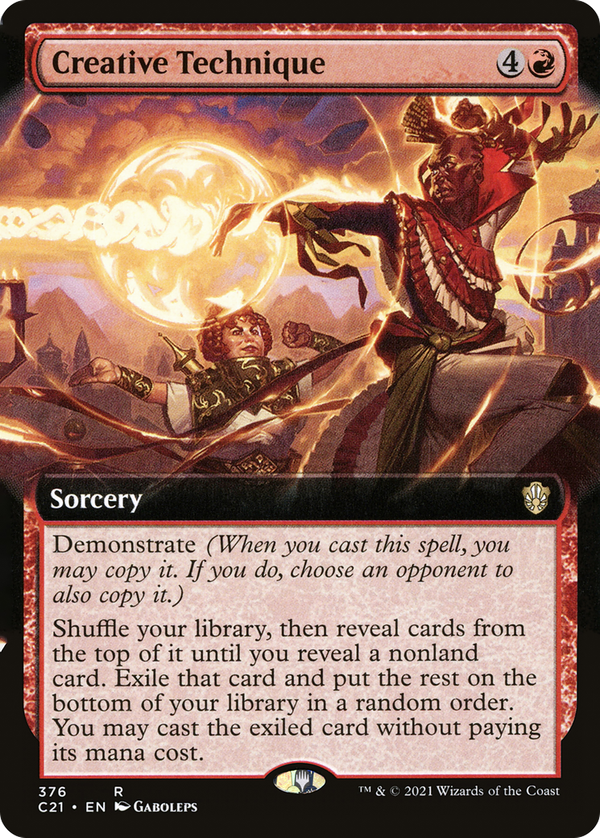
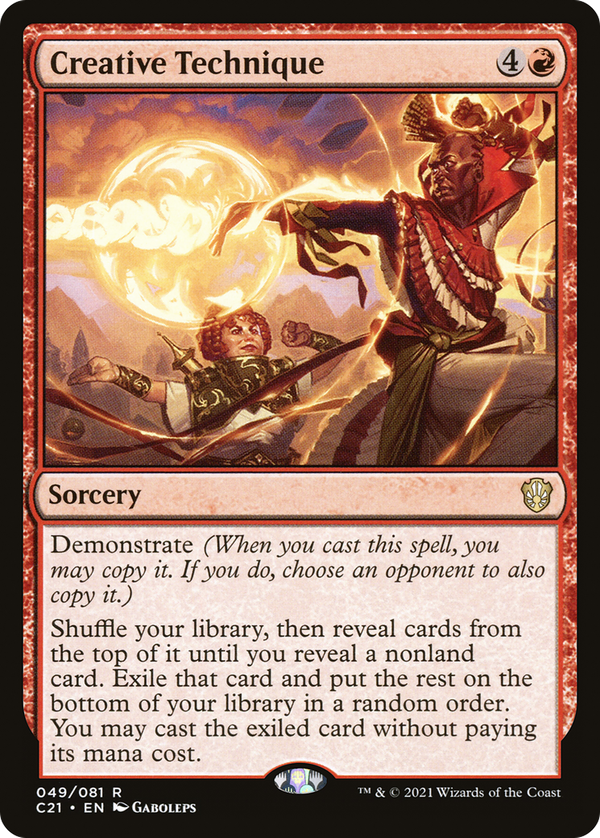
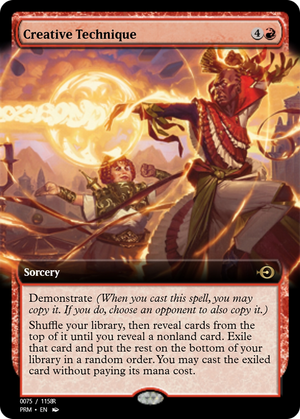
The demonstrate mechanic is the load-bearing joke here, and it is a good one: a spell that only copies itself if you hand a copy to an opponent, turning a solo free-cast into a shared roulette wheel. Read the effect in isolation and it is a familiar random-impulse engine: shuffle, dig to the first nonland card, exile it, cast it for free. Read it through demonstrate and it becomes a negotiation. You copy, an opponent copies, and now two players are firing free spells off the tops of their own libraries: each controller shuffles their deck and reveals from it, so the roulette wheel each of you spins is your own. The shuffle clause is what keeps the free cast from becoming deterministic; you cannot stack your deck first, because casting this obliterates whatever order you set up. That randomness is precisely why the card wants a top-heavy library: the less cheap filler you run among your nonland cards, the likelier the free cast lands on something worth casting for zero. Demonstrate's political texture is the real design payload, though. Handing an opponent a free spell to earn your own second cast is a bribe with teeth, and whether the trade favors you depends entirely on whose deck is the more dangerous coin flip. It is a card built to generate table conversation as much as card advantage, which is exactly the register the multiplayer-only mechanic was written for.