Crack in Time


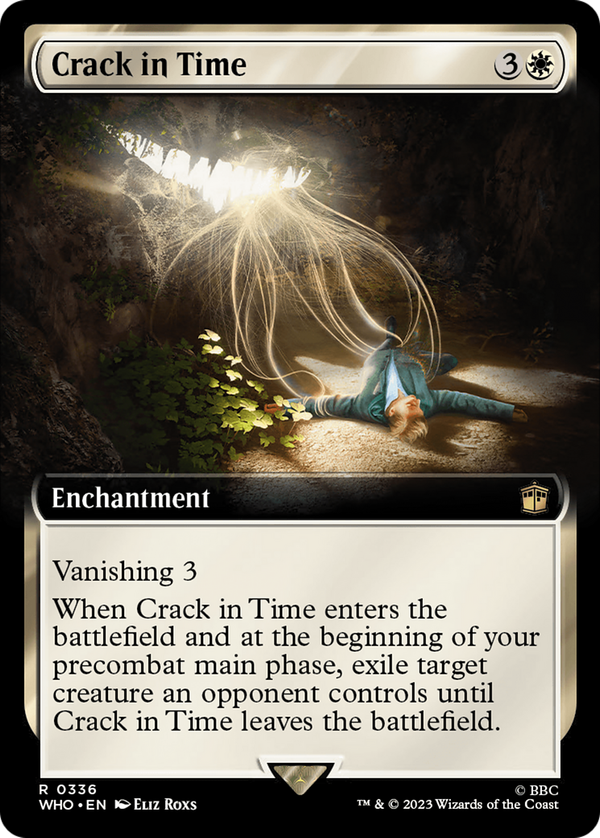
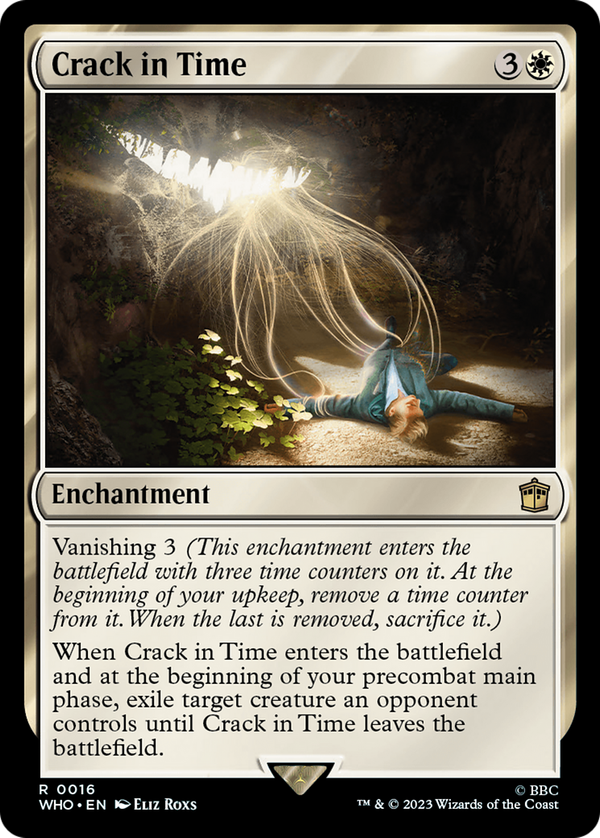
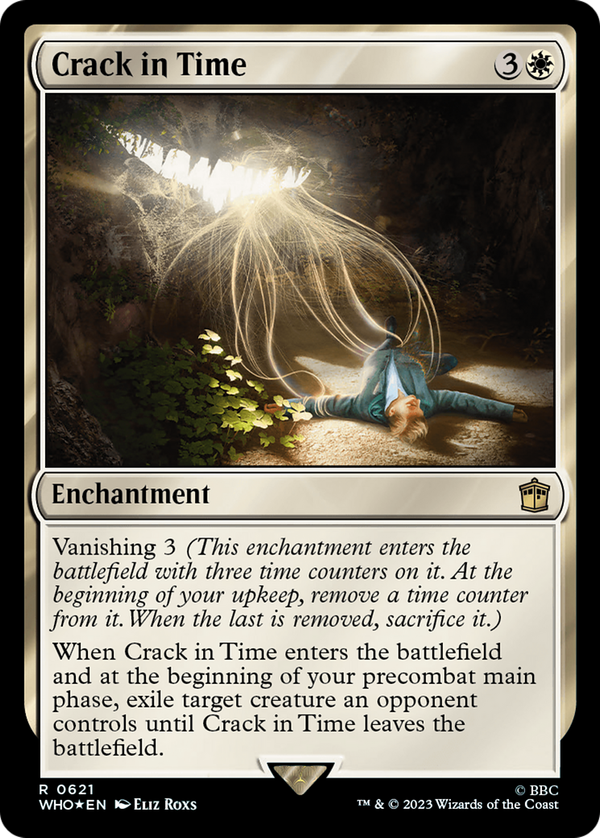
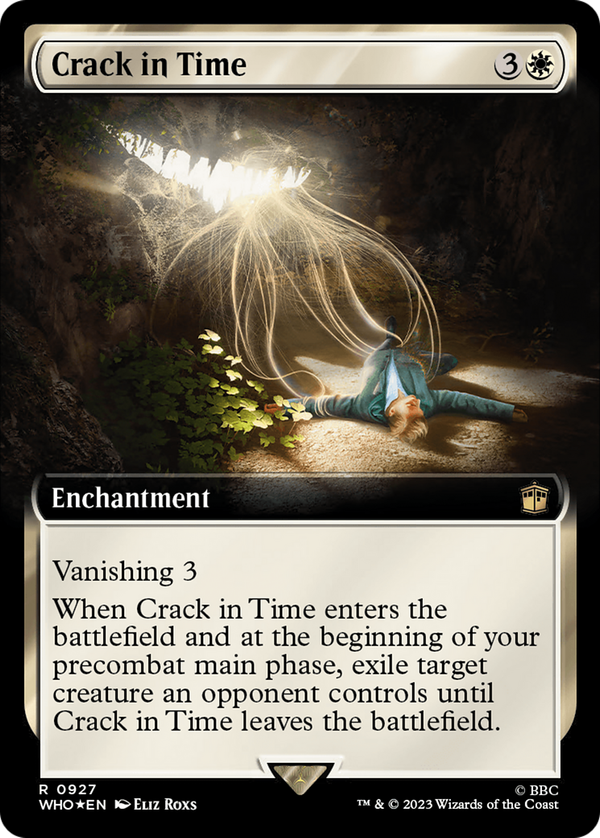
White's exile-until-leaves removal, the Oblivion Ring family, buys permanence at the price of fragility: the answer sticks around as long as the enchantment does, which is until an opponent finds a way to blow it up. This inverts that bargain. The vanishing clock guarantees the enchantment leaves on a fixed schedule, three upkeeps out, and everything it has banished comes flooding back the moment the last counter falls. What it offers in exchange is volume. It exiles one creature the turn it lands (cast during your main phase, the enchantment misses its own first-main trigger that turn), then peels off another at the start of your next two first main phases before the vanishing timer runs out, so a resolved copy can strip as many as three threats before it sacrifices itself. That makes it temporary control wearing the costume of removal: you are not answering the board so much as renting it, and the lease expires on a countdown everyone at the table can read. The design tension lives entirely in that reversal. Anything that trims or adds time counters bends the math, and forcing the enchantment to leave early snaps the whole thing shut, returning every exiled creature at once (a liability, not a tool). Read straight, it is a three-for-one tempo loan with the repayment date printed on the card, which makes it a way to close a game inside a known window rather than win a slow war of attrition.