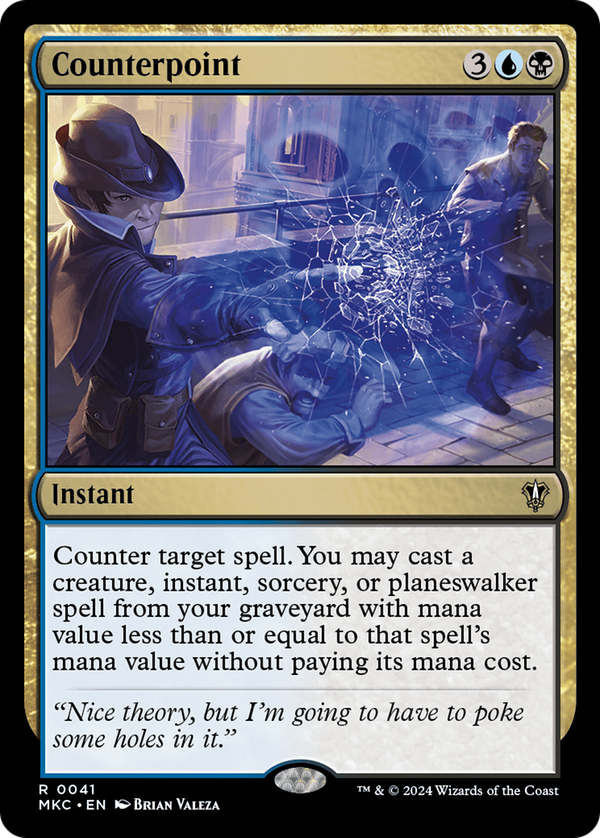
Counterpoint



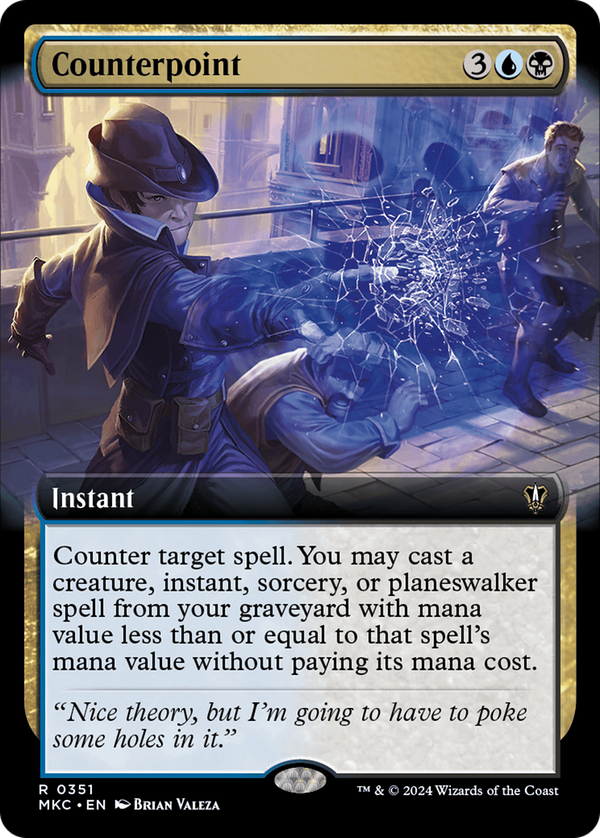
Counterspells almost never generate their own advantage: the classic Counterspell trades one card for one card, and Magic has spent decades treating that even exchange as the cost of interaction. This one pays you back with your own graveyard as the register. Whatever your opponent commits, its mana value becomes the ceiling on what you free-cast in return, so the answer scales to the threat: counter a two-drop and recur something small, counter a bomb and the exile-free cast can be genuinely enormous. The design turns the opponent's ambition into your budget. The friction lives in the sequencing. The spell you replay has to already be sitting in your graveyard when the counter resolves, and it has to fit under a ceiling you do not control until they tip their hand, which rewards decks that fill the yard early and hold a diverse spread of mana values there. It also quietly widens the eligible category past what most graveyard recursion touches: creature, instant, sorcery, or planeswalker all qualify, so the reactive half of the card and the value half draw from the same graveyard rather than asking for separate build-arounds. At five mana it is not the interaction you deploy on curve to keep tempo; it is the interaction that answers the game's biggest single play and converts the parry into a two-for-one, provided your graveyard has done the setup work in advance.