Copy Catchers


Surveil usually functions as smoothing: a look at the top card, a decision about the graveyard, a tick of value on the way to something else. This turns the keyword into a payoff. Every time some other source makes you surveil, the card offers to spend for another 2/1 flier, so the value scales with how many surveil enablers the deck packs rather than with any single explosive turn. The tokens matter because they are exact copies, triggered ability and all: once you have two or three on the battlefield, a single surveil offers to pay off every one of them at once, and the tax stacks fast when three or four copies all want the same trigger. That mana cost is the constraint holding the engine in check. Each new body raises the ceiling on how much a future surveil can produce, but you still need the external surveil to point at, and the payments come out of the same pool that protects a fragile 2/1. So the density of enablers outside this card sets the real ceiling; you need a genuine stack of them before token production outruns what an opponent can profitably answer. The optional payment is the pressure valve, letting you decline when the mana is better spent elsewhere so the card never floods you against your will. What sits at the center of the design is a keyword most decks treat as incidental smoothing, promoted here into a resource worth chaining.
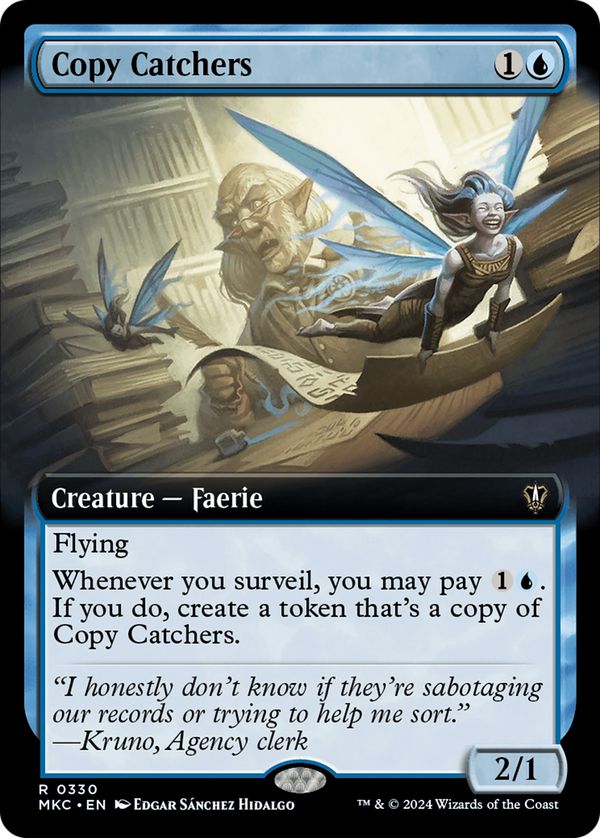
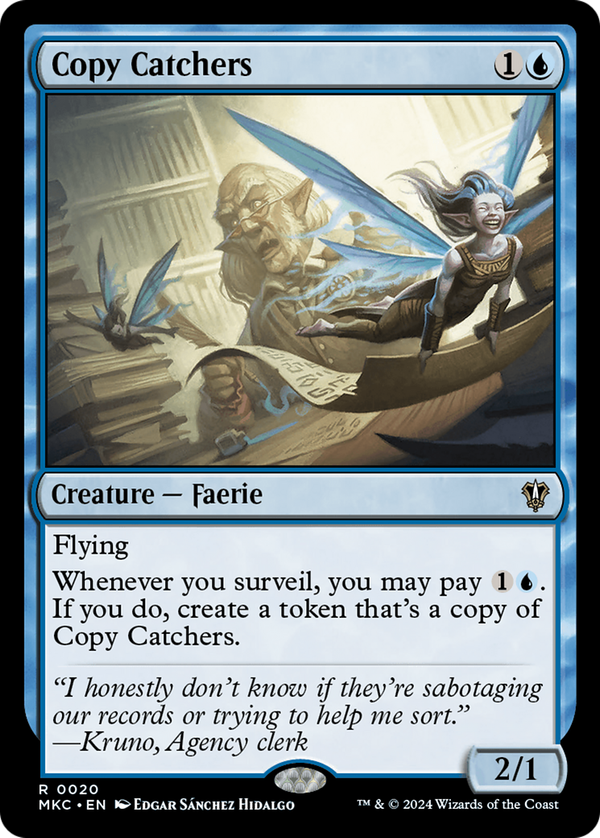
Rules text
. If you do, create a token that's a copy of this creature.