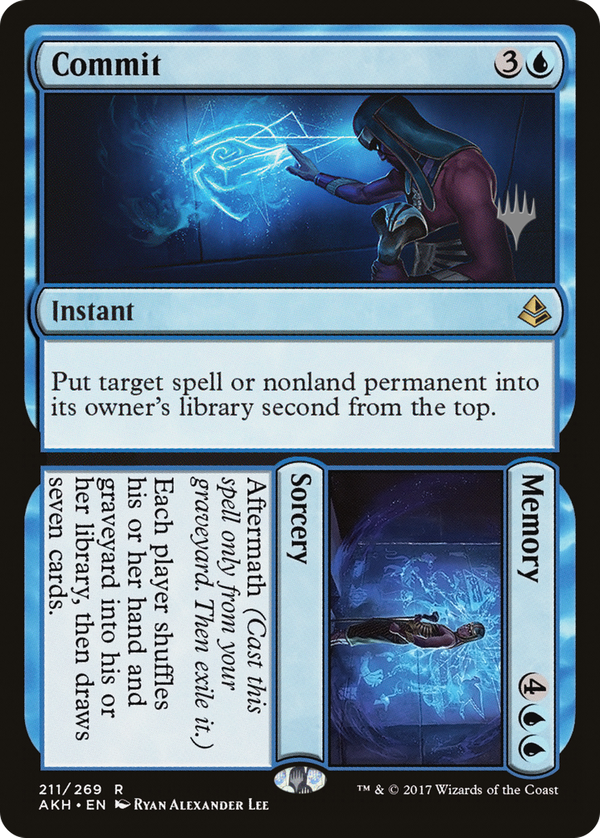
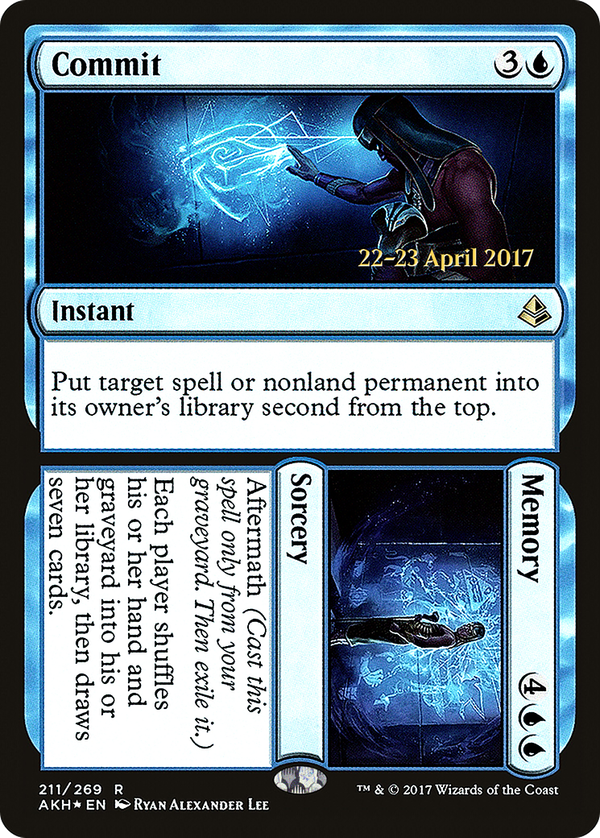
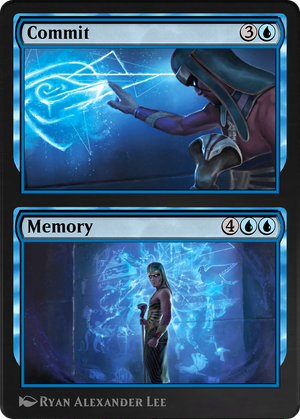
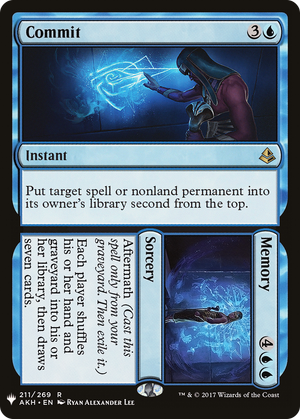
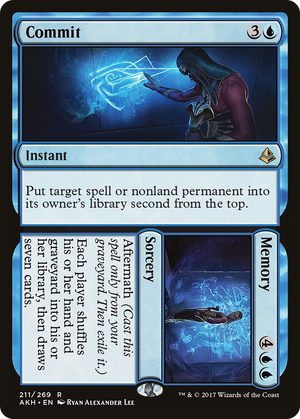
Commit // Memory



The front half answers a problem most blue interaction cannot: a permanent that has already resolved, hit at instant speed without handing the opponent the recursion lines a graveyard-bound kill spell offers. The trick is the burial depth. Second from the top is deliberately worse for the opponent than a clean Time Ebb to the top: they draw their normal card next turn, then have to spend the following draw re-acquiring the thing you sent away, so the answer functions as a two-turn tempo tax rather than a permanent fix. The back half is the rationale for spending the front half early. Memory is fully symmetrical: every player shuffles hand and graveyard back in and draws seven, which is why it doubles as disruption rather than pure refuel. Against a deck that has loaded its graveyard or is sitting on a curated grip, the redraw is closer to a reset than a gift; against you, when you are the one running low, it is a wheel. Aftermath is the design conceit that makes the pairing legal: two casts from two zones, the reactive answer from hand and the resource swing from the bin, jobs that would normally fight over a single deck slot now stacked onto one card. The exile clause after the second cast is what keeps the Memory side from becoming a recurring engine, capping the swing at one.