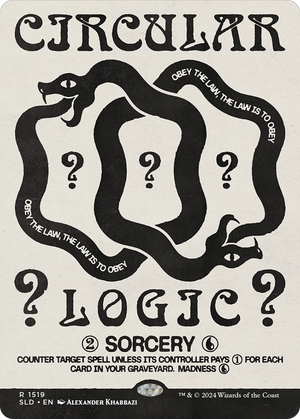
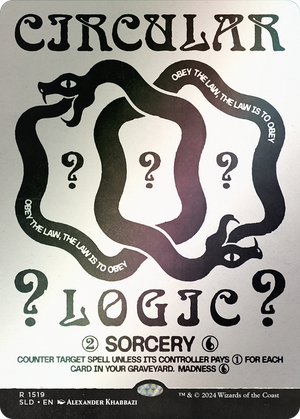
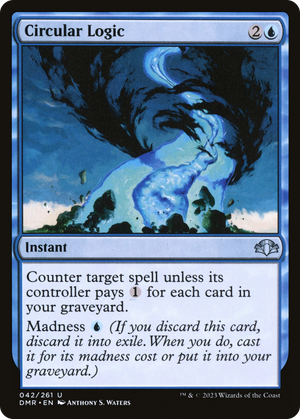
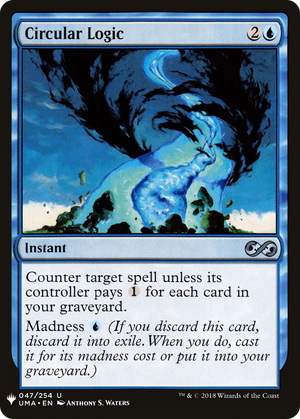
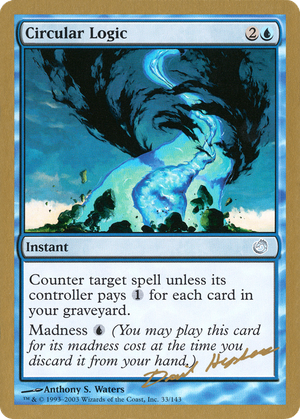
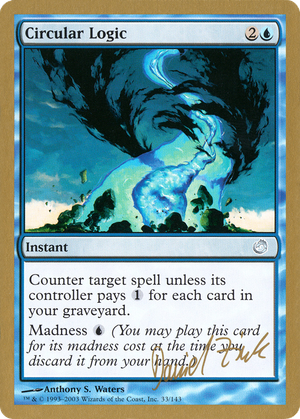
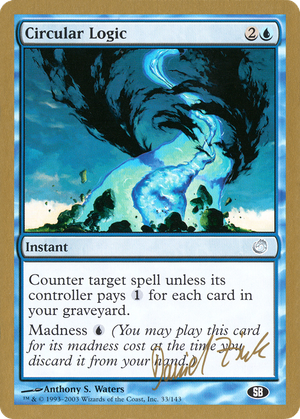
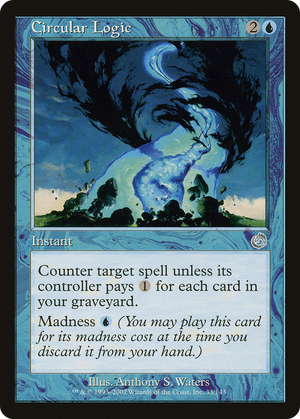
Circular Logic


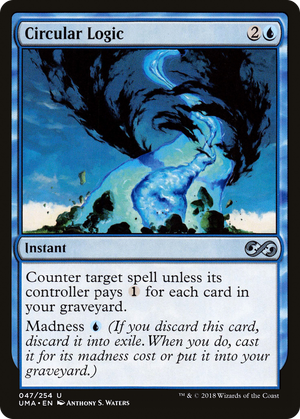
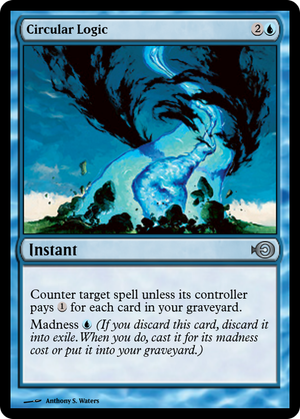
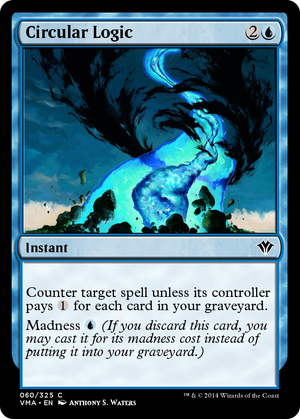
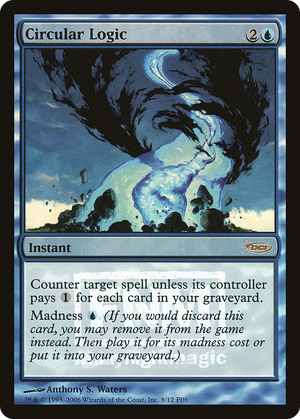
The counter that gets better the longer you wait to use it: with a thin graveyard it costs the caster almost nothing to pay through, but in a deck built to dump cards it hardens into an uncrackable wall by the midgame. What turns the card into a fixture rather than a curiosity is the madness clause, which solves the structural problem every graveyard-counting counterspell faces: dead in the early game when the yard is empty, dead later when your hand is empty and you cannot deploy it. Madness routes around both. The discard outlets that feed the graveyard (the looters and rummagers that grow the tax) are the same engine that lets this be pitched from hand and cast at instant speed for a single blue, so the act of stocking the bin and the act of holding up interaction stop competing for the same turn. That is the loop the name jokes about: a card you discard to fuel future counters can itself become the counter on the way to the bin, and the discard that grows the tax is the discard that triggers the cheaper cast. Most reactive spells punish you for tapping out to develop your own plan; this one rewards the graveyard-centric decks that were going to fill the bin regardless, converting what reads like a payoff for a slow strategy into a hard counter you can fire off the moment a rummage spell sends it to exile.
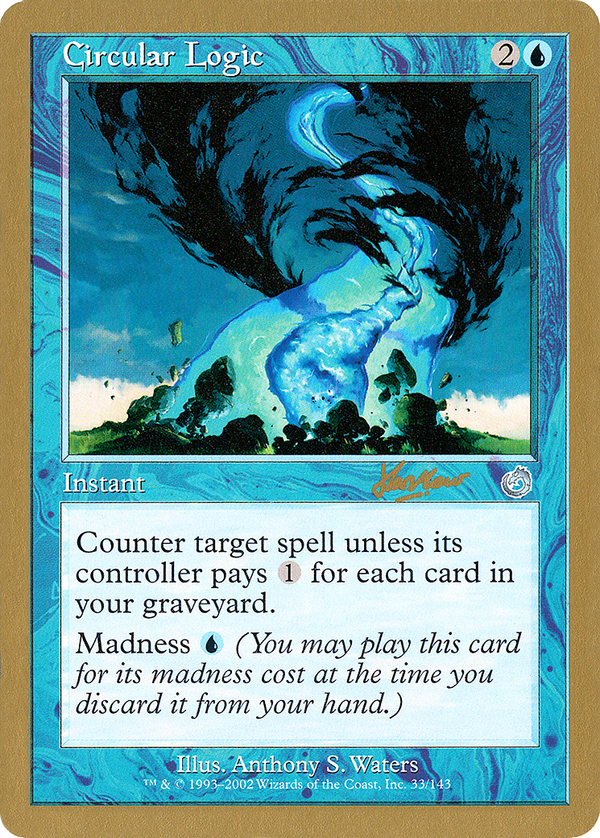
Rules text
 for each card in your graveyard.
Madness (If you discard this card, discard it into exile. When you do, cast it for its madness cost or put it into your graveyard.)
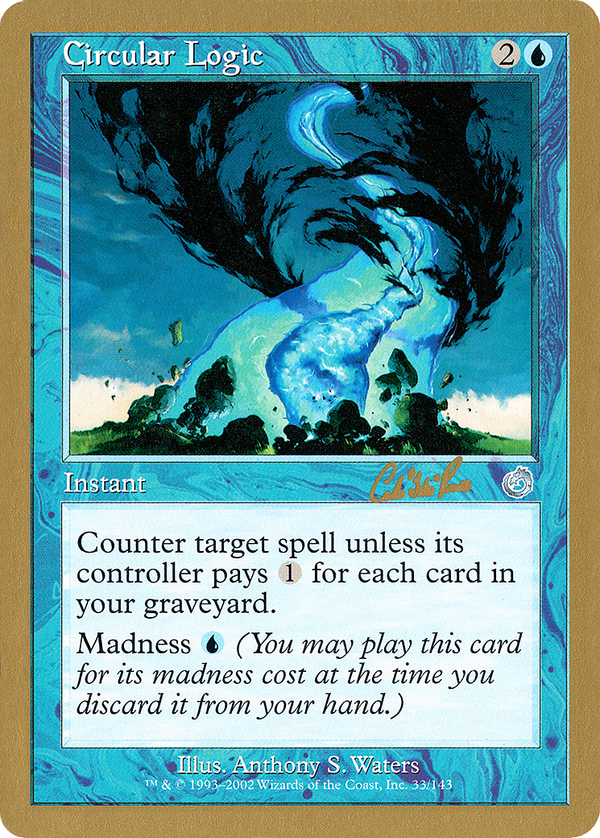
for each card in your graveyard.
Madness (If you discard this card, discard it into exile. When you do, cast it for its madness cost or put it into your graveyard.)