Chaos Mutation



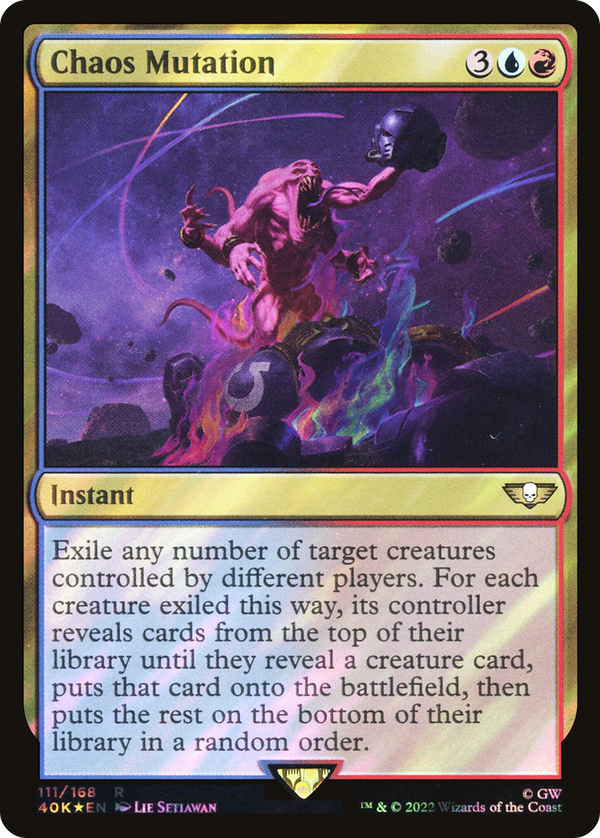
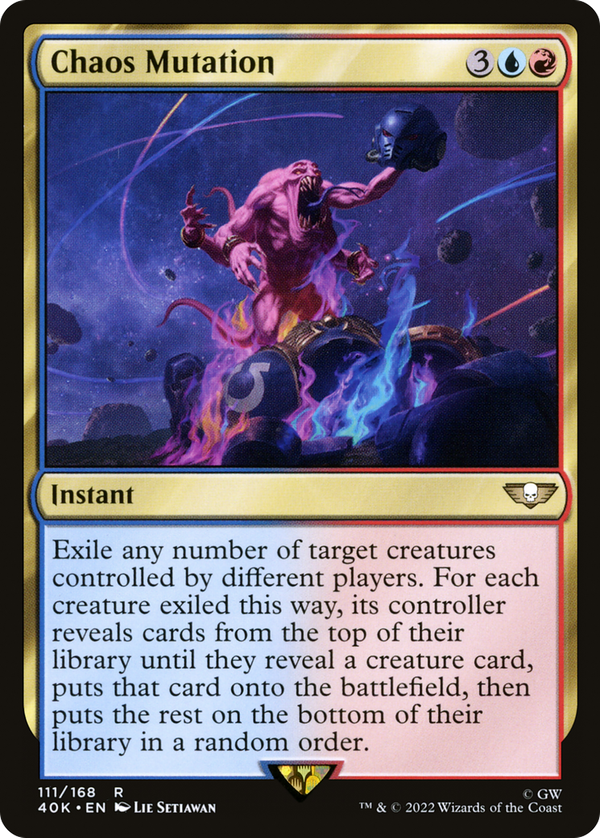
Most removal answers a question: this poses one. The trade is fixed in structure: exile a creature, and its controller digs to the top creature in their library and slams it onto the battlefield, face-up, no choice offered. You are not deleting a threat so much as rerolling it, and the die is loaded by library composition rather than by intent. The multiplayer clause is where the design turns pointed: it must hit creatures controlled by different players, so it cannot be piled onto one opponent's board. It is built to sweep across the table, converting a spread of committed creatures into a spread of random ones in a single resolution. For the caster that reads as sabotage against a stacked engine (turning a carefully assembled piece into whatever the top of the deck coughs up) or as a self-serving gamble, since exiling your own worst creature is likely to trade up. Randomization bites at both ends: the exiled creature is gone for good, and the replacement is dictated by whatever creature surfaces first. Instant speed lets it answer a lethal swing by rerolling the attacker mid-combat, though what lands could hit harder than what left. It is a group-chaos effect that punishes decks running fat, singular bombs (whose replacement is almost always a downgrade) and rewards the deck packed with interchangeable creatures, where any reroll lands somewhere useful.