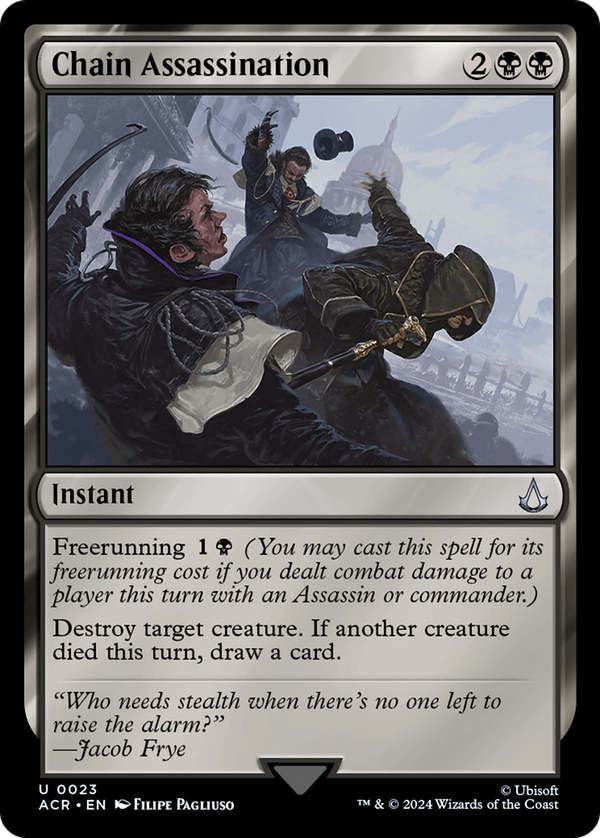
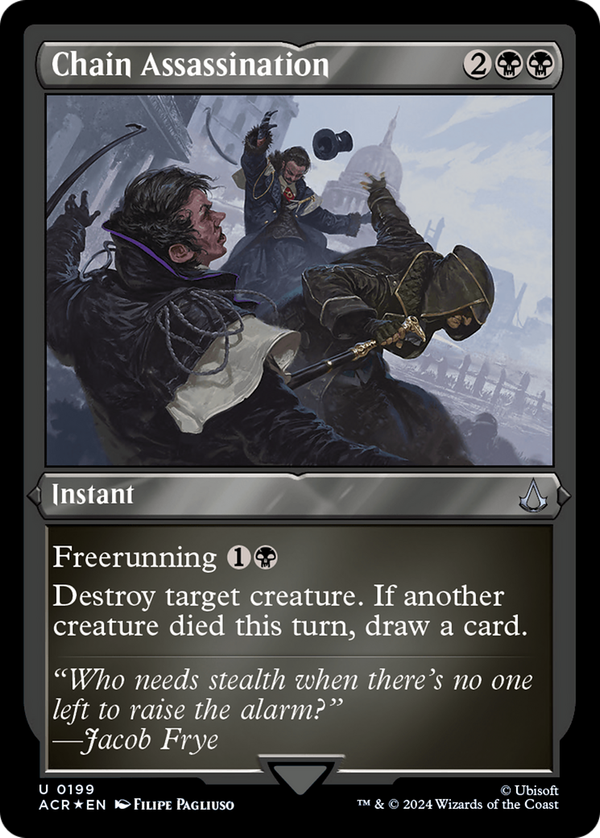
Chain Assassination


Freerunning is the mechanic that most literally models its source material: it discounts a spell as a reward for having already buried a blade in your opponent, and here the payoff is unconditional single-target removal. The design pivots on which half you are buying. At the printed cost of four mana, this is a fine reactive Doom Blade with an upside, the kind of spell that trades up and can refill a card once the board has been trading. Attack with an Assassin or your commander first, though, and it collapses to two mana, which reframes the whole spell: the discount is earned on your own turn, in your own combat step, so this is not a cheap answer you hold up on their turn but a follow-up you unload after your attackers have already connected. You swing, you land damage, and then for two mana you clear whatever survived, or a fresh threat, or the blocker for next turn, with the tempo already tilted your way. The conditional draw is what keeps the freerunning line from being a one-off: in a board state churning through creatures, the destroy clause replaces itself, turning interaction into an engine that funds the next aggressive turn rather than costing you a card for it. The spell only pays off if you were already winning combat, which is the point. Freerunning does not open the door to aggression; it rewards you for having already walked through it.
Rules text
 (You may cast this spell for its freerunning cost if you dealt combat damage to a player this turn with an Assassin or commander.)
Destroy target creature. If another creature died this turn, draw a card.
(You may cast this spell for its freerunning cost if you dealt combat damage to a player this turn with an Assassin or commander.)
Destroy target creature. If another creature died this turn, draw a card.