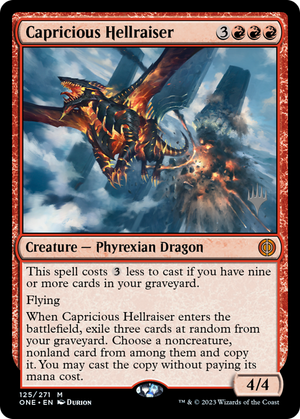
Capricious Hellraiser


The reward for filling a graveyard is usually recursion: bring a card back, cast it again on your terms. This flips the transaction. The entry trigger reaches into your bin, pulls three cards blindly, and lets you copy exactly one noncreature nonland from whatever surfaced. You are not selecting the spell you want; you are staking a claim on the distribution of what you have already spent. That randomness is the trade you make for the discount. A card that let you handpick a free spell out of a nine-deep graveyard would price itself out of red's reach; the coin-flip on which three cards appear keeps the effect fair without demanding a real casting cost. The design leans into red's identity as the color of gambles and impulsive value rather than surgical selection, and it rewards a specific kind of graveyard: not one card worth digging for, but a critical mass of playable noncreature spells dense enough that any three you exile leave you something worth copying. Load the yard with a single bomb and the randomizer will mock you; fill it with a dozen live options and the trigger almost cannot whiff. The discount when you hit nine cards is the other half of the puzzle, turning a six-mana flier into a body that lands early on the exact turn your graveyard is deep enough to make the copy meaningful.
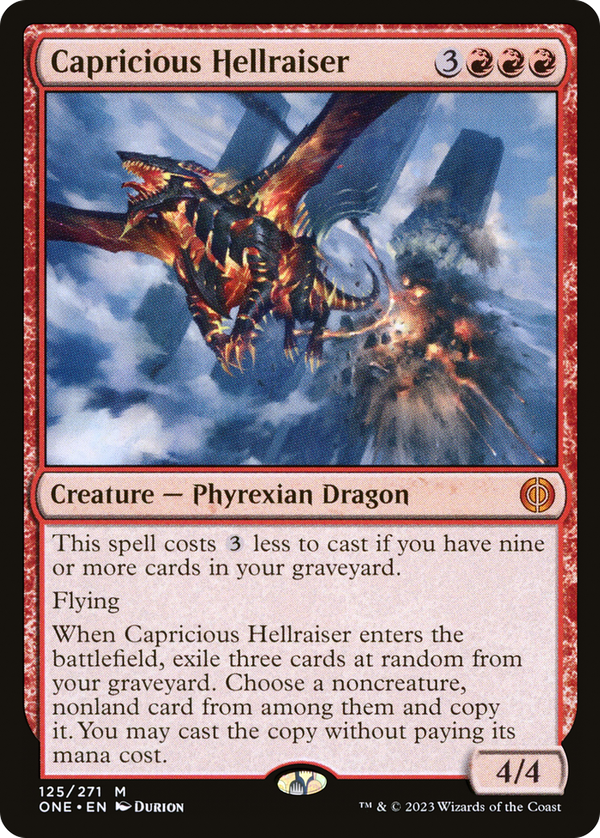
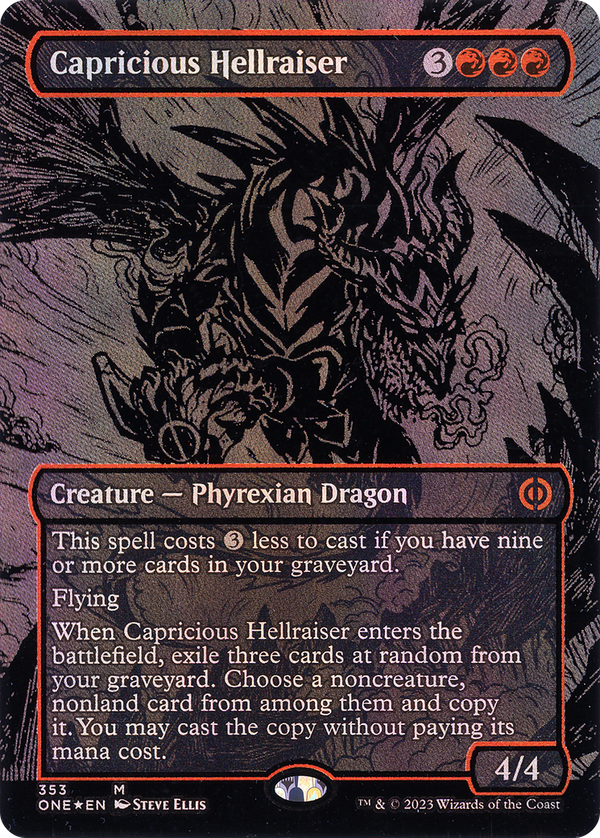
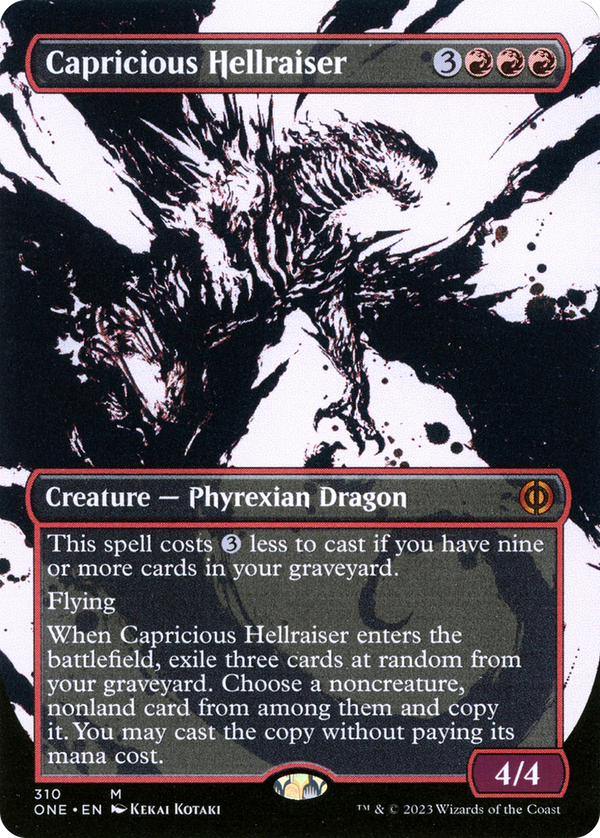
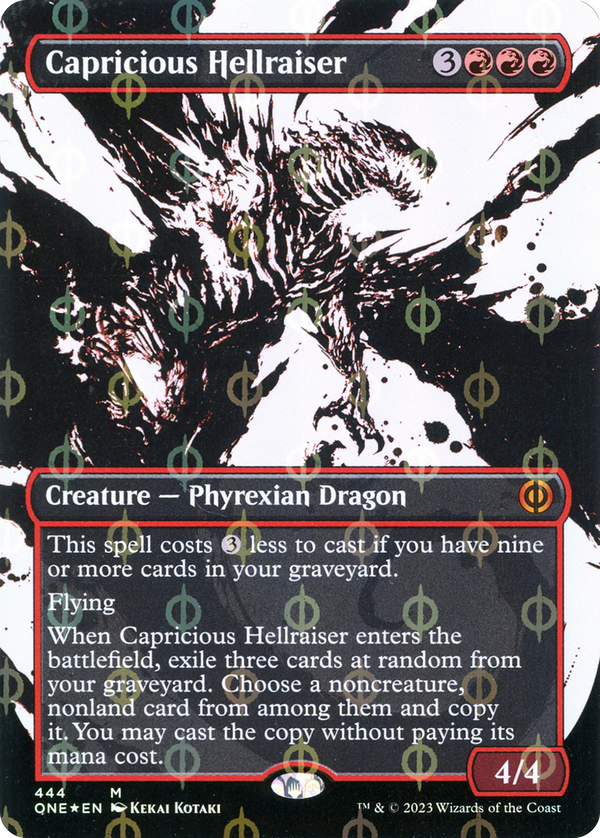
Rules text
less to cast if you have nine or more cards in your graveyard.
Flying
When this creature enters, exile three cards at random from your graveyard. Choose a noncreature, nonland card from among them and copy it. You may cast the copy without paying its mana cost.